How to prevent chargeback fraud: Criminal, friendly fraud and merchant errors
Industry
7 Dec 2023
13 min

Andrii Romanyshyn
Head of Chargeback Prevention, Solidgate
Enhanced protection, reduced disputes, and lower costs—key benefits of chargeback fraud prevention. Learn authentication methods, security protocols, and monitoring tools.
Chargeback fraud is a deceptive tactic used by consumers to obtain refunds by exploiting the chargeback process. Instead of contacting the merchant directly for a refund, individuals initiate a dispute with their bank, which triggers the chargeback procedure. They make false claims, such as receiving faulty or undelivered products, denying authorization for the transaction, or alleging unauthorized charges for recurring subscriptions. However, chargeback fraud occurs when the true motive behind the dispute differs from the reasons provided.
What is a chargeback?
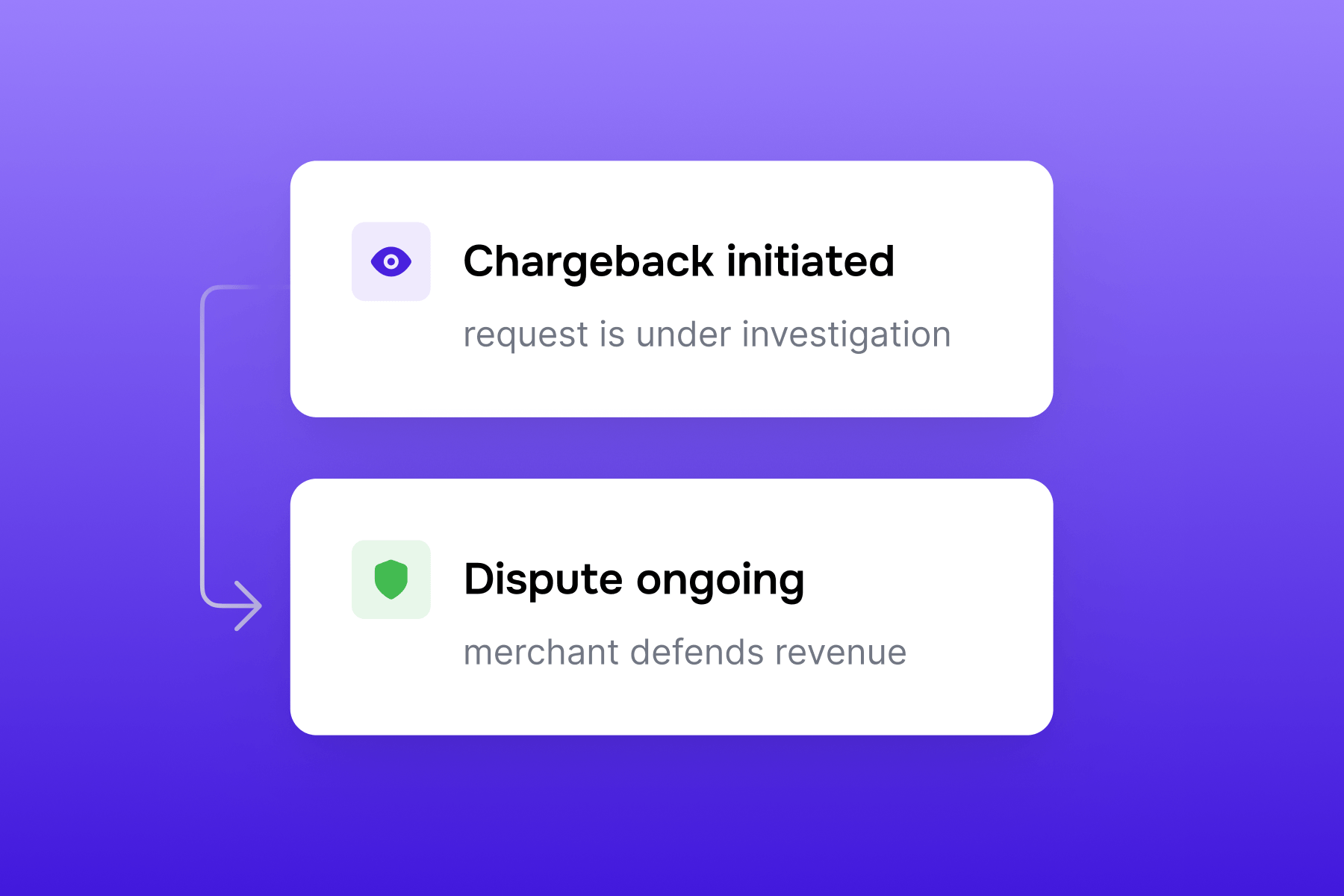
Chargeback is a refund initiated by the client’s issuing bank. The procedure was initially intended to protect the buyer and ensure the security of online card payments. It differs from a regular refund, i.e., when the buyer contacts the seller to request a refund due to a faulty product, a long delivery time, etc.
The customer files a chargeback directly with their bank, bypassing communication with the seller. Therefore, it is crucial to prevent chargebacks, as if the issuing bank finds the client's arguments convincing, it will write off the disputed amount from the seller’s account.
As stated by VISA, from March 2020 to March 2021, online payments increased by 39%. The volume of online transactions is growing, increasing the number of chargebacks alongside. According to Solid research, approximately 0.15%-0.17% of all Internet transactions result in chargebacks.
Why do chargebacks occur?
Legitimate and loyal customers have a significant impact on how merchants handle chargeback fraud. As chargeback abuse involves legitimate customers engaging in fraudulent activities with their own credit cards, merchants face uncertainty regarding when and what to dispute.
The process of disputing chargebacks requires substantial labor and resources. Consequently, when merchants do identify fraudulent chargebacks, the disadvantages of disputing them often outweigh the benefits, leading them to refrain from taking action. However, this approach presents a problem as failing to dispute fraudulent chargebacks ultimately encourages repeat abusers. By opting not to dispute, merchants inadvertently pave the way for continued abuse.
Some buyers may file a chargeback against sellers despite receiving a product or service. These are some simple pieces of advice to protect businesses from chargeback fraud.
How does chargeback fraud hurt business owners?
Chargeback at the client’s request is routine for issuing banks, but on numerous occasions, it can lead to severe problems for the seller and their business. International payment systems (e.g., VISA, MasterCard, Amex, JCB, etc.) watch over the number of chargebacks a business receives.
Exceeding the limit threatens the company with additional losses and getting blacklisted by banks. Indeed, many entrepreneurs are asking how to avoid chargebacks and mitigate these risks, and our article aims to answer this very question.
Online stores with high chargeback rates are considered unreliable by payment systems and should consider implementing a chargeback prevention strategy. Visa and MasterCard will be concerned if a business has more than 100 chargebacks per month, and together they account for more than 0.9% of total transactions.
It is always a problem for a business. Not only because of the transaction amount, but also because the fee will be written off from the account. Often, fees can be higher than the transaction itself for purchases under $30.
In addition, a business with a growing number of chargebacks is receiving increased attention from the acquiring bank and payment systems. When the chargeback ratio is high, the system marks the company as a high-risk client. If a business cannot reduce this figure, it will end up on the MATCH list, an industry’s denylist, and the bank can close the seller’s account.
The only way to get off the list is to prove that the seller got there accidentally. For example, a sudden increase in the chargeback rate was associated with fraudulent buyer behavior. In practice, this isn’t easy, so it is better not to get denied. However, if the company is already marked as high-risk, the seller must reduce the chargeback ratio and exit the monitoring program.
Importance of chargeback fraud prevention
are often an overlooked aspect that people prefer not to dwell on. The process of resolving payment disputes can be complex and challenging to grasp. Consequently, many merchants consider the losses incurred as a mere "cost of doing business," as consumer disputes represent only a small fraction of overall sales.
If you find yourself relating to this perspective, you might be significantly underestimating the detrimental impact chargebacks can have on your financial performance.
Apart from the direct loss of sales revenue and the value of the merchandise, each dispute incurs additional expenses. These expenses encompass chargeback fees, administrative fees, and overhead costs like shipping, fulfillment, and customer acquisition. Moreover, other forms of loss, such as false declines and return fraud, are also likely to rise.
According to a study, for every dollar lost to fraud, the average chargeback ends up costing you $3.60, once you factor in all these supplementary expenses.
How can merchants prevent chargeback fraud?
Legitimate and loyal customers have a significant impact on how merchants handle chargeback fraud. As chargeback abuse involves legitimate customers engaging in fraudulent activities with their own credit cards, merchants face uncertainty regarding when and what to dispute. The process of disputing chargebacks requires substantial labor and resources.
Consequently, when merchants do identify fraudulent chargebacks, the disadvantages of disputing them often outweigh the benefits, leading them to refrain from taking action. However, this approach presents a problem as failing to dispute fraudulent chargebacks ultimately encourages repeat abusers. By opting not to dispute, merchants inadvertently pave the way for continued abuse.
Some buyers may file a chargeback against sellers despite receiving a product or service. These are some simple pieces of advice to protect businesses from chargeback fraud.
How to prevent friendly fraud
Friendly fraud presents a distinct challenge for businesses, as customers unintentionally initiate chargebacks due to misunderstandings or dissatisfaction. To safeguard revenue streams and maintain positive customer relationships, implementing effective prevention strategies is crucial. This concise guide offers valuable insights and actionable tips to help businesses proactively prevent friendly fraud and mitigate its impact.
Ensure transparency in return, refund, and cancellation policies
Transparency is key when it comes to preventing friendly fraud chargebacks. Clearly communicate your return, refund, and cancellation policies to customers, making sure they understand the terms and conditions. By providing a clear understanding of what can be expected in these situations, you can reduce the likelihood of customers resorting to chargebacks due to confusion or dissatisfaction.
Provide contact information: email and phone support
Make it easy for customers to get in touch with you by providing accessible contact information such as email and phone support. Promptly addressing customer inquiries and concerns can help resolve issues before they escalate to chargeback levels. By demonstrating your willingness to assist and communicate, you create a positive customer experience that discourages chargeback disputes.
Track shipments and delay billing with insurance or confirmation
Using shipping insurance or confirmation services can provide valuable proof of delivery and help prevent friendly fraud chargebacks. By tracking shipments and ensuring their successful receipt, you can address any claims of non-delivery or unauthorized purchases. Delaying billing until after the expected delivery date adds an extra layer of protection, as customers are less likely to initiate chargebacks out of impatience or misunderstanding.
Assess transaction appearance via mystery shopping
To better understand how your transactions appear on credit card statements, consider conducting mystery shopping exercises. Place test orders and analyze the resulting transaction information. By experiencing the customer’s perspective, you can identify any inconsistencies or confusion that may lead to chargebacks. Making necessary adjustments to ensure clear and recognizable descriptors can help prevent chargebacks resulting from customer confusion.
Verify customer orders for accuracy
Implement a verification process to ensure the accuracy of customer orders. Send order confirmation emails or messages that clearly state the details of the purchase. This not only serves as a record of customer consent but also reduces the risk of chargebacks based on claims of unauthorized transactions. By confirming orders, you establish a stronger foundation for preventing friendly fraud chargebacks.
Effectively manage recurring payments
For businesses offering recurring payment services, proper management is crucial to prevent friendly fraud chargebacks. Ensure that customers are informed and have given explicit consent for recurring charges. Keep accurate records of customer agreements and regularly review and update billing information. By managing recurring payments effectively, you can reduce the risk of chargebacks stemming from misunderstandings or unauthorized transactions.
Regularly update expired cards
Stay vigilant and regularly update the information for expired cards to prevent friendly fraud chargebacks. Outdated card details can lead to unintentional chargebacks when customers are unaware of the need to update their information. By proactively reaching out to customers to update their card details, you can minimize the occurrence of chargebacks resulting from expired cards.
Ensure transparent free trials without hidden charges
If you offer free trials, ensure transparency by clearly outlining any associated terms and conditions, including potential charges beyond the trial period. Avoid hidden fees or unclear billing practices that may lead to chargebacks resulting from customers feeling misled. By setting clear expectations and providing transparent information, you can reduce the risk of friendly fraud chargebacks during free trial offers.
Display your company name on credit card statements
To prevent customer confusion and potential chargebacks, make sure your company name is clearly displayed on credit card statements. Customers should be able to recognize the charge and link it to their purchase without confusion. By ensuring your company name is visible, you help customers identify legitimate transactions and minimize the likelihood of chargebacks initiated out of uncertainty or suspicion.
Leverage payment provider support for assistance
In case of any challenges or concerns related to friendly fraud chargebacks, don’t hesitate to seek support from your payment provider. Payment providers often have resources, tools, and expertise to help businesses combat and prevent chargebacks. By leveraging their assistance, you can access valuable insights and guidance tailored to your specific circumstances, further strengthening your chargeback prevention efforts.
Representing chargeback
If you are sure that the client is trying to take funds back for a service or product used, you may challenge a chargeback by providing compelling documents to the issuing bank.
Documentation depicting the provided service may help win a chargeback and retain funds. However, please keep in mind that a chargeback fee will be applied regardless of the circumstances.
How to prevent criminal fraud
Criminal fraud occurs when fraudsters exploit vulnerabilities in payment systems, using stolen credit card information or engaging in identity theft to commit fraud. To protect your business and customers from these illicit activities, implementing effective prevention strategies is crucial.
Use customer authentication
To reduce fraudulent cases, you should always require a CVV code when a consumer pays with a credit card and use AVS (Address Verification Service).
Implementing a 3D-Secure verification can also help prevent fraudsters from placing unauthorized online orders and escalating them to the issuing bank as a chargeback. These actions will also decrease fraudulent activity on the website.
Enable secure payment processing protocols
Tokenization is a process that enhances the security of sensitive data, such as credit card information, by replacing it with a unique identifier, or token. The token serves as a surrogate value for the original data, without revealing any sensitive details. Tokenization plays a vital role in preventing fraud by minimizing the exposure of sensitive data and reducing the risk of unauthorized access or misuse.
Strong Customer Authentication (SCA) is an authentication process designed to provide an additional layer of security for online transactions. It is mandated by the revised Payment Services Directive (PSD2) in the European Union. SCA requires customers to provide multiple authentication factors to verify their identity when making certain types of electronic payments.
SCA requires customers to provide at least two factors of authentication from three categories: something the customer knows (e.g., PIN), something the customer possesses (e.g., a mobile device), or something inherent to the customer (e.g., facial recognition). This multi-factor authentication makes it significantly more difficult for fraudsters to impersonate the legitimate account holder.
SSL (Secure Sockets Layer) certificates are digital certificates that provide secure and encrypted communication between a website and its visitors. They play a crucial role in preventing fraud and chargebacks by establishing a secure connection and ensuring the confidentiality of the information exchanged between the customer's browser and the website's server.
SSL encryption ensures that sensitive information, such as credit card details, usernames, and passwords, is securely transmitted and cannot be intercepted or accessed by unauthorized individuals. SSL certificates include a digital signature that verifies the identity of the website's owner. This prevents fraudsters from creating fake websites and deceiving customers into entering sensitive information on fraudulent platforms.
SSL certificates prevent man-in-the-middle (MITM) attacks where a fraudster intercepts and modifies communication between a customer and a website. By encrypting data, SSL certificates make it extremely difficult for attackers to access or tamper with sensitive information.
Make certain that you support EMV
EMV (Europay, Mastercard, and Visa) payment is a global standard for secure payment transactions using chip-enabled payment cards or smart cards. It involves the use of embedded microprocessor chips in payment cards, replacing traditional magnetic stripe cards. Implementing EMV payment offers several benefits for businesses, including:
- Increased security
The chip on the EMV card generates a unique transaction code for each transaction, making it more difficult for fraudsters to clone or counterfeit cards. - Liability shift
The introduction of EMV payment brought about a in the payment ecosystem. Before EMV, if a fraudulent transaction occurred, the party with the less secure technology (either the issuer or the merchant) would be liable for the resulting losses. However, with EMV, liability shifts to the party that has not implemented EMV-compliant technology. - Consumer trust and confidence
EMV technology is widely recognized and trusted by consumers. By implementing EMV, businesses can enhance customer trust and confidence in their payment processes. Customers are more likely to feel secure knowing that their card data is protected by chip technology. - Global compatibility
EMV is a global standard widely adopted in many countries. Implementing EMV payment ensures compatibility with international payment systems, allowing businesses to cater to customers from around the world. - Support for contactless payments
EMV also enables contactless payments, commonly known as "tap and go." This feature allows customers to make payments by simply tapping their EMV-enabled card or mobile device on a contactless-enabled terminal. Contactless payments offer convenience, speed, and a seamless checkout experience. - Future-proofing
As technology continues to evolve, EMV provides a foundation for future payment innovations. EMV-compliant terminals can support additional features such as mobile payments, loyalty programs, and value-added services.
Implement an anti-fraud system
Businesses should use an anti-fraud system that automatically analyzes and identifies potential fraudsters. Such a system may even block a transaction in case of suspicious activities or fraudulent buyers' actions on other websites.
Using services that monitor chargebacks and notify merchants when they occur so merchants can respond promptly and minimize their losses.
Alerts can help prevent chargebacks by identifying and flagging potentially fraudulent transactions before they become chargebacks. By providing real-time notifications of suspicious activity, alerts can help businesses quickly detect and respond to potential fraud, thereby minimizing the risk of chargebacks.
How to prevent merchant error
Merchant errors can inadvertently lead to chargebacks, causing financial losses and customer dissatisfaction. To mitigate these risks, it is crucial for businesses to implement effective prevention strategies. This guide focuses on how to prevent chargebacks resulting from merchant errors, providing valuable insights and actionable tips to help businesses avoid common mistakes, enhance internal processes, and provide exceptional customer service.
Ensure detailed product descriptions and keep online inventory updated
To prevent chargebacks resulting from merchant errors, it is essential to provide detailed and accurate product descriptions on your website. Clear and comprehensive information helps customers make informed purchasing decisions, reducing the likelihood of misunderstandings or dissatisfaction. Additionally, regularly updating your online inventory ensures that customers have access to real-time availability, minimizing the risk of chargebacks caused by incorrect product information or out-of-stock items.
Utilize clear billing descriptors on customer statements
Using clear and recognizable billing descriptors on customer statements is crucial in preventing chargebacks from merchant errors. Customers should be able to easily identify and associate the charge with their purchase, reducing the chances of confusion or potential disputes. By providing a clear billing descriptor, you enhance transparency and minimize chargebacks resulting from customers not recognizing or misunderstanding the transaction.
Avoid processing errors in payment amounts
One common merchant error that can lead to chargebacks is processing errors in payment amounts. It is crucial to ensure accuracy and precision when charging customers. Double-check payment amounts before processing transactions to prevent overcharging or undercharging, which can cause customer dissatisfaction and potentially result in chargebacks. By avoiding payment processing errors, you can maintain trust with customers and reduce the risk of chargebacks due to merchant mistakes.
Minimize shipping delays and tracking mix-ups
Shipping delays and tracking mix-ups can lead to customer frustration and, in turn, chargebacks. It is essential to prioritize efficient shipping processes to ensure timely delivery and accurate tracking information. Proactively communicate with customers regarding any potential delays or issues, providing them with updated tracking details. By minimizing shipping delays and tracking mix-ups, you can reduce the occurrence of chargebacks resulting from customer dissatisfaction or concerns over non-receipt of goods.
Prevent shipping the wrong or defective items
Shipping the wrong or defective items can be a major cause of chargebacks. Implement quality control measures to minimize errors in order fulfillment and shipping processes. Double-check the accuracy of orders before shipment and conduct regular inspections to ensure the quality and condition of products. By preventing the shipping of incorrect or defective items, you can significantly reduce the risk of chargebacks resulting from customer dissatisfaction or claims of receiving unsatisfactory goods.
Track client satisfaction
Ensure the client is satisfied with the service provided or with the product received. For example, sending a satisfaction survey may help discover invisible issues and bugs on the website. By checking the satisfaction rate, you may find reasons for chargebacks. Such a survey may also be used as evidence in challenging a consumer’s dispute.
Conclusion
To develop an effective chargeback prevention strategy, it is essential to combine the recommended best practices mentioned above with tailored actions, policies, and technological solutions that align with the unique circumstances of the merchant. This entails conducting a thorough analysis of the merchant's chargeback data to identify the underlying causes of their disputes.
While there are several independent measures that merchants can take to safeguard themselves, seeking assistance when necessary is another effective way to prevent chargebacks. Engaging the services of a reliable chargeback management firm can help merchants devise a strategy and provide guidance throughout its implementation. This ensures that merchants can retain more of their revenue and maintain a favorable chargeback ratio, keeping them clear of potential risks.