Chargeback
What is a chargeback?
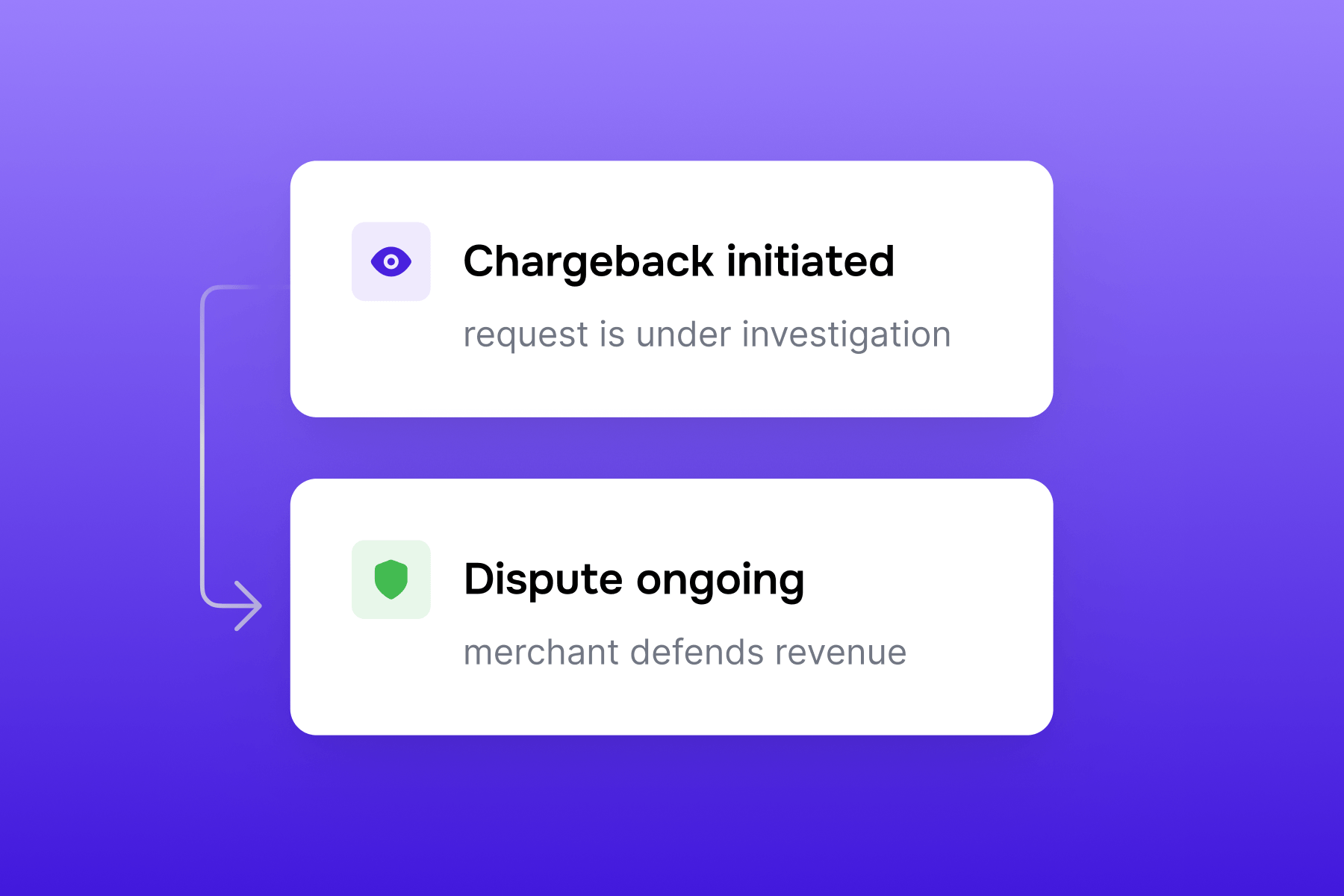
Chargeback is a forced reversal of a card payment, initiated by a through their and pushed back to the merchant through the card network. The issuer pulls the funds from the , which debits the merchant, so the money leaves the merchant account before the case is decided.
Chargebacks are built into card scheme rules as a consumer protection mechanism. A cardholder who spots an unauthorized or charge on a statement, or who never received what they paid for, files with the issuer rather than with the merchant. The issuer reviews the claim, assigns a , and credits the amount back to the cardholder. The merchant finds out after the funds have already moved, and can contest the case with evidence.
Key facts
- Initiated by: the cardholder, through the issuing bank
- Also known as: payment dispute,
- Governed by: card scheme rules, with a separate set per scheme
- Filing window: set by the , which varies by scheme and reason code
- Cost to the merchant: the transaction amount plus
- Measured as: , the ratio of chargebacks to transactions over a period
Types
Card schemes group chargebacks into four categories, each with its own reason codes.
- Fraud – the cardholder claims the transaction wasn't authorized, or that the card was stolen, lost, or used without permission. Card-absent fraud maps to Visa 10.4 and Mastercard 4837.
- Authorization – the transaction lacked a valid authorization, or was processed after the authorization expired or was declined.
- Processing errors – duplicate charges, incorrect amounts, wrong currency, or invalid account numbers.
- Consumer disputes – the cardholder claims the goods or services never arrived, were defective, or didn't match the description.
Cases where the cardholder disputes a purchase they made and received are classified as , and they surface under both the fraud and the consumer-dispute categories.
Why it matters
- Funds move first. The acquiring bank debits the merchant when the dispute is filed, so the revenue is gone whether or not the merchant later wins the case.
- Fees apply either way. Each case carries a chargeback fee charged by the acquirer. Winning the case doesn't return that fee.
- Ratios trigger monitoring. Visa and Mastercard each publish chargeback-to-transaction thresholds. Crossing one puts the merchant into a with escalating fines, and sustained breaches end in account termination. The specific thresholds are scheme- and program-specific and are published in the current scheme rules.
- Evidence decides the outcome. A merchant contests a chargeback by submitting through the acquirer. A response that matches the issuer's evidence requirements can produce a .
- Cases escalate. An issuer that rejects the merchant's evidence can file a , and unresolved cases move on to and , where scheme filing fees apply.
How it compares
The distinction is who moves the money and whether a scheme case is opened.
| Term | Initiated by | What happens |
| Chargeback | Cardholder, via the issuer | Funds are pulled from the merchant through the card network |
| Cardholder | Umbrella term for any cardholder challenge to a charge, including pre-chargeback stages | |
| Merchant | The merchant returns the funds directly, and no scheme case is opened | |
| Issuer | The issuer asks the merchant for transaction documentation, and no funds move |