E-invoicing
What is e-invoicing?
E-invoicing is the exchange of invoices as structured, machine-readable data that the buyer's and seller's systems process without manual re-keying. A PDF attached to an email doesn't qualify: the invoice has to carry its data in a defined XML structure that accounting and tax systems can validate on their own.
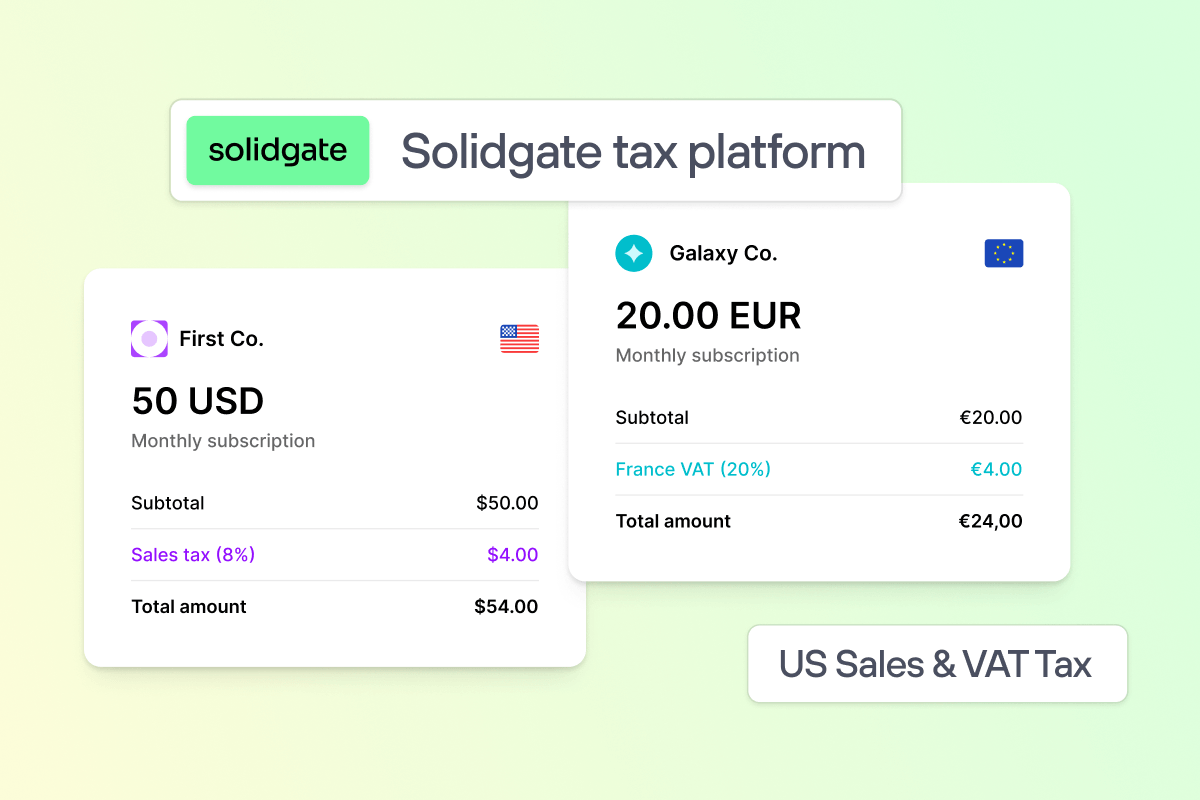
Tax authorities drive most of the adoption. Structured invoice data lets them match declared VAT against actual transactions, so a growing number of countries require invoices to pass through a national platform or a certified network before they count as valid tax documents. For a business selling across borders, that turns invoicing from an accounting routine into a compliance obligation with country-specific formats, channels, and deadlines.
Key requirements
- Structured format – EN 16931, the European standard published by CEN/TC 434 in 2017, defines the core invoice data model. National formats including XRechnung, ZUGFeRD, Factur-X, and Peppol BIS Billing 3.0 map back to it, which is what makes cross-border processing possible.
- Transmission channel – invoices travel either through a national government platform (Italy's SdI, Poland's KSeF, France's accredited PDP providers) or through the Peppol network via certified Access Points. The channel is set by the buyer's country, not by the seller's preference.
- Complete tax data – VAT identification numbers for both parties, invoice number and date, line-level tax breakdown, and the country-specific fields added by national extensions to EN 16931.
- Digital reporting – the EU's VAT in the Digital Age (ViDA) package, adopted in March 2025, requires intra-EU B2B transactions to use EN 16931-compliant structured invoices with near-real-time reporting to tax authorities from 1 July 2030. ViDA adds a cross-border layer on top of national mandates rather than replacing them.
- Archiving – retention periods and storage-location rules are set nationally and differ across the EU; check the rules of each country you invoice into.
Who it applies to
Scope depends on where the buyer sits and how large the seller is. The main European mandates on current published timelines:
| Country | Status |
| Italy | B2B e-invoicing through the SdI platform since 2019, the longest-running EU mandate |
| Germany | Receiving compliant e-invoices (XRechnung or ZUGFeRD) mandatory since January 2025; issuance obligation phased in over 2027–2028 |
| Poland | KSeF mandatory for taxpayers above PLN 200 million turnover from February 2026, most other VAT-registered businesses from April 2026, micro-enterprises from January 2027 |
| France | All businesses must be able to receive e-invoices from 1 September 2026; large and mid-sized companies must also send from that date, smaller businesses from September 2027 |
Which entity carries the obligation follows the invoice, not the payment. A business selling through a is not the seller of record on the invoice, so the mandate applies to the entity named on it.
How it works in practice
- Generate – the billing system produces the invoice directly in a structured format rather than rendering a PDF and converting it afterwards.
- Validate – the invoice is checked against the EN 16931 rules plus the destination country's extension. Missing VAT fields or an unrecognised tax code cause rejection at this stage.
- Transmit – the file goes to a Peppol Access Point or the national platform. Under clearance models such as Italy's and Poland's, the tax authority receives the invoice before the buyer does.
- Clear and deliver – the platform registers the invoice, assigns it an identifier and timestamp, and forwards it to the buyer. That identifier becomes the reference for later queries.
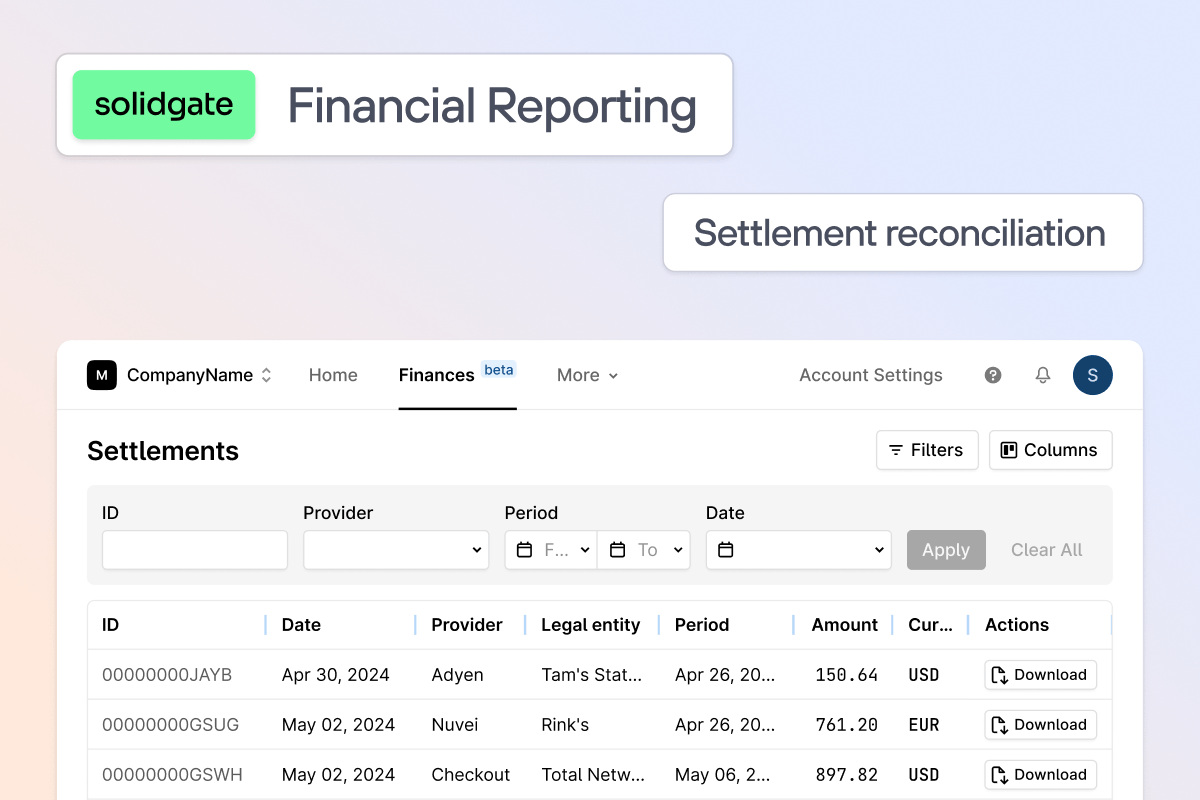
- Archive and reconcile – the structured file is stored for the statutory retention period and matched against payment records during , where invoice identifiers link to the corresponding entries in the .
For subscription businesses, step 1 is the one that breaks: invoices generated per billing cycle by a billing engine have to be produced in the structured format from the start, since a monthly PDF run cannot be retrofitted into a valid clearance submission.
Penalties for non-compliance
- The invoice isn't valid – under clearance models, an invoice that never reaches the national platform is not a legal tax document. The buyer cannot deduct input VAT against it, which makes non-compliance a commercial problem with customers, not only a regulatory one.
- Financial penalties – national rules set fines per non-compliant invoice or as a share of the VAT amount, and the amounts differ by country. Poland and Italy both publish penalty schedules tied to their platforms.
- Rejected invoices delay payment – a submission that fails schema validation is returned rather than delivered, so the payment clock only starts once a corrected invoice clears. Revenue recognition and cash collection slip by the length of that cycle.