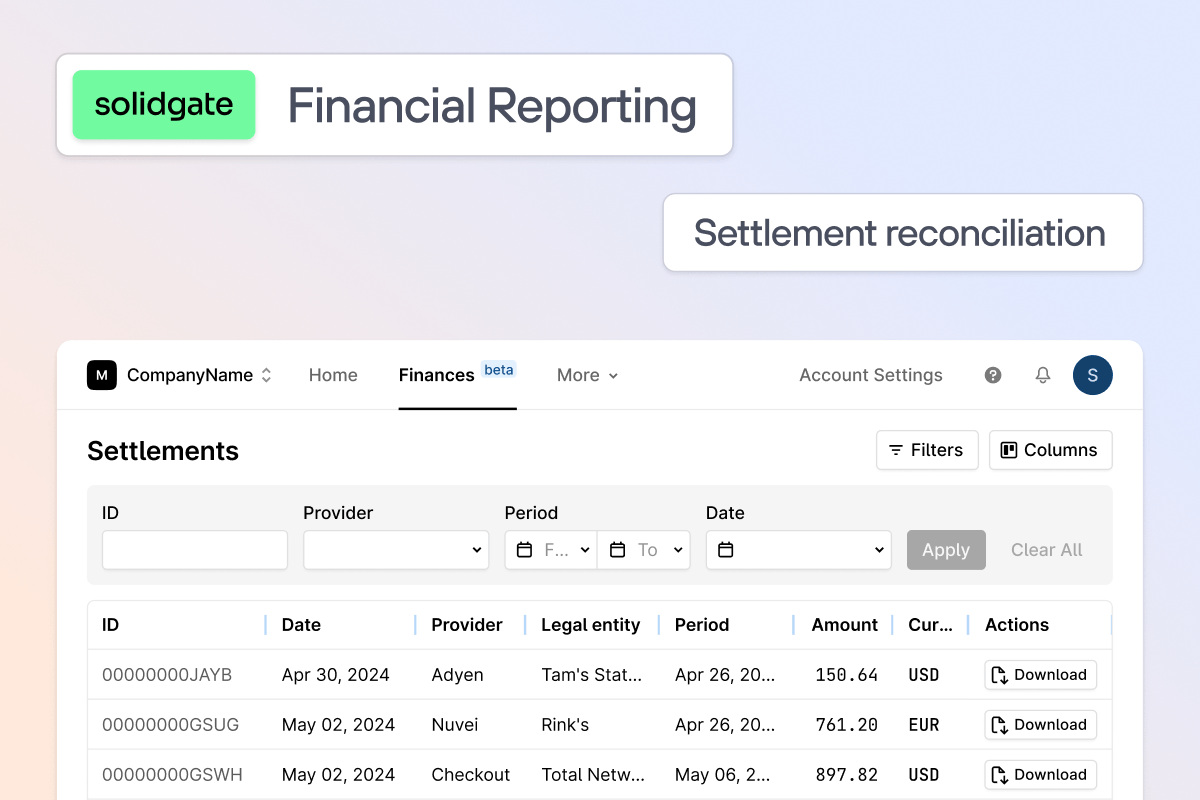
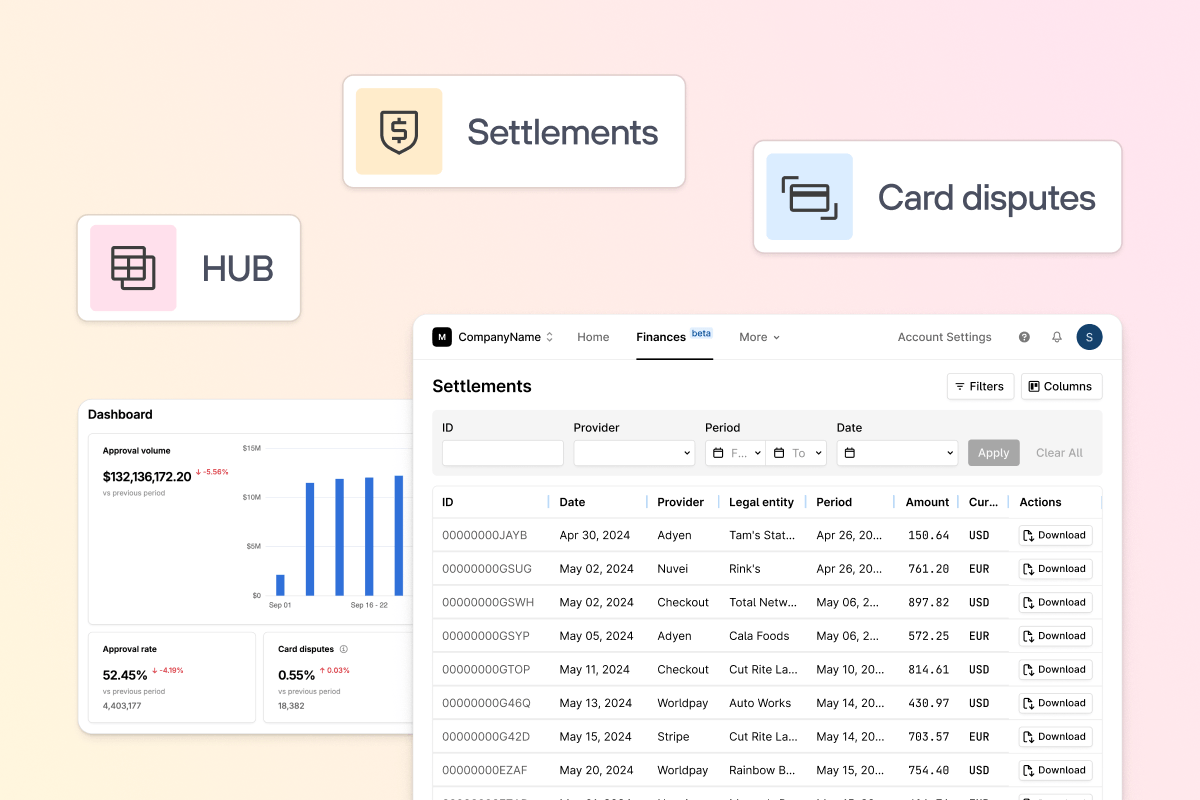
Reconciliation
What is reconciliation?
Reconciliation is the process of comparing financial records from separate sources – bank statements, reports, and a company's own – to confirm that every transaction matches in amount, date, and status. It flags any discrepancy so it can be investigated and corrected.
In payments, reconciliation ties together what a merchant expected to receive, what the processor reported, and what actually landed in the bank account. A single sale can pass through a gateway, an acquirer, and a batch before the money arrives, so records drift out of sync. Reconciliation is how finance teams prove the books are accurate before closing them.
Key facts
- Also known as: payment reconciliation, account reconciliation, settlement reconciliation
- Applies to: merchants, PSPs, banks, and any business processing card or bank payments at volume
- Records compared: bank statements, processor and acquirer reports, internal ledgers, and invoices
- Frequency: daily, weekly, or monthly, usually aligned to settlement and accounting cycles
- Goal: confirm every expected payment arrived, and explain any that didn't
How it works
- Gather records: collect data from each source – bank statements, processor and acquirer reports, and the internal ledger – for the same period.
- Match transactions: line up each entry across sources using identifiers such as the transaction ID, , amount, and date.
- Flag discrepancies: isolate items that don't match – missing payments, duplicated entries, fee differences, or timing gaps between when a sale was captured and when it settled.
- Investigate: trace each exception to its cause, such as an unsettled , a refund, a chargeback, or a processing fee that wasn't recorded.
- Adjust and record: correct the ledger, note the resolution, and mark the period as reconciled once every entry is accounted for.
Why it matters
Without reconciliation, a business can't be sure the money it was promised actually arrived. Unmatched entries hide real problems: fees charged twice, payouts that never landed, refunds processed but not recorded, or fraud that slips through unnoticed.
Reconciliation also underpins accurate financial reporting and audit readiness. Accountants rely on reconciled books to file taxes, close the month, and meet compliance requirements, and regulators expect the reported numbers to tie back to source records.
Common issues
- Timing differences: a payment captured on one day may settle days later, so the same transaction lands in different periods across sources.
- Unrecorded fees: processing, interchange, and scheme fees deducted before payout make gross and net amounts look mismatched.
- Refunds and chargebacks: reversals reduce a settlement without a matching entry unless they're tracked separately.
- Missing or duplicated data: failed exports, manual entry errors, or duplicate files drop or inflate transactions.
- Multi-currency settlements: conversion between the transaction currency and the payout currency introduces rate and rounding differences that have to be reconciled.