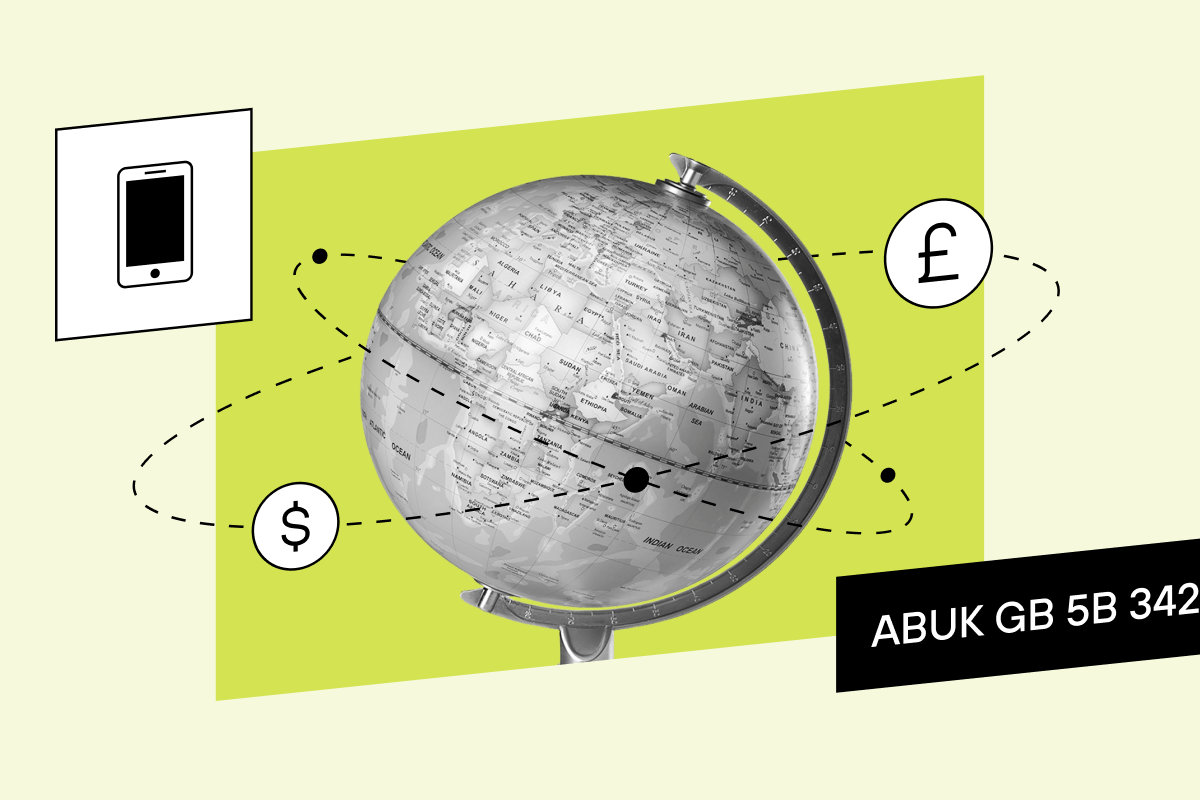
SWIFT
What is SWIFT?
Society for Worldwide Interbank Financial Telecommunication (SWIFT) is a global messaging network that lets financial institutions securely exchange instructions for international money transfers and other financial transactions. It's a cooperative owned by its member institutions, and it carries standardized messages between banks rather than moving money itself.
SWIFT holds no accounts and settles no funds. Settlement happens through correspondent banking relationships, where institutions hold accounts with one another and debit or credit them once the instruction arrives. Beyond payments, the same network carries trade finance, securities, and treasury messages.
Not to be confused with: "SWIFT code" is everyday shorthand for the (BIC), the address that identifies an institution on the network. The BIC is an identifier; SWIFT is the network that routes messages to it.
SWIFT faces competition from domestic instant payment networks, fintech rails, and systems that settle without correspondent banking.
Key facts
- Also known as: the SWIFT network, the SWIFT system; "SWIFT code" is the common name for the BIC
- Owned by: a cooperative of member financial institutions
- Identifier format: 8 characters for an institution's head office (bank code, country code, location code), 11 characters when a branch code is appended
- Message standard: legacy MT formats, migrating to MX messages
- Common message type: MT103, the single customer credit transfer that carries a cross-border payment instruction
- Carries: cross-border transfers, trade finance instructions, securities transactions, treasury operations
How it works
- Instruction created – the sending institution composes a payment message addressed to the beneficiary institution's BIC.
- Message transmitted – the message travels encrypted across the network through regional processing centres, with redundant communication paths so traffic keeps flowing during an outage.
- Routing through correspondents – when the two institutions hold no direct account relationship, the instruction passes through one or more correspondent banks, each debiting and crediting the accounts it maintains for the others.
- Screening – every institution in the chain screens the message against sanctions and anti-money-laundering lists before passing it on. A hit stops the payment mid-chain.
- Credit and confirmation – the beneficiary institution credits the account and confirms back along the chain. Global Payments Innovation (GPI) attaches an end-to-end reference so the sender can track status and fees deducted at each hop.
SWIFT vs BIC, IBAN, and SEPA
These four sit at different layers: one network, one institution identifier, one account identifier, one regional scheme.
| Term | What it is | Scope |
| SWIFT | messaging network for interbank instructions | global |
| code identifying the institution, and optionally the branch | global | |
| code identifying the individual account at that institution | Europe plus adopting countries | |
| euro payment scheme with its own rulebook and formats | the SEPA area |