Multi-currency payment processing: What your stack needs to convert cross-border traffic
Payments 101
9 Mar 2026
8 min


Andrii Kononenko
Head of Merchant Operations, Solidgate
Most businesses display local currency but still route cross-border. Here’s how to build a payment stack that actually converts international traffic.
You’ve localized your checkout. You’re showing euros to German customers, zloty to Polish ones, and pounds to UK shoppers. But your cross-border authorization rates still lag behind domestic – often by double digits.
The dashboard says multi-currency. Your P&L tells a different story.
That gap exists because most businesses treat multi-currency as a front-end feature – show local prices, check the box, move on. But how does the transaction actually route? Which acquirer picks it up, and which local payment methods are available to international customers?
That’s infrastructure – and it’s where cross-border revenue is won or lost.
Most guides on this topic explain what multi-currency payment processing is. This one covers what it takes to make it actually work, including:
- Checkout localization
- Local acquiring
- APM coverage
- Operational infrastructure
Whether you're running a subscription platform, a digital goods business, or a cross-border e-commerce store, this guide is for you.
What multi-currency payment processing actually involves
Multi-currency payment processing lets you accept payments in your global customers’ local currency while settling in your own. Here's how the process looks:
- Customer selects or is shown their local currency at checkout,
- Your payment gateway handles the conversion, routing, and settlement on the back end.
- Funds settle in your base currency — typically within one to two business days depending on the acquirer.
The customer sees a familiar price, and you receive payments in the currency you operate in.
But getting multi-currency right means thinking beyond the checkout page. It involves local acquiring relationships, dynamic payment method routing, acquirer-agnostic tokenization, and settlement infrastructure that can hold and move funds across multiple currencies.
Multi-currency payments vs. cross-border payments
These terms get used interchangeably, but they're not the same thing.
| Multi-currency payments | Cross-border payments | |
| What it means | Processing a transaction in a currency different from the merchant's base currency | Processing a transaction where the buyer and merchant are in different countries |
| Geography | Can happen within one country (e.g., a US-headquartered business accepting euros in Germany) | Always involves two or more countries |
| Currency involved | Always involves at least two currencies | May or may not – a UK buyer paying a UK-based global merchant in GBP is cross-border if the acquirer is overseas, but single-currency |
| Where they overlap | Most cross-border transactions are also multi-currency. Most multi-currency setups exist to serve cross-border customers. In practice, you're usually solving for both at once. |
The distinction matters because each one introduces different costs. Multi-currency adds conversion spread and FX risk. Cross-border adds scheme fees, higher interchange, and lower auth rates from foreign acquirers. When a transaction is both, which is the common case, those costs stack.
That's why the infrastructure underneath your checkout matters more than the currency label on top of it.
Why currency display alone doesn’t fix cross-border conversion
Here's what happens when you show local currency but don't change anything underneath. Let's say a German customer sees a price in EUR, enters their card details, and the transaction routes through your US-based acquirer. From the card network's perspective, that's still a cross-border payment, which results in:
Hidden cost: The card network applies cross-border and scheme fees. You're paying 30-50 basis points more per transaction than you would if it were routed domestically.
Visible risk: Cross-border transactions carry higher . Local issuers are more likely to soft-decline a transaction from a foreign acquirer – especially for new customers or higher-value purchases. When that happens, the customer does notice. They see a failed payment, maybe try once more, and often leave.
Across our infrastructure, we see that adding a local currency display without typically delivers only a fraction of the expected conversion lift. The front end looks right, but the back end hasn’t caught up.
Fixing this requires work across four layers: checkout localization, local acquiring, alternative payment method (APM) coverage, and the operational backbone that holds everything together.
Layer 1: Checkout localization that goes beyond currency
Currency display is the baseline. What matters is how your checkout determines what to show.
Three signals drive localization:
- IP geolocation
- Browser language
- Card BIN, once entered
A strong checkout cross-references all three to handle edge cases, e.g., a UK cardholder browsing from a German IP.
Language matters as much as currency. A Dutch customer sees prices in euros, but a checkout form in English still hits a snag. The best setups auto-adjust both in the same pass.
Speed matters too. A checkout page that takes three seconds to load will lose customers before they even see your localized prices. Pre-populating fields from previous purchases compounds the effect – less typing means less time to reconsider.
How this looks in practice: a German customer hits your checkout. The page loads in under a second via CDN, detects their location, and renders in German with pricing in euros. Input fields are pre-populated from their last purchase. They confirm and pay in eight seconds.
That same checkout, visited by a Dutch customer, renders in Dutch with euro pricing. No redirect, no separate checkout flow, no dev work per market.
For that to be your case, you need a platform that auto-adjusts currency, language, and payment methods based on location. That's how Solidgate's works, and it's what we'd recommend looking for in any multi-currency setup.
Layer 2: Local acquiring – where multi-currency hits the P&L
This is the layer most guides skip entirely. It’s also the one with the biggest impact on your economics.
When a transaction routes through a local acquirer – one domiciled in the same country as the cardholder’s issuing bank – the card network classifies it as a domestic transaction. Three things change at once:
- Interchange rates drop: Cross-border transactions in Europe typically cost 30–50 basis points more than domestic ones once you factor in interchange differentials, scheme fees, and cross-border surcharges. On €1M in monthly volume, that’s €3,000-€5,000/month in unnecessary cost – before you count declined transactions.
- Authorization rates climb: Local issuers trust local acquirers. They’re less likely to soft-decline a transaction that comes from a domestic source.
- Cross-border fees disappear: The surcharge that card networks apply to cross-border transactions goes away when both the acquirer and issuer sit in the same market.
Here’s the connection many teams miss: you can’t do local acquiring without multi-currency processing. If you’re settling everything in USD, you can’t route through a European acquirer.
Merchants on our platform who’ve moved from cross-border-only to local acquiring in key European markets have seen double-digit improvements in acceptance rates. That’s not a display change. It’s an infrastructure change.
The math is straightforward: higher auth rates mean more revenue per checkout session. Lower interchange means more margin on every transaction that does go through. Local acquiring turns multi-currency from a cost center into a profit lever.
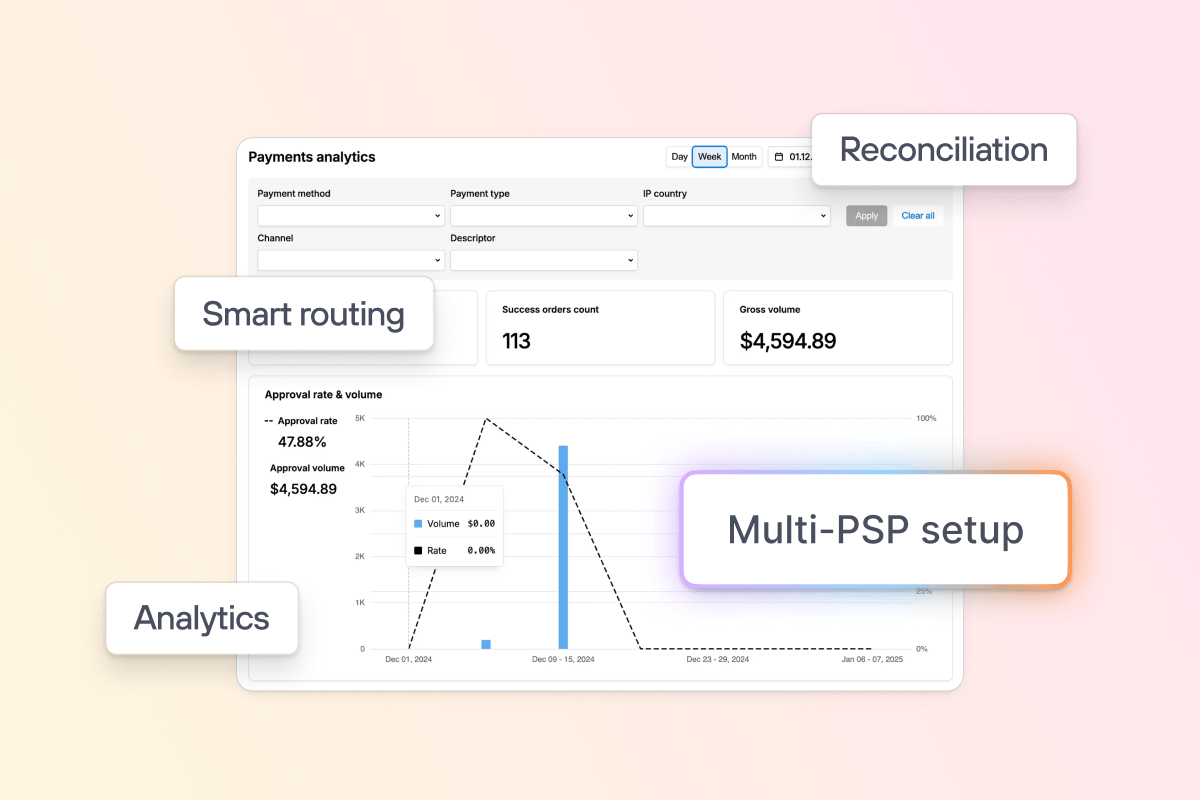
This is how we've built Solidgate's routing layer – 100+ global and local acquirers, with that picks the best one per transaction based on geography, cost, and historical performance.
Layer 3: APM coverage – the methods your checkout needs
In key European markets, cards aren’t always the default.
Cart abandonment in cross-border checkout averages near 70%, according to . Missing the local “hero” payment method is a big part of why.
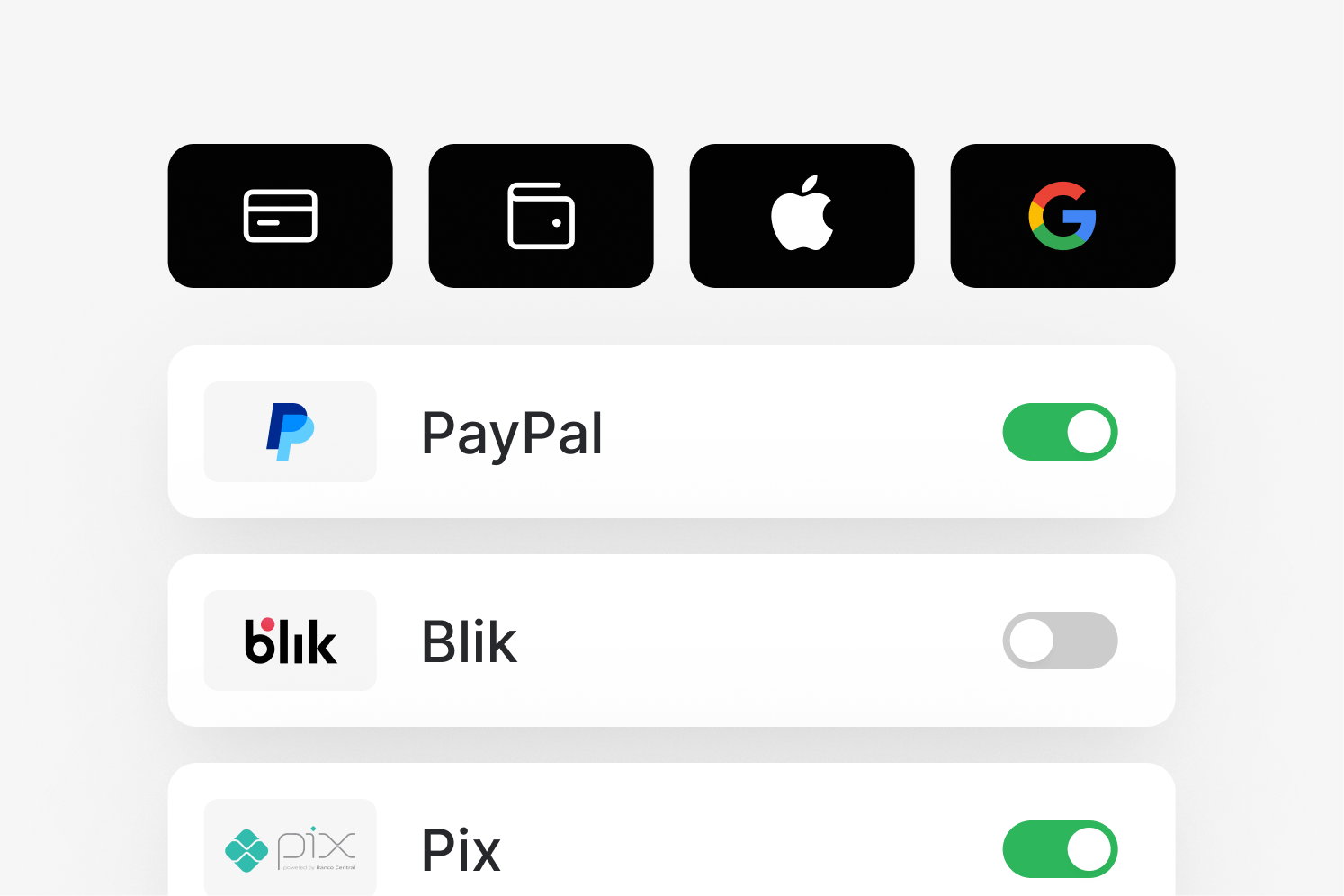
In the Netherlands, iDEAL handles the majority of online payments. In Poland, BLIK is the dominant mobile method – customers pay with a six-digit code in seconds. Across Germany and Austria, Klarna and SOFORT carry a heavy share.
If your checkout doesn’t surface these, you’re asking customers to use their second-choice method.
The challenge with APMs is surfacing the right ones. A checkout that shows every available method to every customer creates clutter and confusion. The better approach is to detect the customer’s location, surface the two or three most relevant options, and keep the experience clean.
How this looks in practice: a subscription business selling across the Netherlands, Poland, and Germany from a single checkout. The Dutch customer sees euros and iDEAL. The Polish customer sees zloty and BLIK. The German customer sees euros and Klarna. Same checkout page, three localized experiences – zero additional dev work.
Note: not every APM supports subscriptions. iDEAL works for recurring payments through SEPA mandates, while BLIK supports recurring payments natively. But some methods are one-time only.
Your payment stack needs to know which methods support card-on-file or mandate-based billing – and filter accordingly, so your checkout never offers a method that works for the first payment but fails on the second.
Look for a platform that surfaces methods dynamically based on customer location. For subscription businesses, one that auto-filters to recurring-capable methods only. That's how Solidgate's layer works across 100+ methods, but the principle applies regardless of provider.
Layer 4: The ops layer – reconciliation, failover, and settlement
Accepting payments in 10+ currencies across multiple acquirers creates an operations problem that doesn’t show up until your finance team tries to close the books.
Each acquirer has its own settlement timeline, reporting format, and currency. Without centralized reporting, you’re reconciling manually across three or four dashboards every month.
Failover matters here, too. If a transaction fails on one acquirer, can your system retry on another – in the same currency, using the same token? Most single-PSP setups can’t. can, but only if tokenization is acquirer-agnostic. It means the card is stored once and can be charged through any connected acquirer without re-tokenization.
Payment cascading – automatically rerouting failed transactions to a backup acquirer — recovers a meaningful share of otherwise-lost revenue. On our platform, we’ve seen recovery rates in the low-to-mid teens as a percentage of initial declines.
add another layer. Instead of retrying immediately on the same acquirer (which usually fails again), the system waits for the right window based on issuer behavior and time zone, then retries through the most likely path to approval.
For subscription businesses, this is the difference between involuntary churn and a recovered customer.
Then there’re settlement questions:
- Do you convert everything to a single base currency at the day’s exchange rate and absorb the FX spread?
- Or hold local currency balances in different currencies and convert when timing favors your treasury?
Most platforms force one approach.
The better option: hold balances in the currencies you collect, and convert when timing works for your treasury. support EUR, USD, and GBP with unique IBANs, SEPA Instant, and SWIFT – but the broader point is that your payment platform and your treasury shouldn't be separate systems.
Centralized multi-acquirer reporting, acquirer-agnostic tokenization, and full payment cost visibility via API round out the ops layer. This is where fragmented multi-PSP setups break down and where a unified infrastructure pays for itself.
Your checkout shows local currency – does your stack back it up?
Multi-currency payment processing is a stack-level decision, and currency display is where it starts. Local acquiring, APM routing, failover logic, subscription handling, and centralized reconciliation are what make it actually work.
If you're expanding into new markets, audit your current stack against these four layers:
- Where does your checkout localize?
- Where does the transaction actually route?
- What methods are you missing?
- And who's reconciling all of it?
The answers will tell you whether your multi-currency setup is working, or just looking like it is.
Frequently asked questions
Multi-currency payment processing lets businesses accept payments in a customer’s preferred currency while settling funds in their own base currency. The payment gateway handles currency conversion, routing, and settlement behind the scenes.
The customer pays in a familiar currency, and the merchant receives funds in the currency they operate in. It’s the foundation for any business looking to process payments from international customers at scale.
When a transaction routes through an acquirer in the same country as the cardholder’s issuing bank, the card network treats it as domestic. That means lower interchange fees, no cross-border surcharges, and higher approval rates from local issuers.
Multi-currency processing is a prerequisite – without it, you can’t route through local acquirers in each market.
iDEAL dominates in the Netherlands, BLIK is the leading mobile payment method in Poland, Klarna and SOFORT carry a heavy share in Germany and Austria, and SEPA direct debit is widely used for recurring payments across the EU. Not all APMs support recurring billing, so subscription businesses need to verify method compatibility before enabling them at checkout.
A single payment provider limits you to their acquirers, methods, and currencies. Payment infrastructure – like an orchestration platform with its own acquiring and APM integrations – lets you route across multiple providers, pick the best acquirer per transaction, and manage everything from one dashboard.
The difference shows up in auth rates, cost, and operational overhead.
Cross-border payments often carry currency conversion costs that aren’t visible at checkout but turn into additional fees. They include exchange rate markups from payment processors, scheme fees from card networks, and intermediary bank fees on wire transfers.
Dynamic currency conversion (DCC), where the customer’s bank handles conversion instead of your payment processor, typically carries the highest markups. Local acquiring and multi-currency capabilities remove most of these layers by keeping the transaction domestic.
Not necessarily. A multi-currency merchant account lets you hold and settle in multiple currencies, but modern payment solutions like orchestration platforms can handle international payments without requiring separate merchant accounts in each market.
They route transactions through local acquirers and process payments in the customer’s local currency while settling to your preferred base currency –or holding balances in local currency through business accounts. The right approach depends on your volume, markets, and treasury needs.
Exchange rate fluctuations can erode margins between the time a customer pays and the time you convert funds to your base currency. For subscription businesses billing monthly in local currency payments, this risk compounds over each billing cycle.
The two main approaches are: convert immediately at settlement and accept the rate you get, or hold balances in multiple currencies and convert strategically when rates favor your position. Platforms with built-in treasury tools give you the flexibility to choose.