Failed payment recovery: A guide to smart retries
Payments 101
Updated 8 Oct 2026
8 min

Valentyn Pidpalyi
Product Manager, Solidgate
Most failed subscription payments are recoverable. The question is whether your retry logic knows when to go back for them.
Soft declines account for 80–90% of all failed card-not-present payments in subscription businesses. Most of that revenue is recoverable, and the window to recover it depends on timing.
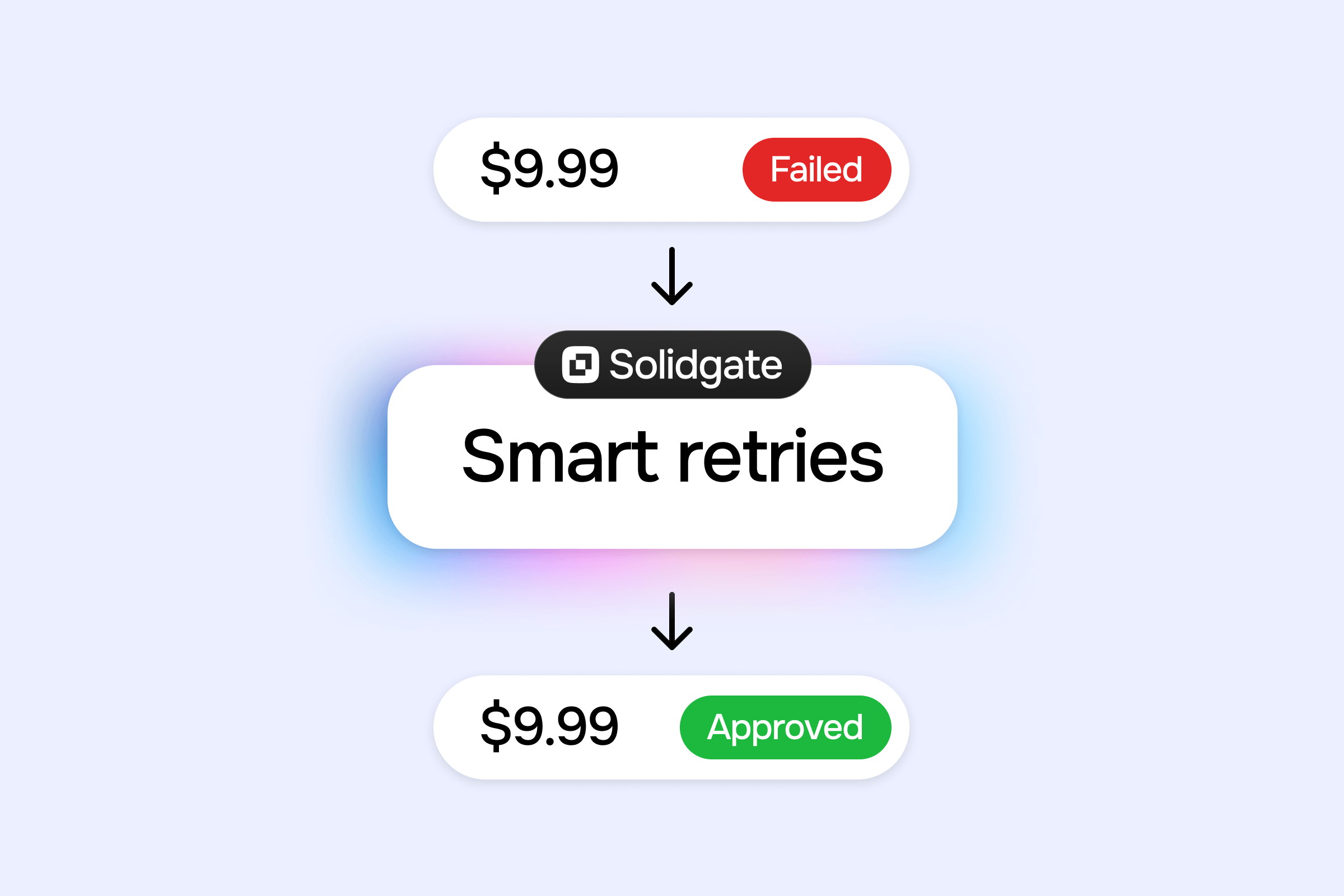
When a payment fails, the retry decision involves two variables: whether the decline is recoverable, and when the customer is most likely to have funds available. Static retry schedules address the first question by firing on a fixed clock. Smart retries address both – using machine learning to factor in customer history, timing signals, and payment details to choose the retry moment.
This article covers what failed payment recovery means, how automated retries work, what distinguishes smart retries from fixed-schedule approaches, and what results businesses see when they implement them.
TL;DR
- Failed payment recovery is the process of winning back revenue from declined transactions before the subscriber's service lapses.
- Automated payment retries encode retry logic into the billing system, so the decision of when to retry happens without manual intervention.
- Static retries and smart retries solve the same problem with different logic – static schedules apply a uniform interval across all failure types; smart retries treat each decline separately.
- Solidgate merchants using smart payment retries have seen 51–67% better first-retry conversion and revenue arriving roughly 23.6% faster.
What is failed payment recovery?
Failed payment recovery is the process of collecting revenue from declined transactions before the customer loses access to the service.
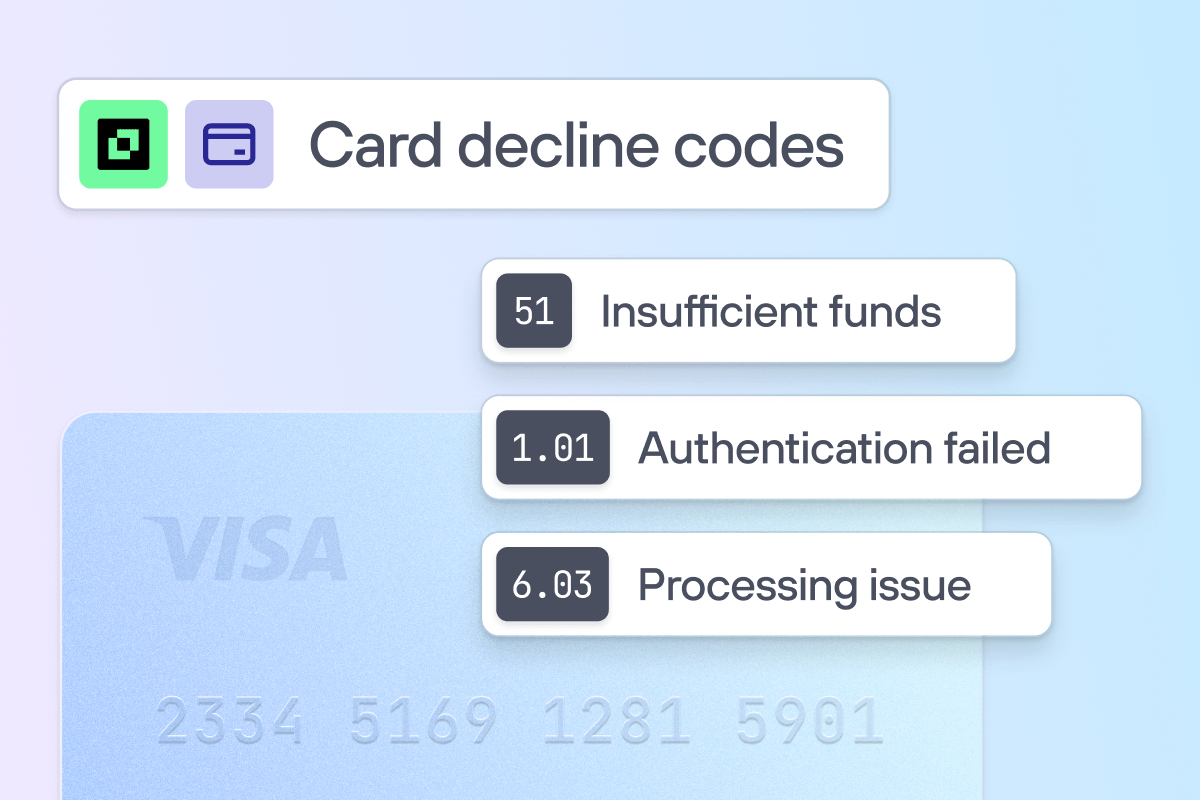
Most declines in recurring billing are soft declines – temporary conditions like insufficient funds at the moment of charge, a bank's fraud filter flagging the transaction, or a processing timeout on the issuer's side.
Soft declines are recoverable. The card is valid; the customer hasn't cancelled; the payment failed because of a condition that can change. 80–90% of in subscription businesses fall into this category.
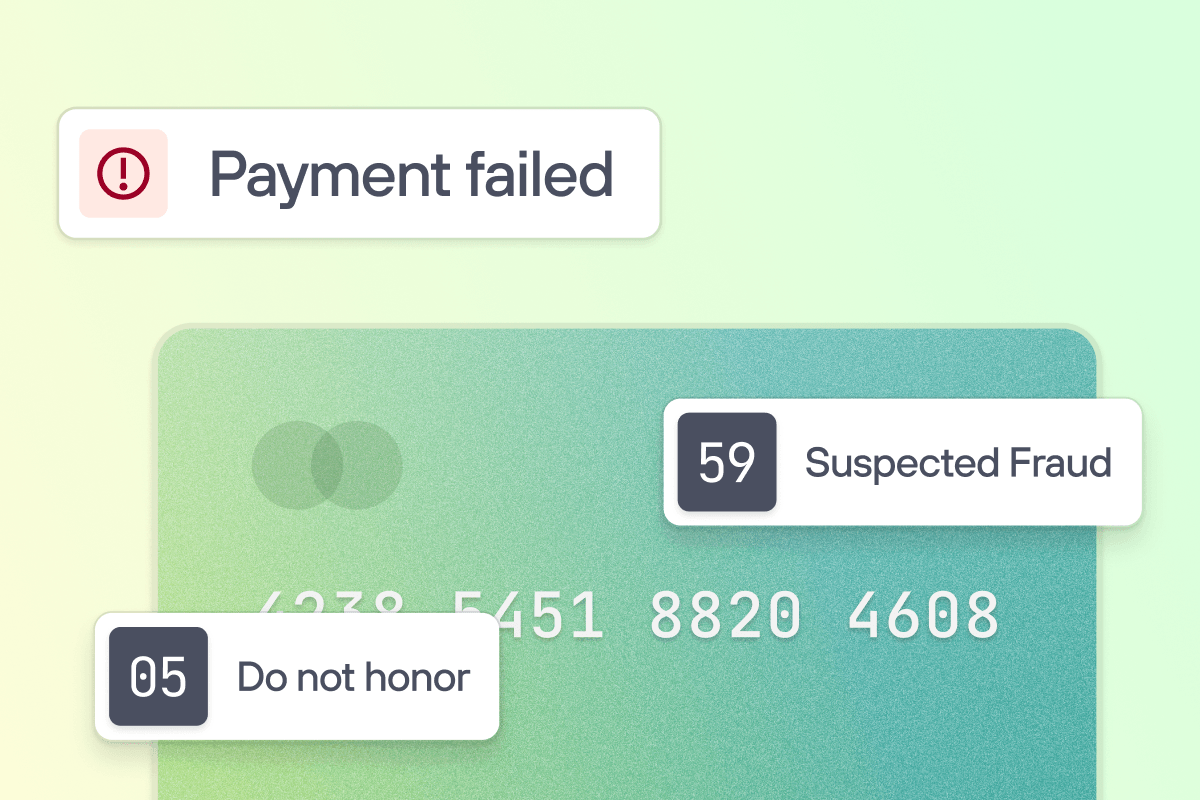
Hard declines – stolen cards, closed accounts, do-not-honor codes from the issuer – sit outside the retry window. Retrying them burns attempts without a realistic path to collection. The right response there is updating the payment method or through a different channel.
For recurring billing businesses, the gap between those two categories is where lives. A subscriber whose card had a temporary issue at renewal didn't choose to leave – the subscription lapsed because the soft decline wasn't recovered in time.
How to automatically retry failed payments
Automated retries encode retry logic into the billing system, so the decision of when to retry a failed charge happens without a person making that call transaction by transaction.
At low volume, a finance team can review failed charges and decide when to retry each one. Past a few hundred transactions a month, that becomes a significant operational commitment – the team is reacting to individual declines rather than working on other priorities.
A works alongside automated retries but solves a different problem: it refreshes expired or reissued card credentials before the retry happens, so the attempt uses a valid card number. The retry handles the timing; the account updater handles the credential.
Card networks set different rules on retry frequency. caps retries at 20 attempts within 30 days for recoverable declines – certain response codes (stolen card, closed account) prohibit retrying at all.
takes a different approach: rather than a fixed cap, it issues Merchant Advice Codes that specify when to retry – MAC 02 means wait 24 hours; MAC 03 means stop. Automated retry systems read these signals per transaction and apply the right behavior, keeping merchants compliant without manual tracking.
Dunning – the broader practice of communicating with a customer about a failed payment and prompting them to update their details – runs alongside automated retries. Retries recover the payment where possible without customer action. Dunning messaging engages the customer when action is needed, like updating a card that can't be automatically refreshed.
Core insight: Automated retries remove the per-transaction operational burden of manual dunning, and work best when combined with fresh card credentials from an account updater.
What are smart retries?
Smart retries are an intelligent payment recovery system that uses machine learning to automatically select the best time to retry failed payments. The system adapts to individual payment history, user profiles, transaction context, and global trends, increasing the likelihood of a successful charge.
It evaluates multiple factors, including:
- Customer behavior and profile: How long they've been subscribed, their payment history, and location
- Timing: Local time zones, weekdays versus weekends, salary days and holidays that affect spending
- Payment details: Method, card type, decline reason, amount, and currency
- Proven patterns: What's worked before for your business, geography, similar companies, and banks around the world
With all these inputs, smart payment retries automatically find the best moment to try again.
For Solidgate merchants, smart retries are enabled by default with four retries over a four-week period, and you can adjust these settings to suit your business needs through the dashboard or the API.
Smart retries also work alongside – routing decides which acquirer sees the transaction, and smart retries decide when to send it back.
Together, they reduce revenue lost to timing and infrastructure issues. Where a decline carries a fraud signal, that's a input, not a retry candidate, and the two systems work together to separate those cases.
Core insight: Smart payment retries treat each decline as a distinct case with its own retry window, based on why the payment failed and when recovery is most likely.
Smart retries vs static retries
Static retries and smart retries are both approaches to recovering the same failed payments. The difference is in what each one accounts for when deciding when to retry.
Static retries apply a fixed interval across all failures – retry on day three, day seven, or another predefined schedule, with the same timing regardless of decline reason, customer history, or payment context. That consistency makes them straightforward to implement and reason about.
Smart retries use those same variables to choose the retry moment for each transaction, and the model refines its predictions as more data comes in.
| Feature | Smart retries | Static retries |
| Retry timing | Selects the retry time based on historical data and real-time patterns | Fixed windows based on predefined intervals |
| Adaptability | Adjusts based on customer behavior, bank policies, and market conditions | Rule-based, adjusted manually when needed |
| Context awareness | Weighs transaction type, payment history, and timing together | Uniform rules applied across all decline types |
| Learning over time | Each retry adds data that refines future predictions | No automated learning mechanism |
| Decision basis | Statistical signals and real-time data | Fixed rules set in advance |
The gap between the two approaches grows with transaction volume and payment complexity. Across multiple geographies, card brands, and billing cycles, the inputs that determine optimal retry timing vary enough that a fixed schedule leaves some recovery on the table.
Core insight: The difference between static and smart retries is what each one factors into the timing decision. As transaction volume and market complexity grow, so does the range of variables that determine when a retry is likely to succeed.
Benefits of implementing smart retries
Recover more revenue
Smart retries recover failed payments by retrying at a moment calibrated to each specific failure type. An insufficient-funds decline retried on payday has a different probability of success than the same decline retried two days earlier on a random weekday. That timing precision is what moves recovery rates – not retrying more often, but retrying smarter.
Boost customer retention
Failed payments cause service interruptions, and service interruptions cause involuntary churn. The subscriber whose card had insufficient funds at renewal didn't choose to leave – they lost access because the retry fired at the wrong moment and the payment never cleared.
Involuntary churn averages 7.2% per month across .
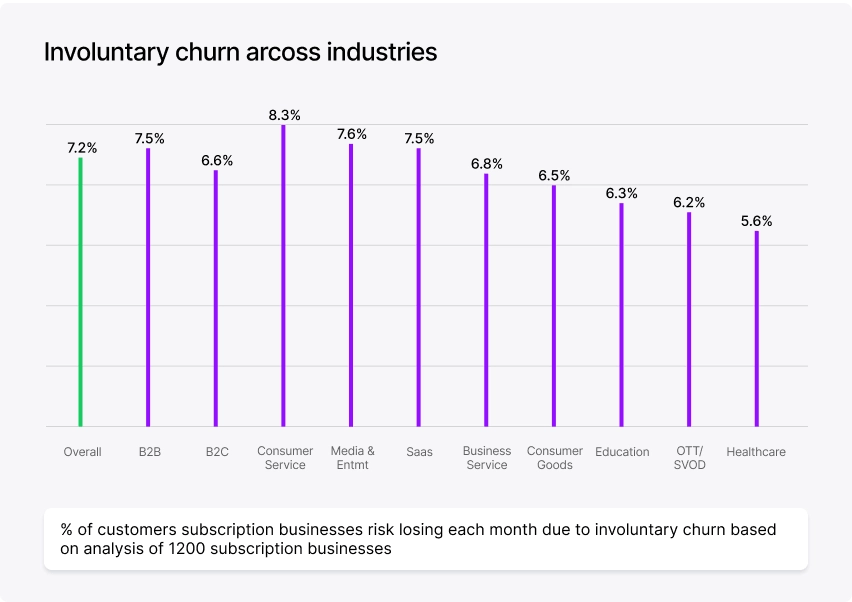
A share of that is genuinely unrecoverable – hard declines, closed accounts, fraud. But soft declines retried at a better-timed moment convert at rates that keep subscribers active and protect lifetime value (LTV). The customer acquisition cost (CAC) already spent to acquire that subscriber is recovered only if the subscription continues. A missed retry window erases it.
Decrease operational load
Managing payment retries manually means someone on the finance or operations team is tracking which transactions failed, deciding when to retry each one, and monitoring network retry limits to avoid penalty fees. At low volume that's manageable. Past a few thousand transactions a month, it becomes a dedicated workload with no upside – the team is reacting to individual failures instead of working on anything strategic.
Smart retries automate that entire decision layer. The system checks the decline reason, factors in customer and timing context, and fires the retry without manual input. The team sees the outcome in reporting. That removes both the operational cost and the risk of human error on time-sensitive retry windows – a retry that fires a day late because someone missed it is a recovery that doesn't happen.
Core insight: Better retry timing recovers revenue, keeps subscribers active, and removes a per-transaction manual task.
Proven results: What automated recovery delivers
Solidgate merchants using smart retries have seen the following across early user data:
- 51–67% improvement in first-retry conversion: The first retry attempt succeeds at a materially higher rate.
- 10–15% reduction in declines within subscription cohorts: Fewer transactions in active cohorts fail across the billing cycle.
- Revenue arrives about 23.6% faster: Merchants collect in roughly 23 days instead of 30, improving cash flow and reinvestment timing.
- 42.1% reduction in wrong-time retries: Fewer retries fire at a moment unlikely to succeed, which also reduces unnecessary and protects issuer relationships.
- 2% increase in subscription cohort revenue and 2.1% increase in invoice conversion: More of the billed revenue in a cohort is actually collected.
Ajax Systems launched its EU subscription business on Solidgate's full subscription infrastructure – including smart retry logic, intelligent routing, and network tokenization – and achieved across EU markets from launch.
Core insight: Automated recovery affects conversion, churn, and cash flow together, because retry timing is a shared input to all three.
What's next?
Smart retries improve as the model processes more transaction data, and Solidgate is extending that in three directions.
The retry model retrains continuously on transaction volume across the merchant base, so retry timing gets more precise without any action needed from the merchant.
Advanced heuristics segmented by customer type, geography, and industry are being added, so a retry approach tuned for a US SaaS subscriber accounts for different patterns than one tuned for an EU media subscriber.
And deeper analysis of across banks and regions feeds back into the payment retry logic, turning observed patterns into more accurate recovery timing.
Enable smart retries and stop losing revenue
Failed payment recovery compounds quietly. A soft decline unretried at the right moment is a subscriber who lapses. A subscriber who lapses is CAC already spent that doesn't get recovered. Across a billing cycle, those missed windows add up in both revenue and churn.
Smart retries address that by taking the timing decision out of the equation – the system factors in customer history, decline reason, and timing signals, and fires the retry when the probability of success is highest.
Solidgate merchants have smart retries on by default – four retries over four weeks, adjustable through the Hub or via API.
If you're not on Solidgate yet and failed payment recovery is costing you subscribers, to map your current setup and identify where the gap is.

Hily's ~20% ARPU lift with direct iOS billing
How smart retries and multi-acquirer routing boosted Hily's renewal performance.
Frequently asked questions
Smart retries are a machine learning-based system for timing retry attempts on failed payments. They weigh customer history, timing signals, and payment details to choose the retry moment for each transaction.
Yes, if it’s a soft decline – insufficient funds, a bank timeout, or a temporary issuer flag. Hard declines, like a stolen or closed card, require a different response, such as updating the payment method or notifying the customer directly.
Static retries apply a fixed schedule regardless of decline reason. Smart retries use data – customer profile, timing, payment details – to choose the retry moment for each transaction, and the model improves as more retries run.
Involuntary churn happens when a subscriber loses access because a payment failed and wasn't recovered in time. Smart payment retries reduce that by recovering more soft declines before the subscription lapses – the better the retry timing, the fewer subscribers lose access over a temporary payment issue.
Build retry timing around the decline reason and customer context. An insufficient-funds decline responds to a payday window; a processing timeout responds to a fast re-attempt. Systems that factor those variables in recover more of the available revenue.
Smart retries recover failed subscription payments that a fixed schedule would have missed. Solidgate merchants using smart retries have seen 51–67% better first-retry conversion and revenue arriving about 23.6% faster.
By default, four retries over four weeks, with timing set by the smart retries model. Merchants can adjust the count and schedule in the Solidgate Hub or via API.