AI-assisted commerce: How to prepare for the next revenue channel
Industry
26 Feb 2026
11 min

Artem Sadurskyy
Chief Product Officer, Solidgate
A new revenue channel is forming in AI interfaces. Here's what's live, what's still developing, and how to prepare your payments for the opportunity.
A new revenue channel is taking place inside AI interfaces that your customers already use every day. Half of all consumers already use AI when searching the internet, according to .
Discoverability in AI becomes the new SEO.
Discoverability in AI becomes the new SEO.
Merchants who get their checkout and product data ready for the first wave of agentic commerce will capture this channel when it scales. Those who don't will be retrofitting under pressure.
In January 2026, Google launched its Universal Commerce Protocol with Shopify, Etsy, Target, and Wayfair, letting users buy directly inside Search and Gemini without visiting a merchant's website.
OpenAI and Stripe have rolled out their own in-chat checkout protocol inside ChatGPT shortly before.
Of course, it's still early. Both protocols are US-only, the implementation is complex, and real transaction volume is still ahead – along with fully agentic payments.
This piece covers what's actually live today, what's still being figured out, and what's worth doing right now – for both product and payments leaders trying to work out where to place their bets.
What is agentic commerce – and what's actually live right now?
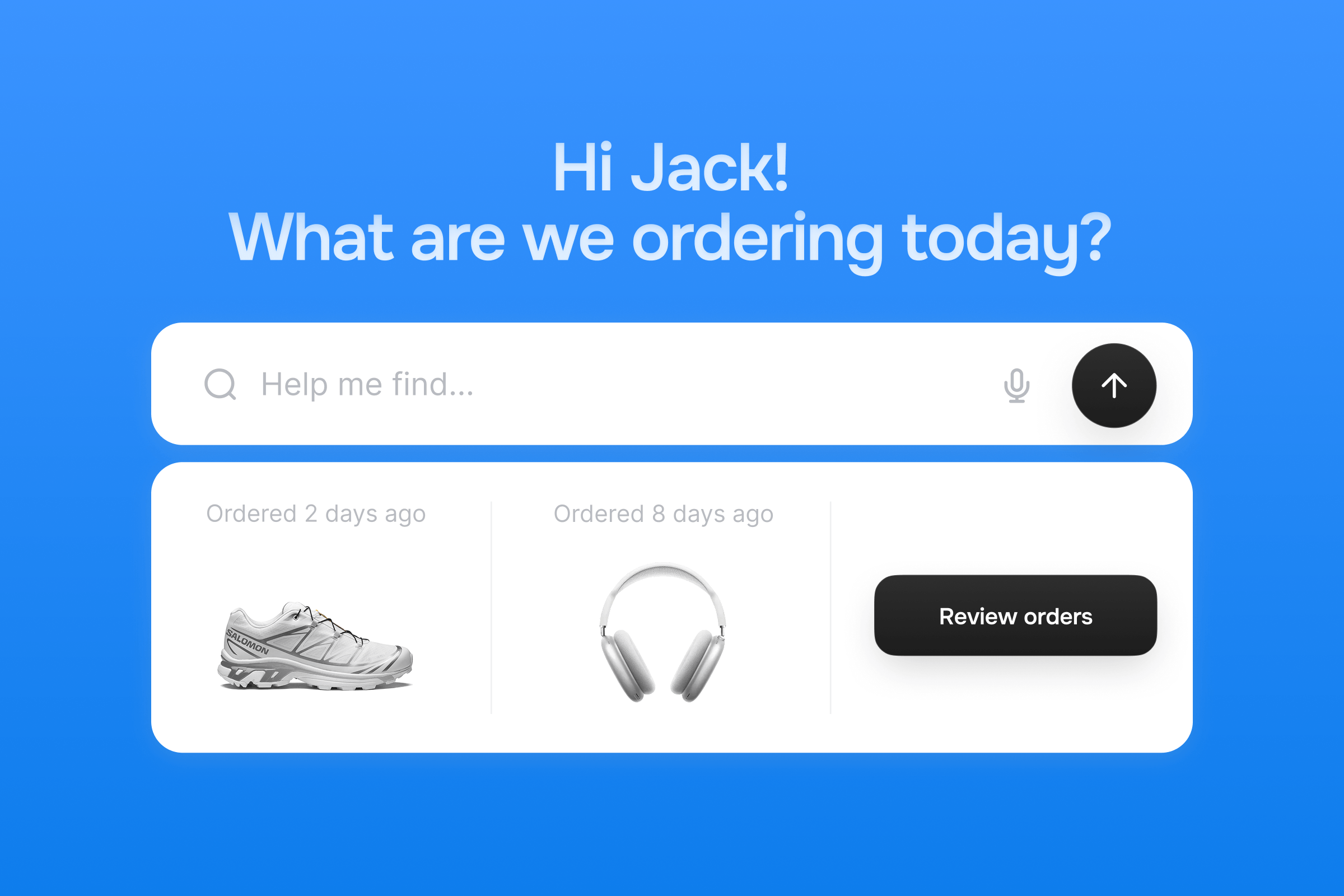
Agentic commerce is shopping powered by AI agents that act on a user's behalf. They can discover, compare, and buy inside a single conversation, without the user visiting a merchant's website.
It's a spectrum, not a single technology. And it helps to be clear about where we actually are on that spectrum.
Right now, we're at the stage where the agent does the legwork by searching, comparing, and narrowing down, but the user stays in control and confirms the purchase.
The next stage is where the industry is heading: fully autonomous payments, where the agent spends on your behalf without checking in.
| Two stages of agentic commerce | Stage 1: AI-assisted shopping | Stage 2: Fully agentic payments |
| Who initiates | User, with AI help | AI agent, autonomously |
| User role | Reviews options, confirms purchase | Sets parameters upfront, delegates everything |
| Example | "Find me a bike" | "Reorder coffee when I'm running low – or when the price drops" |
| Status | Live in the US, several platforms | In beta |
That future isn't here yet commercially, but the infrastructure is being built for it now.
Key players building agentic commerce protocols
The landscape is fragmented, with different players tackling different pieces of the stack. Two protocols dominate the space right now.
OpenAI + Stripe Agentic Commerce Protocol: ChatGPT Instant checkout
Stripe and OpenAI teamed up to build ACP to let ChatGPT users complete purchases without leaving the conversation.
The user describes what they need, ChatGPT helps them narrow it down, and checkout happens right there in the chat via Stripe's : a delegated token with built-in limits on amount, merchant scope, and expiration. No raw card data changes hands.
Source:
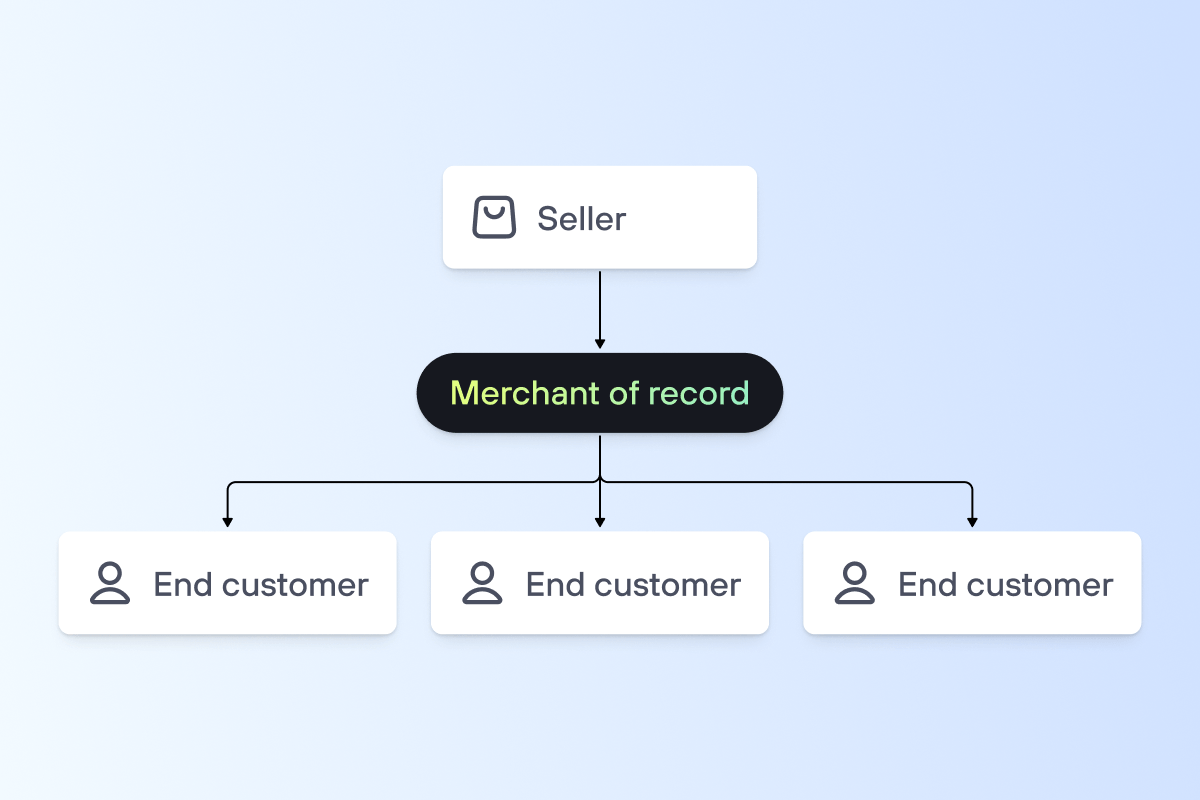
Behind the scenes, responsibility is split across four parties, and the merchant stays in control of most of it:
| Party | Role |
| Buyer | Expresses intent, reviews options, and authorizes payment inside the agent interface. |
| ChatGPT agent | Interprets the request, renders the checkout UI, manages the session flow, collects payment credentials. |
| Merchant | Calculates pricing, taxes, and shipping; manages inventory; processes payment; fulfills the order. Remains the merchant of record throughout. |
| Payment provider | Tokenizes payment credentials with built-in spending constraints; processes the charge when the buyer completes checkout. |
Who can plug it in: Merchants processing through with ACP-compatible APIs built for their product catalog and checkout.
Google Universal Commerce Protocol: Buy in AI search and Gemini
Google went broader. launched in January 2026 with Shopify, Etsy, Wayfair, Walmart, and Target on board, enabling direct checkout inside Google Search's AI Mode and the Gemini app – powered by Google Pay, with PayPal support coming shortly after.
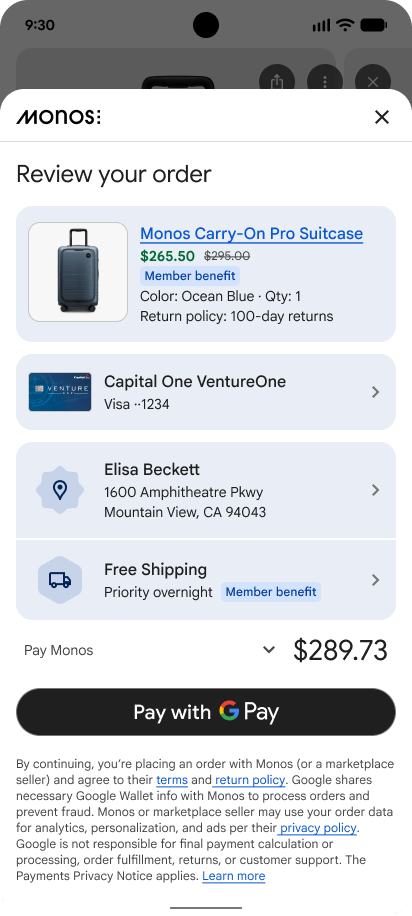
The same four-party split applies here. Google handles the discovery and experience layer, the merchant owns pricing, inventory, fulfillment, and payment processing, and stays the throughout.
The integration lift, however, is real – if you're on a custom-built checkout, you're looking at months engineering work to get UCP off the ground.
Who can plug it in: Anyone with a UCP-compatible API and Shopify merchants.
UCP is designed as an open standard. It’s compatible with MCP, Agent2Agent, and other emerging protocols, which gives it a broader ecosystem play than ACP. Global expansion is on the roadmap, but no timeline has been confirmed.
The bottom line is, there's no unified standard yet that covers both. If you want to show up as purchasable in both ChatGPT and Google, you're building for two separate protocols with different token formats, session logic, and error handling.
How to show up in AI interfaces – and convert when you do
Turning AI-assisted commerce into a revenue channel comes down to two things: getting your products recommended in the first place, and being able to close the transaction when a customer wants to buy. For now, most merchants are behind on both.
Getting discovered in AI interfaces
AI shopping agents don't browse your website the way a human does. They pull from structured data sources like product feeds, schema markup, review aggregators, and real-time inventory APIs.
Abstraction layers win only if the underlying data is machine-executable. If your product data is incomplete, inconsistent, or stale, you won't show up in recommendations regardless of how good your product actually is.
The basics that determine whether you surface:
- Google Merchant Center feed that's clean, complete, and updated in real time. Gaps in pricing, availability, or product attributes directly reduce your recommendation eligibility.
- Structured product schema.org markup on your product pages tells AI crawlers what your products are, what they cost, and whether they're in stock.
- Strong, credible review signals AI agents use to surface products. Volume and recency both matter.
If you’re already investing in feed quality and structured data, you're ahead of most.
Getting the transaction across the line
Discovery without transaction readiness is a broken funnel. If a customer wants to buy through ChatGPT or Google and your checkout can't handle it, but a competitor's can, you've handed away a sale.
Here's what "checkout-ready for AI commerce" actually means:
- API-accessible product and inventory data. Agent platforms query your catalog programmatically for pricing, availability, variants, and shipping options in real time. If that data only lives in your frontend, agents can't reliably consume it.
- Delegated token support. ACP and UCP pass encrypted, constrained payment tokens. Your payment infrastructure needs to handle these natively.
- Session state management. Agentic checkouts are multi-step API conversations: create a session, add items, apply shipping, and confirm payment. Your checkout needs to hold state across those calls without breaking mid-flow.
- Error handling for agent-specific failures. What happens when a product goes out of stock between session creation and payment confirmation? When a price changes mid-session? When a token gets rejected? These need defined behaviors. An agent that hits an unhandled error won't retry and will just move on to the next merchant.
- Unified payment infrastructure. Supporting both ACP and UCP means handling different token formats, session schemas, and error protocols inside the same payment stack. Without and an , you end up maintaining parallel payment logic for each protocol (and for every new agent platform that scales after them).
In other words, you’re best positioned to capture agentic commerce traffic if your infrastructure already supports network tokens, , multi-PSP fallback, and consolidated reporting for your existing channels.
What remains to be solved for agentic commerce to go mainstream?
So we have live protocols from OpenAI and Google, backed by two of the largest consumer platforms in the world. And yet meaningful transaction volumes haven't materialized. Why?
Consumer trust is still catching up
Building trust in a new way to pay takes time and evidence. It took years of infrastructure development and millions of successful transactions before buying online felt normal. Agentic commerce faces the same hurdle, but it's starting from a harder place.
Buyers are asking reasonable questions that nobody has good answers to yet:
- If I pay through ChatGPT instead of the merchant's site, will my money actually reach them?
- How do I verify what I'm actually buying before I confirm?
- If something goes wrong, who do I go to?
The puts a number on it. Globally, 40% of consumers are comfortable letting AI help them shop by browsing, comparing, finding deals. Ask those same people whether they'd let AI complete a purchase without checking first, and the number drops to 6%.
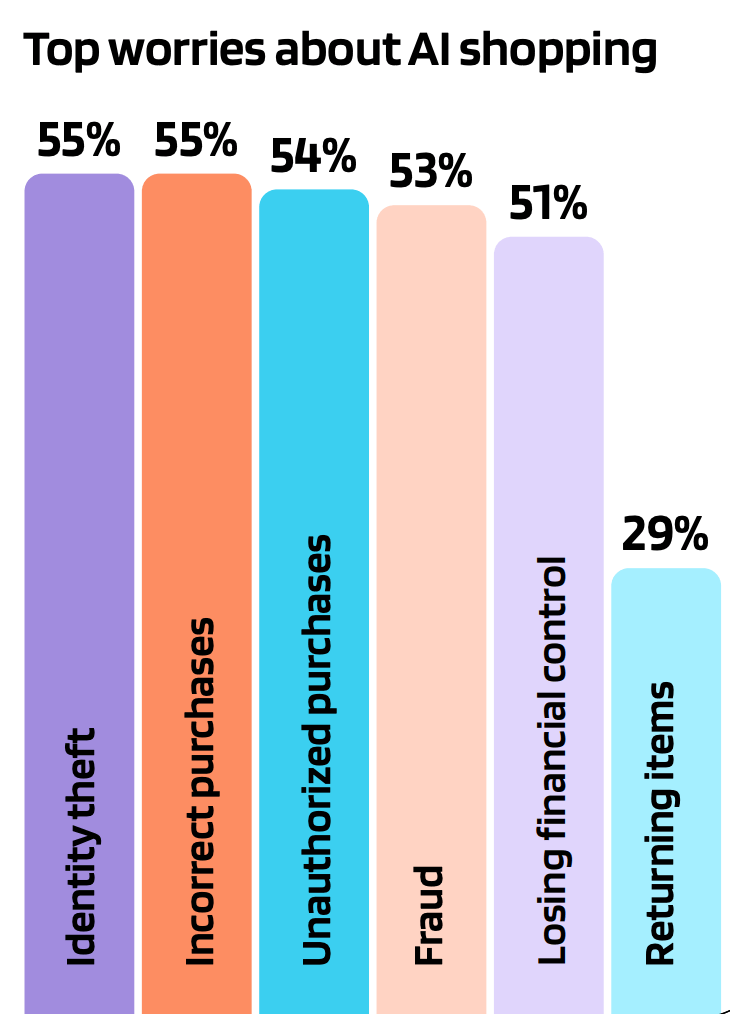
Buyers are more willing to hand off low- and mid-value purchases, but confidence disappears as prices go up.
The pattern is clear: When the stakes are small, AI earns freedom; when the value or emotion grows, humans take back control. – Worldpay report.
Technical implementation is a real lift
Getting agentic commerce working isn't a small project. Especially so for merchants on custom-built checkout systems, who are looking at months of engineering work.
For merchants on Shopify, the platform handles much of the complexity. For everyone else, it's a deliberate build. For many teams, the honest business case right now is "invest now and hope the traffic materializes later."
Geographic reach is still narrow
Both ACP and UCP are currently US-only. Getting to international markets means working through problems that don't have clean solutions yet:
SCA compliance
EU's requires for online payments, meaning the user needs to actively verify the transaction. Agentic flows break that assumption by design. Existing exemptions (recurring mandates, merchant-initiated transactions) were written for , not AI agents operating across multiple merchants mid-session.
Whether they apply is a regulatory grey zone for now. EU authorities haven't formally addressed it yet, and until they do, merchants with high European volumes carry exposure they can't fully quantify.
Local payment methods
The US is heavily card-based, but most markets aren't. iDEAL in the Netherlands, PIX in Brazil, Alipay and WeChat Pay in China – building agent protocols that support these methods is non-trivial and requires market-by-market work.
Cross-border complexity
Currency conversion, exchange rate volatility, customs declarations, international shipping restrictions – none of these are new problems, but they all compound when you're adding a new integration layer on top.
International merchants should be tracking this before building for it.
Fraud models weren't built for this
Traditional fraud systems score human behavioral signals: mouse patterns, typing speed, device fingerprints, IP geolocation.
Agent-initiated transactions don't produce any of these. Instead, they carry agent attestations, mandate compliance records, and cryptographic authorization proofs that most existing risk engines don't know how to read.
Questions that don't have answers yet:
- How do you detect account takeover when an agent makes purchases?
- How do risk engines catch that?
- What does "abnormal behavior" even mean for an agent?
Early testing by fraud providers has already shown the gap in practice: fraud engines have approved orders through agentic flows that would have been declined through traditional checkout.
Merchants need to go in clear-eyed that their current fraud tooling may not cover them for agentic flows.
Protocol fragmentation multiplies the work
Supporting purchases through both ChatGPT and Google means building for both ACP and UCP separately. Different token formats, session logic, anderror handling, with no shared standard between them. No industry consortium has stepped up to drive convergence, and most merchants can't wire this together on their own.
This is exactly the kind of complexity that manages at scale.
The orchestration layer that agentic commerce makes non-negotiable
Most agentic commerce coverage misses a critical operational reality: agents don't retry failed payments the way humans do.
If a payment fails, an agent (especially in commoditized categories) will move to the next merchant that can fulfill the same request. You don't get a second chance.
The payment gaps merchants tolerate today – a PSP outage here, a decline spike in a new market there – can become permanent lost revenue in an agentic channel. Add the protocol fragmentation problem from the previous section, and the complexity stacks up fast.
Payment orchestration exists to solve exactly this. And in an agentic environment, it becomes more valuable:
Routing and fallback become revenue-critical
Smart routing by region, card type, and transaction value already drives from 3% to 15% authorization rate improvements for traditional payments. In an agentic channel with no human retry, that routing logic is the difference between capturing the sale and losing the customer for good.
Multi-protocol support needs an abstraction layer
No engineering team should be rebuilding payment logic from scratch every time a new agent platform reaches scale. Orchestration normalizes token formats, session handling, and fraud signals across ACP, UCP, and whatever comes after them.
Unified reporting stops being optional
Siloed dashboards with one for traditional checkout and another for agentic APIs create reconciliation overhead that compounds badly. Finance and ops teams need a single view across both flows.
Solidgate's already handles smart routing, multi-PSP fallback, and unified reporting across payment channels. Merchants using it today are building the infrastructure that agentic volume will flow through when it arrives.
How Solidgate fits in
Solidgate's orchestration layer is built around exactly these failure modes:
Self-serve payment routing
Solidgate's evaluates transactions against 20+ parameters, including BIN, card type, region, transaction amount, and historical PSP performance.
Merchants can set and adjust routing rules directly in the Hub without touching code, which matters when agent protocols are still evolving, and routing logic may need to change quickly.
Merchants can set and adjust routing rules directly in the Hub without touching code, which matters when agent protocols are still evolving, and routing logic may need to change quickly.
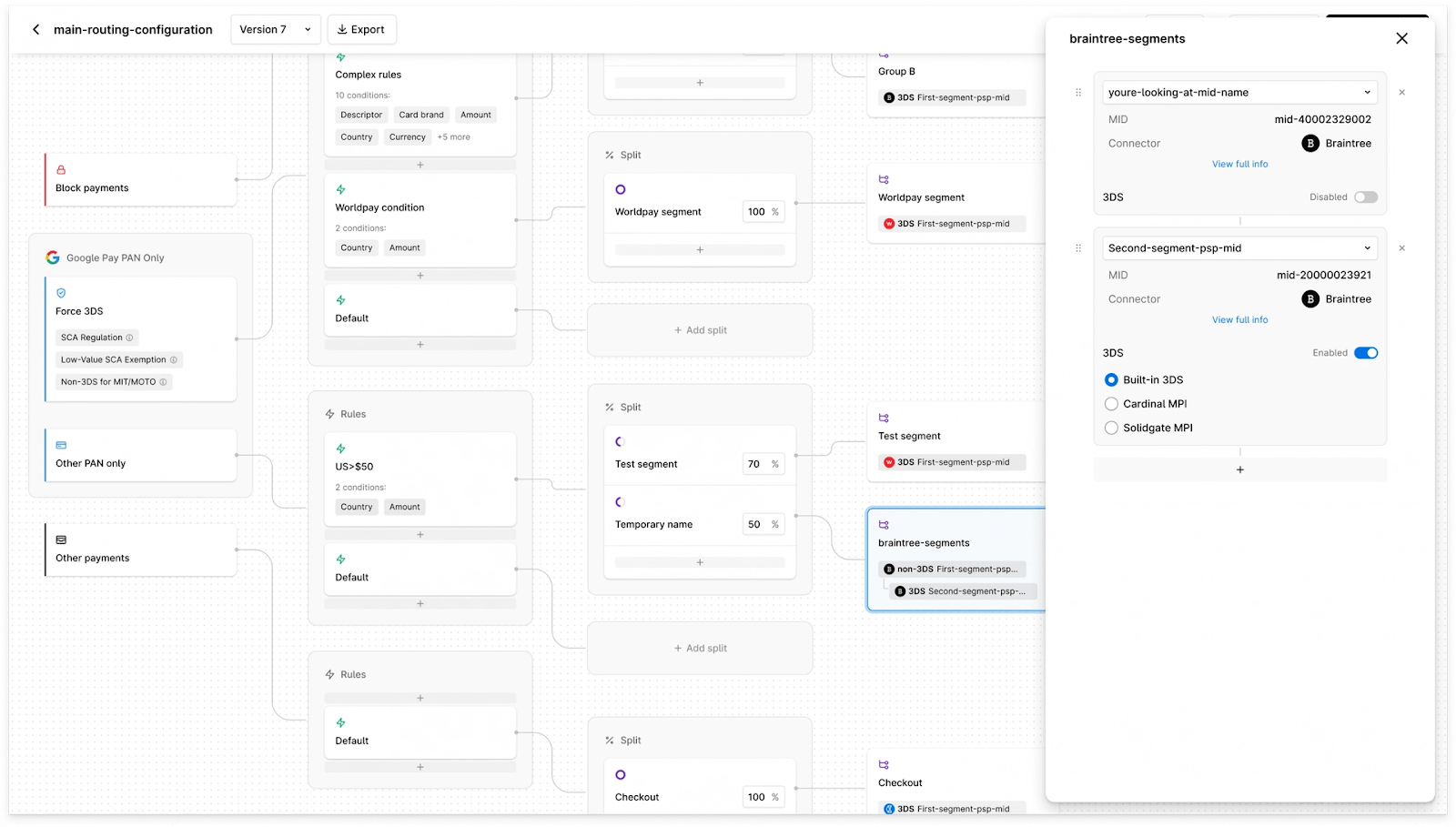
When a PSP goes down or a transaction is declined, Solidgate automatically cascades to the next best provider based on live performance data.
In an agentic channel where there's no human to notice and retry, that automatic failover is what keeps transactions completing.
Full token portability
Solidgate's stores credentials in a PSP-agnostic format. Tokens provisioned through one provider can be used across others in your network.
For agentic flows where token-based credentials are the payment mechanism, this removes the single-provider lock-in that would otherwise expose you to concentration risk.
Global payments connectivity
Solidgate to over 100+ acquirers and payment methods. When agentic protocols expand into new markets, the network is already in place. You're not building point integrations from scratch.
Unified reconciliation across providers
All transaction data across PSPs, payment methods, geographies, and, later, agent platforms, flows into a single reconciliation layer. Finance teams get one source of truth. Operations teams can identify PSP performance issues before they become revenue problems.

Merchants using Solidgate's orchestration today are building the infrastructure that agentic volume will flow through when it arrives.
Looking ahead: What to do now
Agentic commerce is technically real and already in use. People are discovering, comparing, and buying through AI interfaces today.
While the jump to fully autonomous payments is still a few years out, the channel is forming now, and it will take share.
Here's what's worth doing now:
- Audit your checkout for agent-readiness. Can it expose product catalog, pricing, and inventory via clean APIs? Can it accept delegated tokens instead of raw card data? If not, you have foundational work ahead.
- Get your orchestration in order. Smart routing, multi-PSP fallback, unified reporting – merchants who already have these running will absorb agentic volume without operational chaos. Those who don't will be building under pressure when the traffic eventually shows up.
- Keep an eye on the platform you're already on. If you're on Shopify, Google UCP integration may be closer than you think. Platform-native merchants will be the first to see real agentic traffic, and the ones with clean product data and optimized checkout flows will convert more of it.
Agentic commerce will reshape online shopping. The merchants who treat the next 18-24 months as preparation time will be the ones capturing the biggest share of this channel.