Merchant
What is a merchant?
Merchant is a business or individual that accepts card payments in exchange for goods or services. In everyday use, the word describes anyone who sells goods or services for profit. In payments, the term refers specifically to any entity that holds a – an agreement with an acquiring bank that allows the business to process card transactions and receive settlement funds.
Every merchant is assigned a (MID) by their acquirer and categorized by a (MCC) that reflects their primary line of business. Both identifiers are embedded in every transaction the merchant processes and determine how that transaction is priced and underwritten.
Key facts
- Also known as: seller or vendor. In card network messages, the merchant is called the card acceptor.
- Merchant account: the contractual agreement between the merchant and the acquiring bank that enables card payment processing and settlement. Without one, a business can't accept card payments directly.
- MID (Merchant Identification Number): a unique identifier assigned by the acquirer. It links every transaction to the correct merchant account and is required for payment processing.
- MCC (Merchant Category Code): a four-digit code grouping merchants by industry type. The MCC drives interchange rates, card network fees, and acquirer underwriting – a card-not-present subscription business operates under different terms than a brick-and-mortar retail store.
- Primary obligations: compliance with card network rules, PCI DSS security requirements, and the terms of the merchant agreement.
How it works
The merchant is the party that starts every card payment and receives the funds at the end of it:
- Checkout. The enters card details on the merchant's checkout page or taps a card at the merchant's terminal.
- Authorization request. The merchant's (PSP) or gateway sends the request, tagged with the merchant's MID and MCC, to the , which forwards it through the to the cardholder's .
- Approval or decline. The issuer runs its checks and returns a response, which the merchant sees at checkout within seconds.
- Settlement. The merchant captures approved payments, and the acquirer pays the funds into the merchant account during , minus processing fees.
- After the sale. The merchant issues refunds and responds to disputes. If a cardholder files a , the merchant has to provide evidence to keep the funds.
Types of merchants
These categories reflect how a merchant's business model and payment profile affect risk classification and acquiring terms. They aren't mutually exclusive – a single business often fits more than one.
- Card-present merchant: accepts payments in person through a terminal, such as a shop or restaurant. Chip, PIN, and contactless checks make harder to commit fraud with than online sales.
- E-commerce merchant: sells and transacts entirely online; no card is physically present. Higher fraud risk than in-person transactions, which typically results in higher dispute rates and more stringent underwriting requirements.
- Subscription merchant: charges customers on a recurring schedule using stored card credentials. Faces elevated chargeback risk from forgotten subscriptions and failed card updates.
- Marketplace seller: sells through a platform that manages payment infrastructure. The platform's merchant account processes the transaction; the individual seller may not hold a direct acquirer relationship.
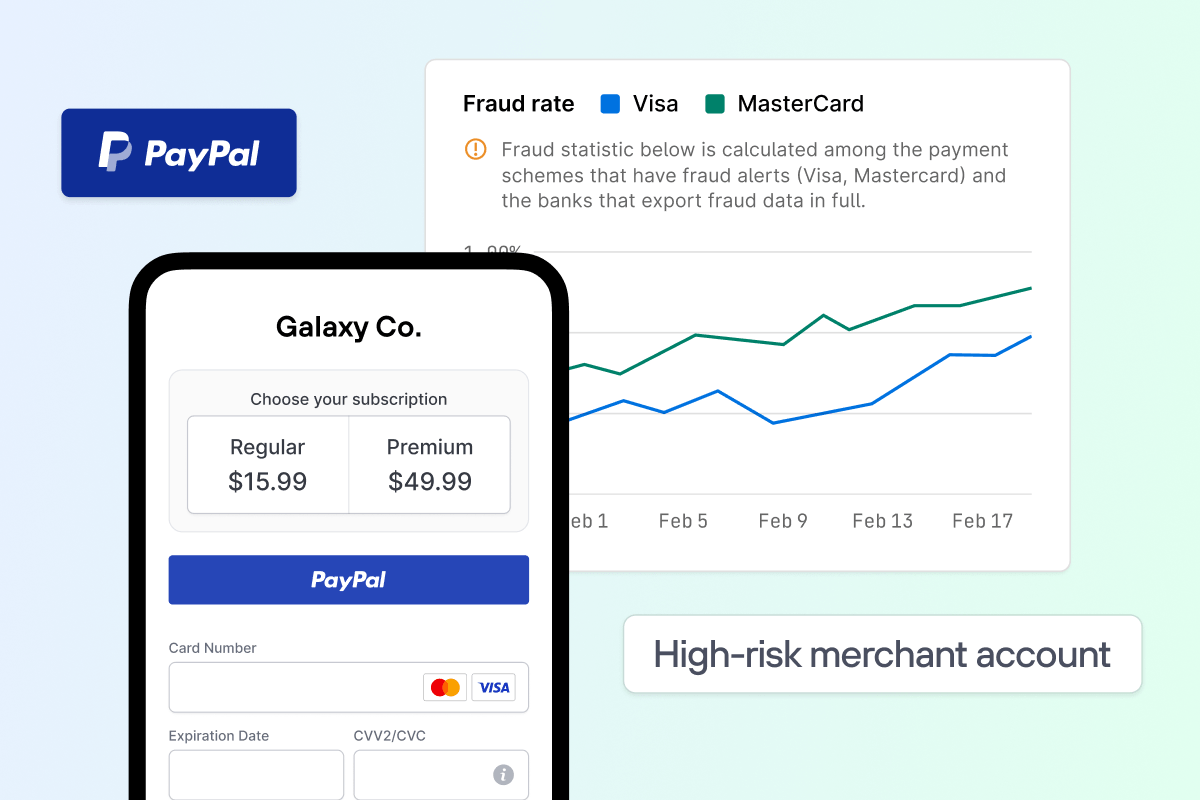
- High-risk merchant: classified as higher risk by acquirers based on industry type – such as gambling, travel, or nutraceuticals – or historical chargeback rates. Typically subject to rolling reserves, higher processing fees, and stricter underwriting.
For example, a supermarket taking contactless payments is a card-present merchant, an online electronics store is an e-commerce merchant, and a video streaming service billing monthly is both an e-commerce and a subscription merchant.
Why it matters
The merchant's MCC, business model, and transaction history determine the terms of their acquiring agreement: the processing fees they pay, any reserve requirements, and the chargeback rate thresholds they must stay under to keep their account in good standing.
Chargebacks are the primary financial risk merchants face in card-not-present environments. When a cardholder disputes a transaction, the issuing bank reverses the funds from the merchant's account pending resolution. Merchants who exceed the card network's chargeback thresholds enter monitoring programs with escalating penalties that can ultimately result in losing the ability to accept card payments.
Not to be confused with merchant of record: a direct merchant processes payments under its own MID and holds chargeback liability directly. A processes payments on behalf of underlying sellers – appearing on the cardholder's statement, absorbing chargeback liability, and handling tax and compliance obligations for those transactions. For the full breakdown, see .