Payment processor
What is a payment processor?
Payment processor is a service that moves card transaction data between the merchant, the banks, and the card networks so a payment can be authorized and the money settled. It sits in the middle of every card payment, sending authorization requests out and returning an approval or decline in seconds.
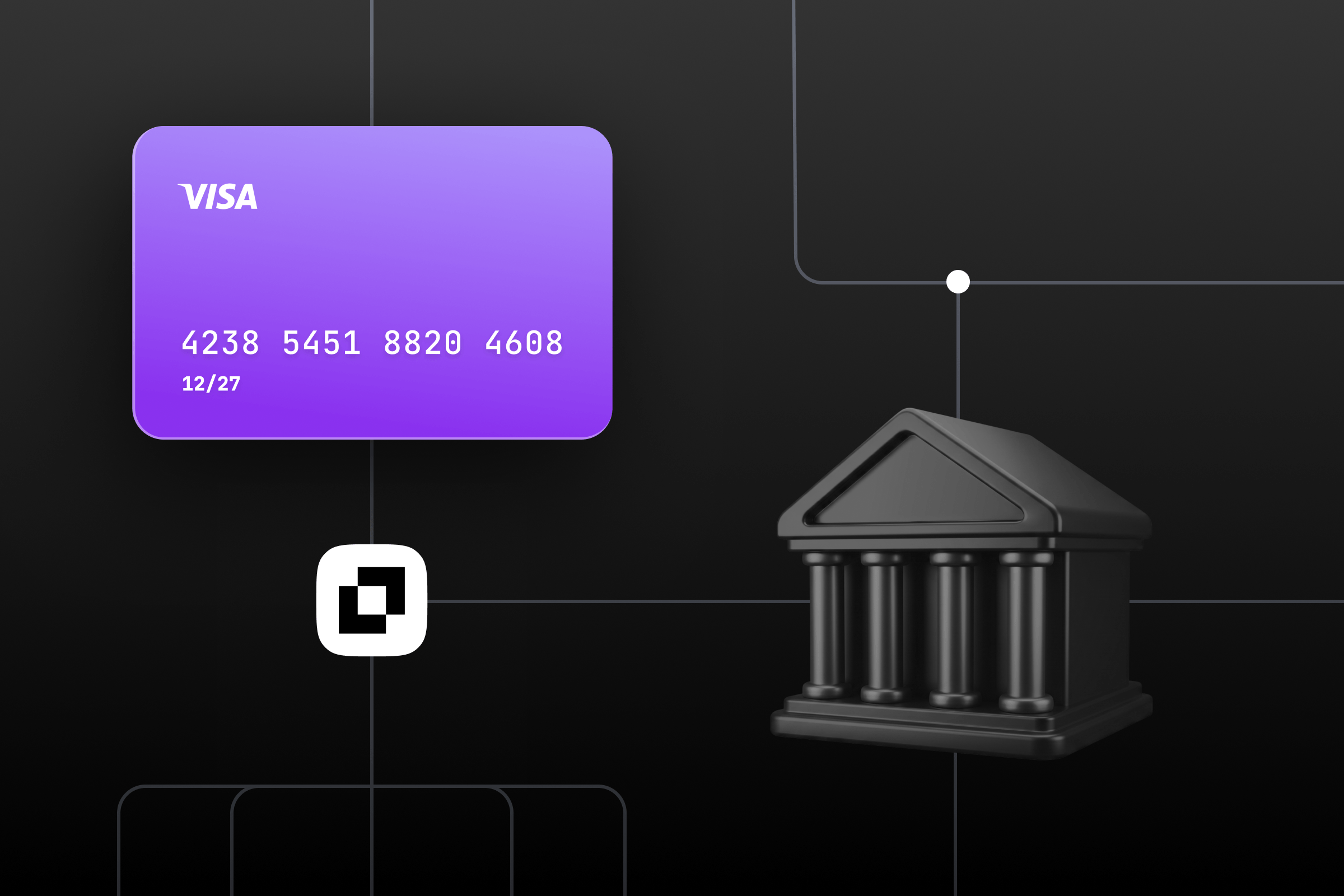
A processor connects the merchant's to the cardholder's through the card networks. It doesn't hold the funds itself; it routes the messages that make authorization, capture, and settlement happen, then confirms the result back to the merchant. Not to be confused with a payment service provider (PSP), which bundles processing with other services (see the comparison below).
Key facts
- Role: intermediary that routes authorization and settlement messages between the banks and the card networks.
- Parties involved: the on the merchant side, the on the cardholder side, and the card networks in between.
- Handles: authorization, capture, and settlement of a transaction.
- Supports: payment cards, , and bank transfers.
- Does not: hold a merchant's funds long term or set interchange rates.
How it works
- Checkout – the cardholder submits card details at the merchant's checkout.
- Authorization request – the processor sends the request to the acquiring bank, which routes it through the card network to the issuing bank.
- Approval or decline – the issuer checks available funds and risk, then returns a response that the processor relays back to the merchant.
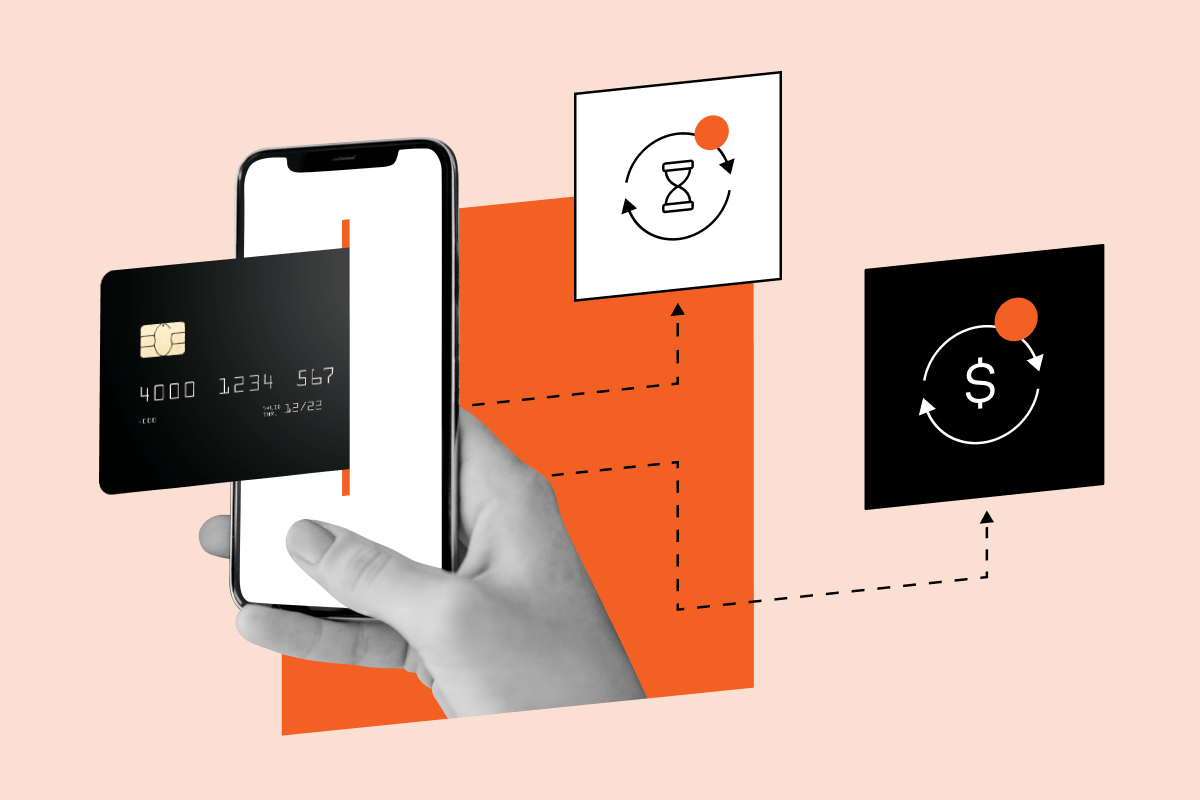
- Capture – the approved amount is flagged for collection, usually batched at the end of the day.
- Settlement – funds move from the issuer to the acquirer and into the merchant's account during .
Payment processor vs payment service provider
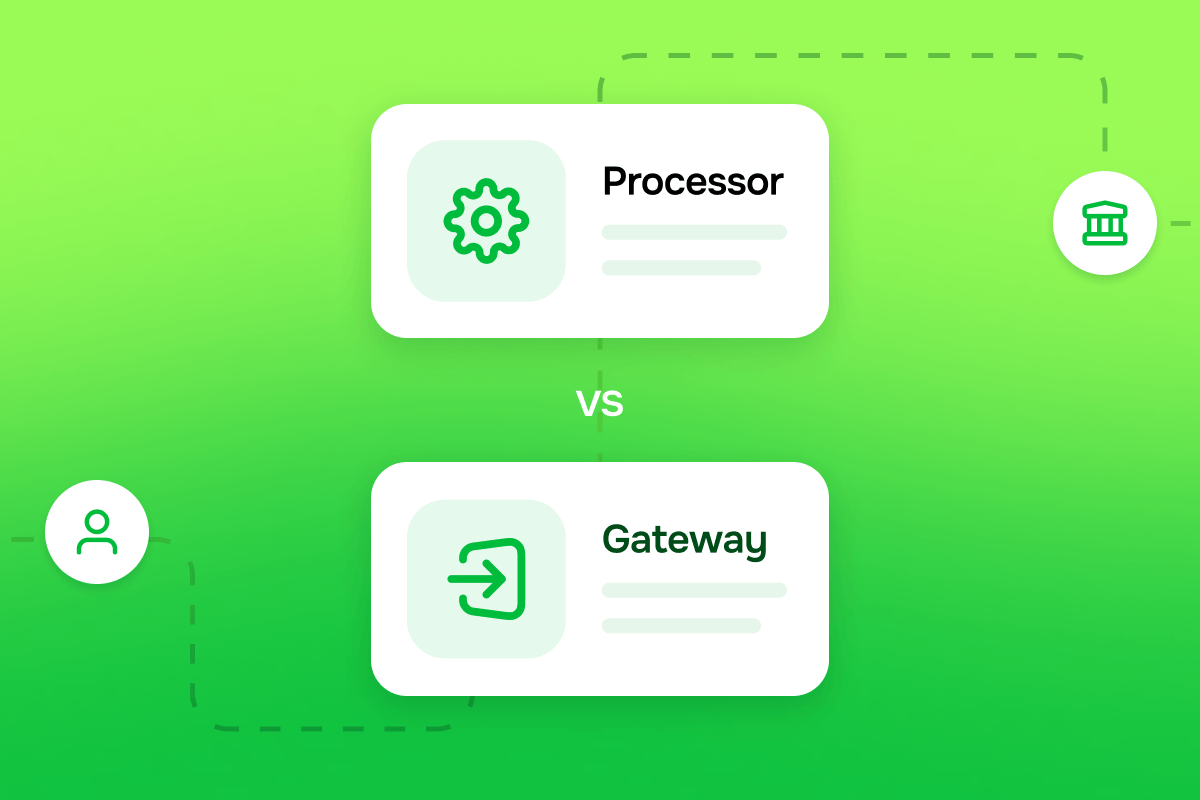
The processor is only the routing layer; the terms below name the account, the front end, and the bank around it.
| Term | What it does |
| Payment processor | Routes authorization and settlement messages between the banks and the card networks. |
| Bundles processing, a merchant account, and a gateway into a single contract. | |
| Captures and encrypts checkout data, then passes it to the processor. | |
| The bank that holds the merchant account and receives the settled funds. |
Why it matters
The processor is the component that decides whether a payment clears in real time, so its reliability and network coverage feed directly into a merchant's approval rate. A processor connected to more acquirers and card networks can route a transaction along a path that's more likely to be approved. Because the same service also handles settlement, it sets how quickly authorized funds land in the merchant's account.