Per-seat pricing
What is Per-seat pricing?
Per-seat pricing is a subscription billing model that charges a fixed fee for each licensed user, or "seat," rather than for how much that user actually uses the product. The total charge scales with headcount: adding a seat adds one unit of the fee, removing one removes it.
It's most common in B2B software, including payment orchestration dashboards, fraud-review tools, and other platforms billed alongside recurring payments. Per-seat fees are typically collected through the same cycle a business already uses for its subscription products, rather than as a separate transaction. Because the fee is tied to seats provisioned and not to logins, transactions processed, or feature usage, two customers with the same seat count pay the same amount even if one team uses the product daily and the other rarely opens it.
Key facts
- Also known as: per-user pricing, per-license pricing
- Fee structure: price per seat × number of licensed seats, charged each billing cycle
- Contrasts with: usage-based pricing, where the fee scales with consumption (transactions, API calls, active users) instead of provisioned licenses
- Applies to: B2B SaaS products, team-based tools, and platforms where access is granted per named user or per role
How it works
- The vendor sets a fixed price per seat, sometimes tiered by role or feature access (admin seat vs. viewer seat).
- The customer is billed for the number of seats provisioned, not the number actively used.
- Seats added mid-cycle are typically prorated; seats removed usually take effect at the next renewal rather than a mid-cycle refund.
- The charge is collected through the vendor's recurring billing cycle, alongside any other subscription line items.
Per-seat pricing vs usage-based pricing
| Model | Fee scales with | Best fit |
| Per-seat pricing | Number of licensed users | Teams where access, not consumption, defines value |
| Usage-based pricing | Actual consumption (transactions, API calls, volume) | Products where usage varies widely between customers |
Why it matters
Per-seat pricing gives a vendor predictable recurring revenue tied to headcount rather than to how actively customers use the product, which is easier to forecast than consumption-based revenue. It also gives the customer a fixed number to budget against each billing cycle, independent of usage swings.
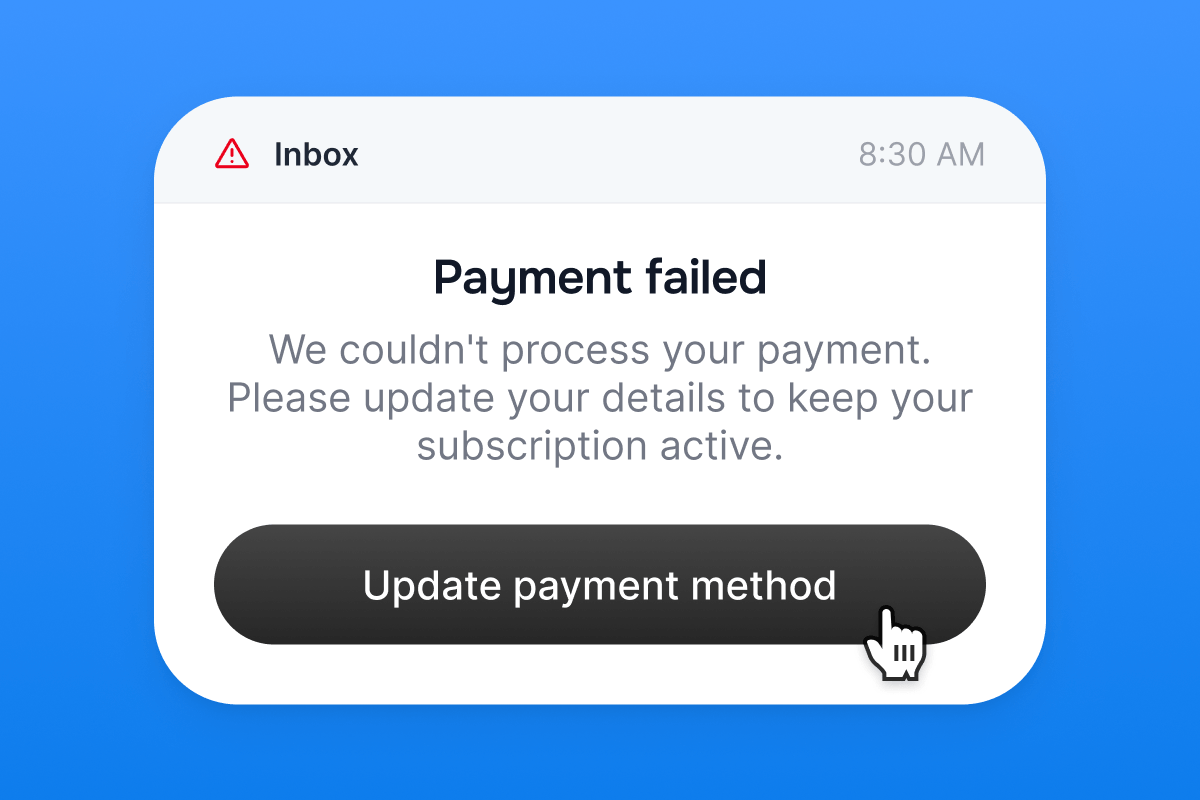
The same fixed structure creates a specific cost problem for the customer: a seat that's provisioned but rarely used still bills at full price, so a company with many inactive or underused seats pays for capacity it isn't drawing on. When a seat-based subscription payment fails at renewal, the recovery step is the same as for any other subscription: , followed by suspension of that seat's access if the retry attempts don't succeed.