Dunning management: How subscription businesses recover failed payments
Payments 101
Updated 8 Oct 2026
9 min

Valentyn Pidpalyi
Product Manager, Solidgate
Failed card payments drive half of subscription churn – and most of those failures are recoverable with the right dunning process in place.
drive 50% of subscription churn – and of those failures are nothing the customer did.
The card expired between billing cycles, the issuer returned a temporary decline, or a bank flagged a charge that would have cleared the next day. The subscriber never saw it happen. Without a recovery process in place, they lapse – and most of them never come back.
Dunning management is the process that catches those failures before they become lost subscribers. A structured flow retries the charge, updates payment details where possible, and contacts the customer only when their input is genuinely needed.
This article covers what dunning management is, how the process works, the practices that raise recovery rate, and the metrics that tell you whether your current setup is working.
TL;DR
- Dunning is the automated process of recovering failed or overdue payments before they become lost customers – through retries, credential updates, and a structured communication sequence.
- Retries and customer notifications run in parallel across a recovery window, and the account stays active throughout.
- The best dunning setups work as one connected flow – prevention, retry logic, customer communication, and compliance running together.
- Four metrics tell you whether it's working: involuntary churn rate, recovery rate, retry success rate, and authorization rate at renewal.
What is dunning?
Dunning is the process of recovering overdue or failed payments through a structured sequence of automated retries and customer communication. It runs across email, SMS, in-app messages, and other channels. Urgency escalates over a defined recovery window until the payment clears or the account suspends.
Dunning applies to any business that charges customers on a cycle — subscription software, streaming services, membership platforms. When a payment fails or goes unpaid, dunning is the system that works to recover it before the failure becomes a lost customer.
What is dunning management?
Dunning management is the system that runs the dunning process automatically across every failed or overdue payment, applying retry logic, communication schedules, and escalation rules without manual intervention. It turns one-off recovery attempts into a repeatable workflow that handles every failed renewal on the same logic, at any volume.
Manual follow-up on failed payments breaks down quickly. A small team can chase a handful of overdue accounts by hand. A subscription base generating hundreds of renewals a cycle produces more failures than any team can clear before the recovery window closes. Dunning management applies the same tested sequence to every failure the moment it happens.
Why dunning management matters
Failed payments are one of the largest sources of subscription revenue loss, and most of that loss is recoverable. of subscription customer churn traces back to failed card payments – the subscriber didn't decide to leave, their payment did.
This is involuntary churn: customers lost to a payment failure rather than a cancellation decision. It behaves differently from voluntary churn because the intent to stay is still there. The customer wanted the service, the renewal broke, and without a recovery process they lapse anyway.
The friction of recovering that customer manually is often enough to lose them for good. Solidgate's found 37% had cancelled a subscription after hitting a payment issue. A declined renewal that forces a customer to re-enter a card, restart a signup, or contact support gives a wanted subscriber a reason to walk.
Dunning management protects the revenue between a failed charge and a lost customer. Every renewal it recovers is that never converts into lost monthly recurring revenue, retained without a discount or a win-back campaign.
Core insight: Involuntary churn is recoverable revenue, not lost demand – the customer still wants the service, so a working recovery process keeps MRR that would otherwise lapse over a payment failure no one chose.
How the dunning process works
Dunning runs as an automated sequence triggered the moment a payment fails or goes overdue. Retries and customer notifications run in parallel across a recovery window, and the subscription stays active throughout so no one loses access over a payment that recovers on a later attempt.
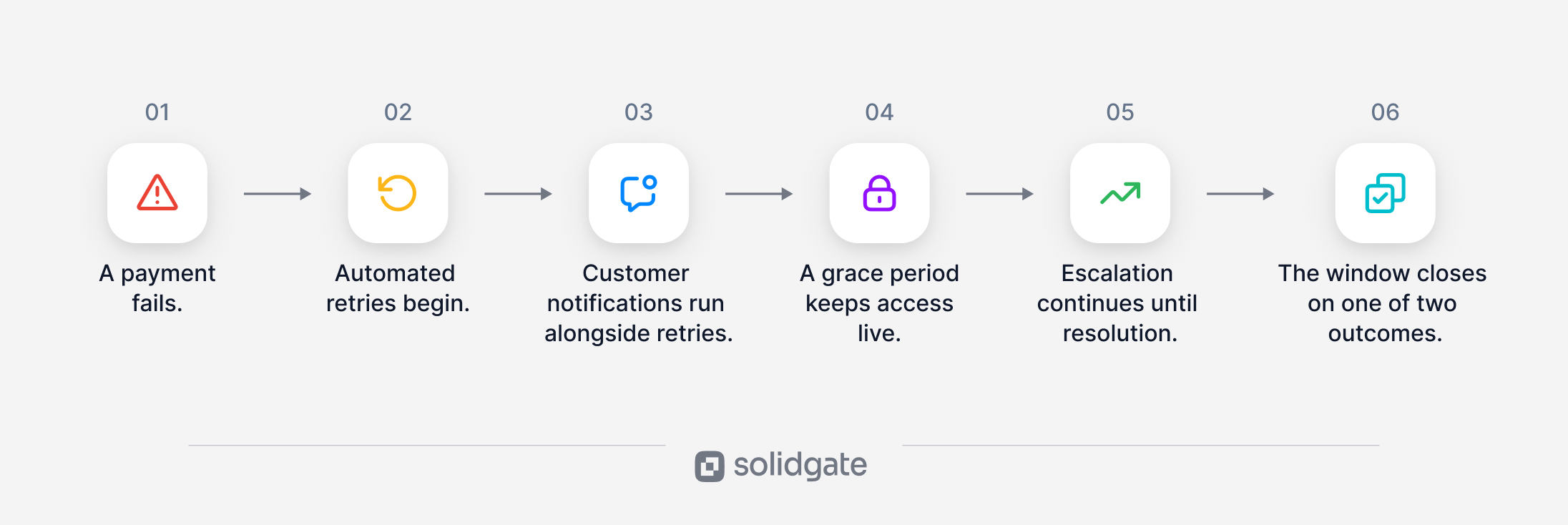
Step 1 – A payment fails. On the renewal date, the system attempts to charge the stored payment method. The charge is declined and the recovery sequence starts automatically.
Step 2 – Automated retries begin. The system reattempts the charge on a schedule across the recovery window – commonly a handful of attempts over two to four weeks. Fixed setups retry on preset days. time each attempt to the decline reason and the issuer's behavior, targeting the moment the card is most likely to approve.
Step 3 – Customer notifications run alongside retries. Emails, SMS, or in-app messages let the subscriber know a payment didn't go through. The tone starts soft – a gentle heads-up – and gets more direct as the window progresses. Every message carries a link to update payment details so fixing it takes one step.
Step 4 – A grace period keeps access live. Throughout the recovery window the subscription stays active. A subscriber whose card clears on the third retry never loses service, and one who updates their card after a notification keeps access without interruption.
Step 5 – Escalation continues until resolution. If early retries and reminders don't recover the payment, the sequence escalates – more direct messaging, stronger urgency, and a final notice before the account suspends.
Step 6 – The window closes on one of two outcomes. A charge succeeds and the subscription returns to active, usually with no visible interruption. Every attempt fails and the subscription suspends or cancels, and the subscriber moves to a win-back flow.
Core insight: Dunning runs retries and customer notifications in parallel across a recovery window – the two tracks work together, and the subscription stays active throughout so recovery can happen without the subscriber losing access.
Dunning process best practices
Here are a few practices to help you manage dunning.
Reaching out before the failure happens
The most effective dunning starts before the charge fails. Notifying a subscriber that their card is about to expire, or that an upcoming charge is due, gives them a chance to update their details before the renewal runs. A prevented failure costs nothing to recover.
Handling soft and hard declines differently
fall into two categories, and the recovery path depends on which one you're dealing with. A soft decline is temporary – the card is valid but the charge couldn't process right now, so a later attempt may clear it. A hard decline is permanent – the card is closed, reported stolen, or the number is invalid.
Soft declines are worth retrying on a schedule. Hard declines need the credential fixed first. An pulls a reissued card automatically; other hard declines require a new payment method from the customer.
Keeping credentials current with tokenization
replaces a stored card number with a network-managed token. When the underlying card is reissued or updated, the token updates automatically – so the renewal charge runs against current credentials without the customer doing anything.
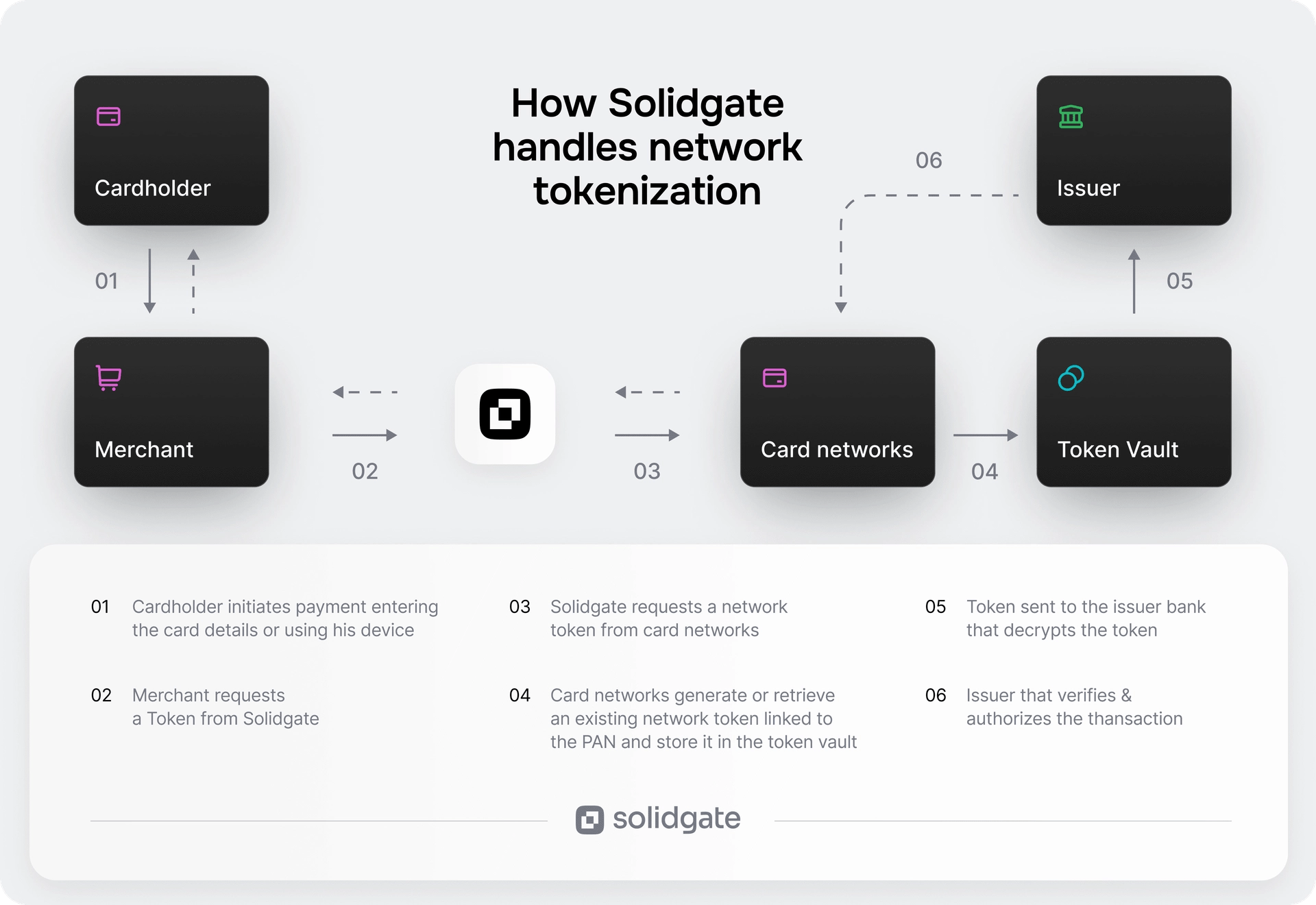
Combined with account updater, it raises first-attempt authorization rates before any retry logic needs to run.
Using multiple communication channels
Reach the subscriber where they'll see it. When a charge needs their action, send the prompt across email, SMS, in-app message, and push. Put a direct link to update payment details in every message, so fixing it takes one tap instead of a hunt through account settings.
Following card-network retry rules
Card networks cap how often a declined charge can be retried, and exceeding the limit incurs fees. caps reattempts within a 30-day window and charges an excessive-reattempt fee once a merchant exceeds it.
issues merchant advice codes that signal per transaction whether to retry and when – one code means wait, another means stop. Retry logic that reads these rules keeps recovery compliant; retry logic that ignores them runs up fees and wasted attempts.
Routing recovery through the strongest path
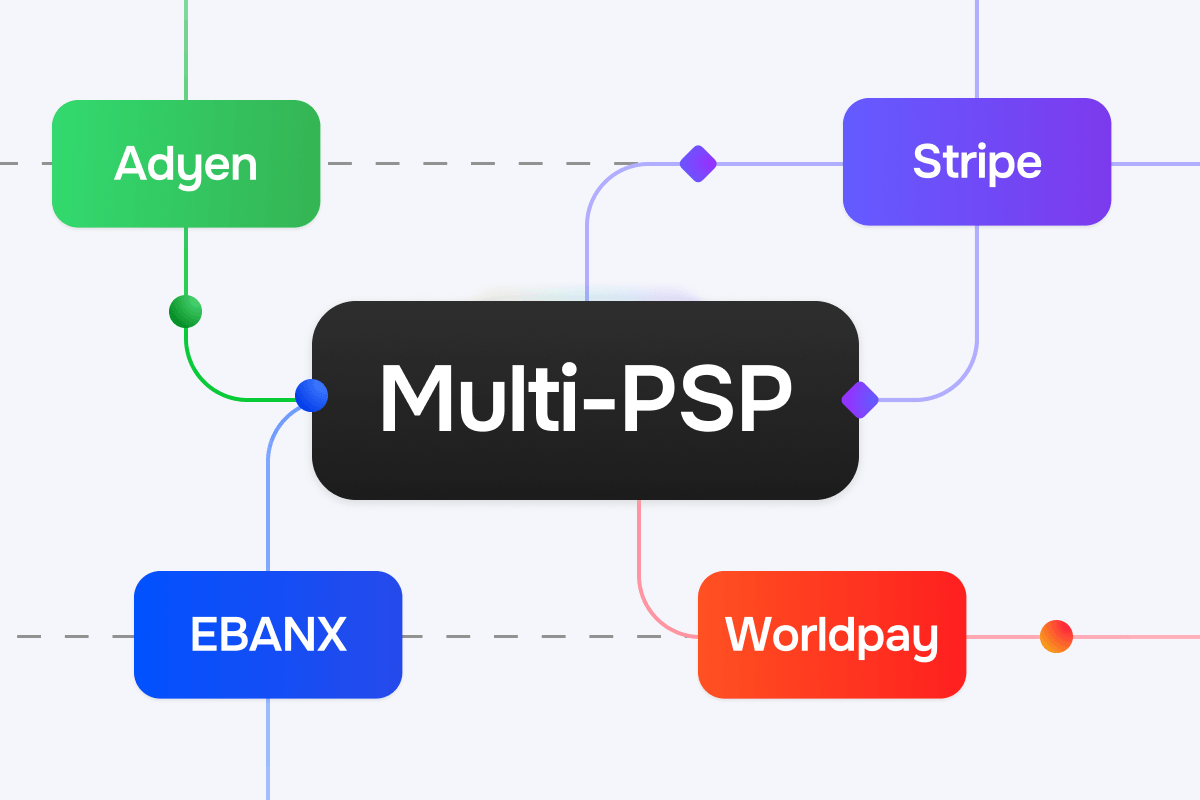
A recovered credential still has to clear, and where it routes affects whether it approves. sends each retry through the best-performing provider for that card and market, so a card that failed on one path gets its next attempt on a stronger one.
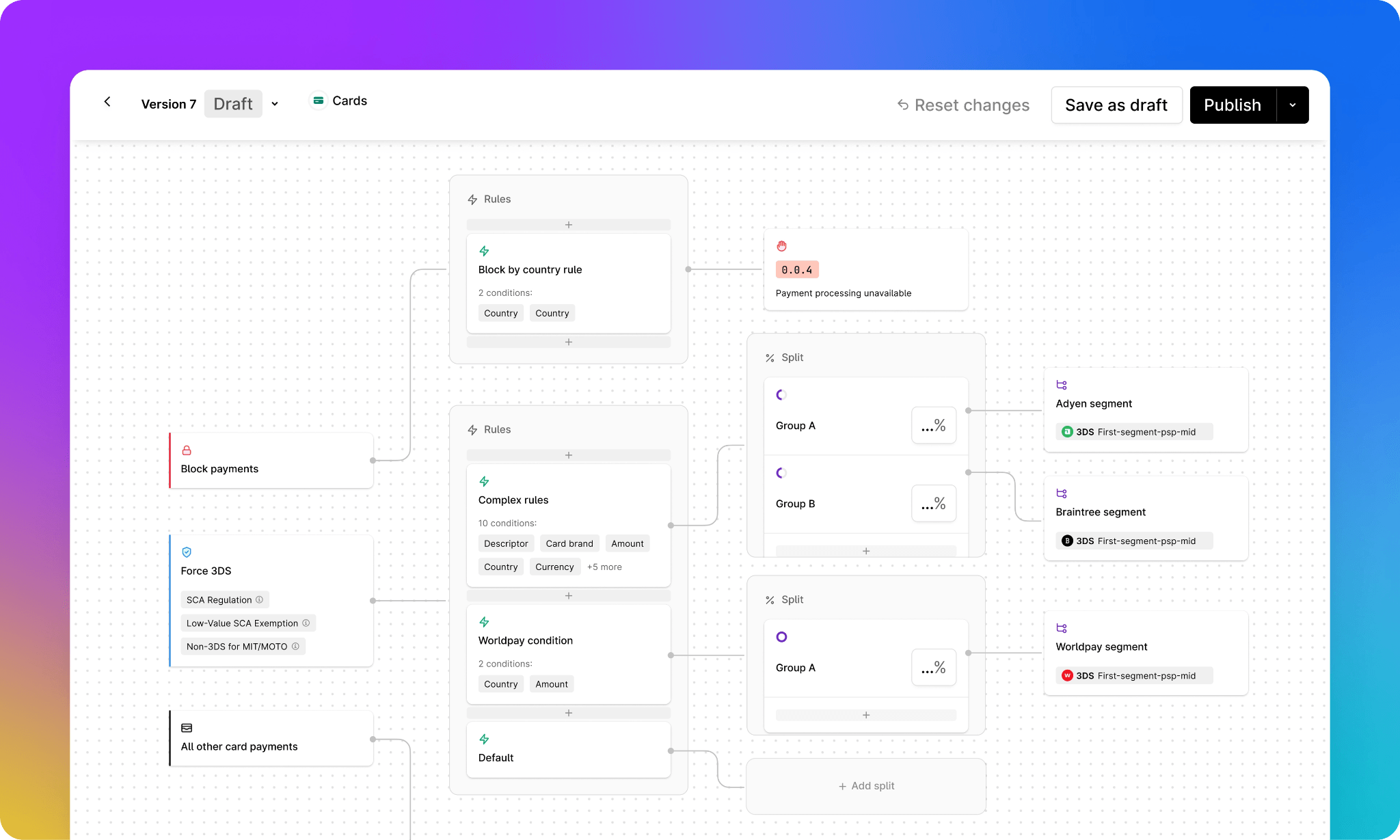
For customers whose cards keep failing, offering removes the card from the equation entirely.
Staying compliant
Dunning touches stored card details and customer inboxes – both of which carry real obligations. Card credentials need to sit inside a -certified environment. Customer notifications fall under GDPR and equivalent privacy rules depending on your markets. Getting this right from the start is simpler than fixing it later.
Core insight: Effective dunning setups combine proactive outreach, decline-aware recovery, and compliant credential handling – prevention, recovery, and communication working as one system.
How to automate dunning
A dunning management system runs recovery without anyone working failures by hand. To set one up:
- Retry logic – configure the number of attempts, intervals, and recovery window length
- Credential refresh – enable an account updater so expired and reissued cards update before the charge runs
- Customer notifications – set the message sequence, channel, and timing for when a fix needs the customer
- Outcome tracking – ensure every failed charge closes with a clear status, recovered or canceled, so churn reporting stays accurate
- Compliance controls – make sure stored card details sit inside a PCI DSS-certified environment and notification flows meet privacy requirements for your markets
A has these parts wired together out of the box.
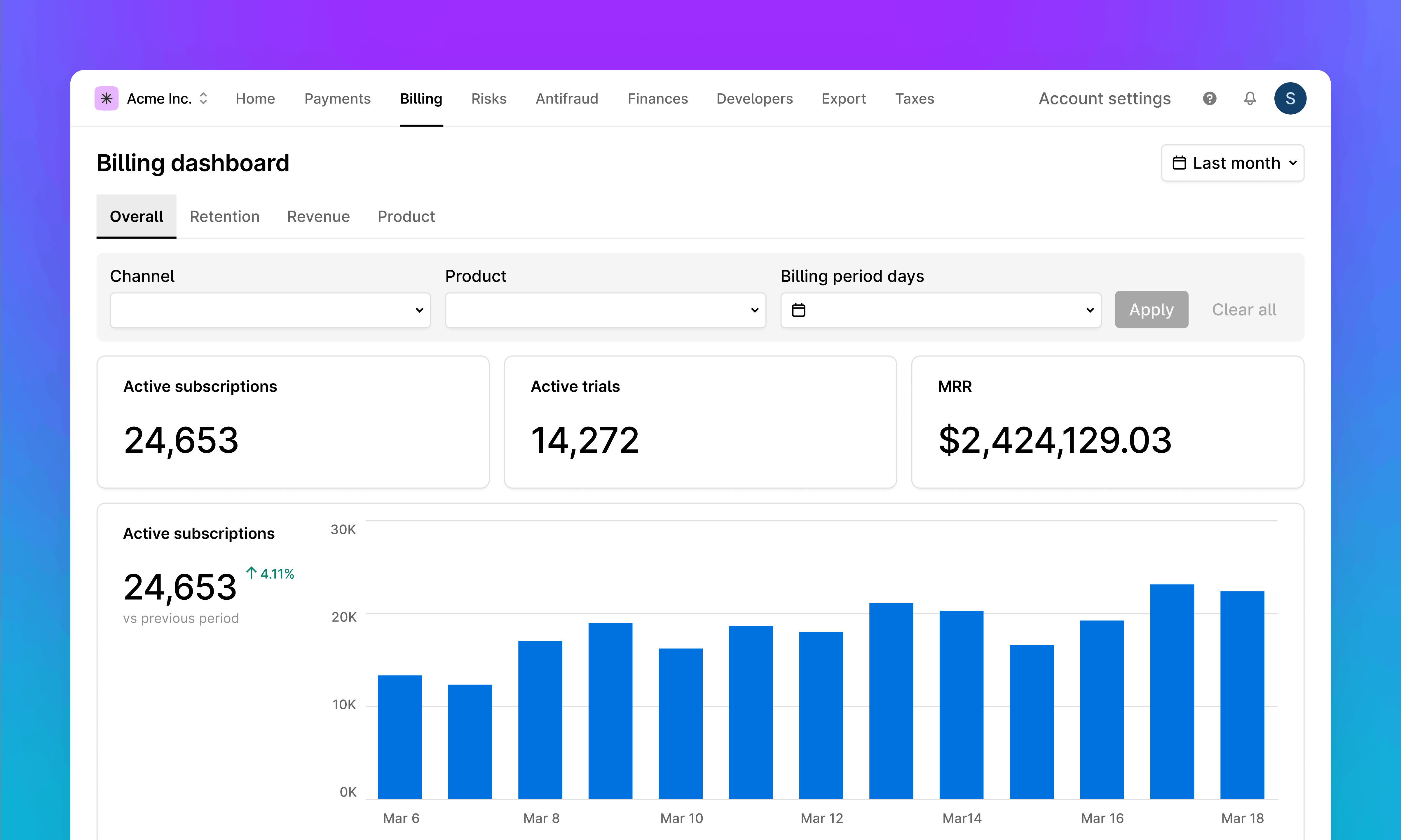
Most subscription businesses running choose a platform for exactly this reason – the flow is already connected.
Core insight: Automated dunning connects retry logic, credential refresh, customer notifications, outcome tracking, and compliance controls into one flow – configured once, running across every failed renewal without manual intervention.
Metrics to track
Tracking the following metrics can tell you whether your dunning management is working.
Involuntary churn rate measures the share of subscriber losses caused by a failed payment. It isolates the churn dunning can address, and a high rate points to prevention and recovery gaps in the dunning flow.
Involuntary churn rate = subscribers lost to failed payments ÷ total active subscribers at start of period × 100
Recovery rate is the share of failed payments dunning gets back. It is the headline measure of the whole flow: a rising recovery rate means retries, credential refresh, and routing are working together, and effective dunning can recover a substantial share of failed charges.
Recovery rate = failed payments recovered ÷ total failed payments × 100
Retry success rate isolates the retry step alone – the share of retried charges that approve. A low retry success rate against a healthy recovery rate points to timing or routing, while both being low points to credential staleness upstream.
Retry success rate = retries that approved ÷ total retry attempts × 100
Authorization rate at renewal is the share of renewal charges that approve on the first attempt, before any retry runs. It measures prevention: the higher it is, the fewer charges reach dunning at all, and rising it through account updater and tokenization is cheaper than recovering the failures downstream.
Authorization rate at renewal = first-attempt approvals ÷ total renewal attempts × 100
Core insight: Involuntary churn rate and authorization rate at renewal measure how many failures the system prevented. Recovery rate and retry success rate measure how many it got back.
Most involuntary churn is recoverable
Dunning management gives businesses a structured way to recover failed payments before they become cancellations. The businesses that recover the most build prevention, retries, and customer communication into one connected flow – and measure the right metrics to know where to improve.
Solidgate is a that connects payments, billing, routing, and fraud management into one integration – so merchants work with one system across every provider they use.
If you're looking to optimize your payment stack and reduce revenue lost to failed renewals,.

+15% payment acceptance
See the Solidgate setup behind the numbers
Frequently asked questions
Dunning is the automated process of recovering failed or overdue payments through retries and customer communication. When a charge doesn't go through, a dunning system reattempts it on a schedule, notifies the customer if their action is needed, and keeps the account active until the payment clears or the recovery window closes.
A dunning email is a message sent to a customer after a payment failure, asking them to fix the issue. It typically carries a direct link to update payment details and escalates in urgency with each follow-up – starting as a soft alert and moving toward a final notice if the payment stays unresolved.
Active dunning combines automated retries with a customer-facing notification sequence – emails, SMS, or in-app prompts that escalate as the recovery window progresses. Passive dunning relies on retries alone, with no outreach to the customer.
Failed payments cause subscribers to lapse even when they intend to stay – their card expired or their bank returned a temporary decline, not a decision to cancel. Dunning management reduces this type of churn by recovering those payments automatically through retries and credential updates, so the subscription continues without interruption. The customer stays active, and the revenue that would have counted as churn is retained.
A dunning letter is a written demand for an overdue payment, traditionally sent by post or formal correspondence. It follows a set escalation – reminder, notice, final warning – and is common in B2B invoicing and collections. In digital billing, automated email sequences cover the same ground faster and at scale.
Recent articles