Negative option billing
What is negative option billing?
Negative option billing is a commercial arrangement where a seller treats a customer's failure to take positive action, such as rejecting an offer or canceling an agreement, as implicit agreement to be billed for products and services.
Unlike traditional subscription offers, the customer isn't required to actively acknowledge or consent to subsequent charges in a negative option billing framework. Instead, customers are automatically enrolled and given the choice to opt out. The model covers free trials that roll into paid plans, clubs that keep shipping until someone cancels, and fixed-term contracts that renew on their own anniversary date.
This presents an appealing opportunity for merchants. Forrester Research reveals that merely 18% of individuals respond to opt-in or opt-out requests. Consequently, negative option billing could result in approximately 82% of customers subscribing, compared to the 18% success rate of traditional opt-in subscriptions.
Key facts
- Also known as: negative option marketing, negative option offer, opt-out billing
- Consent model: enrollment happens by default, and the billing stops only when the customer cancels
- Applies to: free-to-pay trial conversions, continuity plans, automatic renewals, prenotification plans
- Regulated by: the Federal Trade Commission (FTC) in the US, under its Negative Option Rule and the Restore Online Shoppers' Confidence Act (ROSCA), alongside Visa and Mastercard standards for subscription merchants
- Main operational risk: and from customers who don't recognize the charge on their statement
Types of negative option offers
The FTC sorts negative option offers by what triggers the enrollment:
- Prenotification plans. The seller announces an upcoming shipment, and it ships unless the customer declines it within a stated window. Book and record clubs are the original form.
- Continuity plans. The customer agrees up front to receive goods or services at set intervals until they cancel, as with meal kits and razor refills.
- Automatic renewals. A fixed-term subscription rolls into a new term of the same length unless the customer cancels before the renewal date.
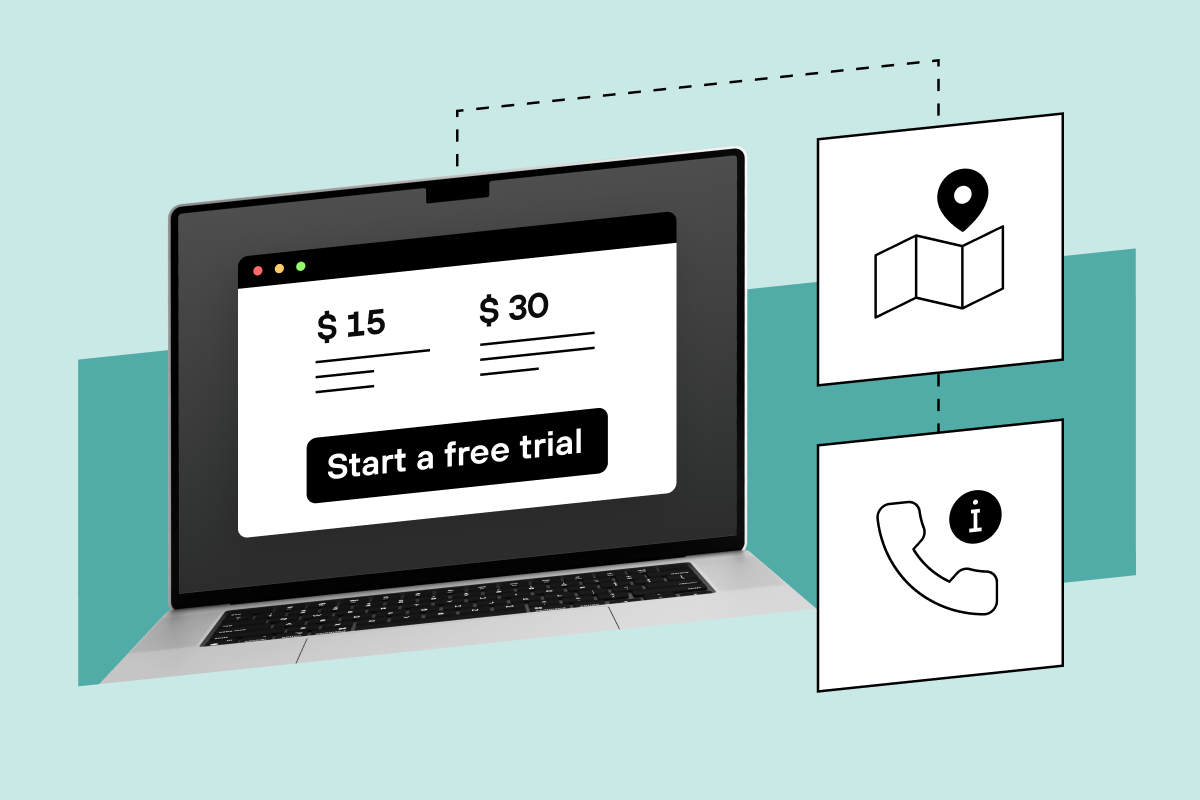
- Free-to-pay conversions. A free or discounted trial converts to a paid plan at full price when the trial window closes.
Free trial offers fall under negative option billing, but they avoid much of the legal and regulatory exposure attached to the model when the subscription price, the first billing date, and the cancellation route are stated clearly throughout signup.
Why it matters
The heavy reliance on often-overlooked fine print in agreements has led to repeated scrutiny and regulation of negative option billing by both the FTC and major card networks. Historically, certain merchants have deliberately obscured recurring charges, assuming that many customers wouldn't notice charges they don't recall signing up for.
Card schemes now write the disclosure mechanics into their rules. Under the Mastercard standards in force since 22 September 2022, a merchant running a trial longer than seven days on a digital good sends the customer a reminder between three and seven days before the trial ends, stating that the subscription will start unless the trial is canceled. Subscription terms, trial length, price, and billing frequency have to appear on the page itself, not behind a link, inside a scrollable message box, or below the fold. After enrollment, the merchant sends an electronic confirmation with cancellation instructions, then an electronic receipt after every subsequent billing.
The US federal picture is unsettled. The FTC's Click-to-Cancel rule was vacated by the Eighth Circuit in July 2025, and in March 2026 the agency opened an Advance Notice of Proposed Rulemaking to rebuild the Negative Option Rule. Enforcement under ROSCA and Section 5 of the FTC Act continued throughout.
An unrecognized line on a card statement is the shortest path from a negative option charge to a dispute. When a merchant's chargeback ratio climbs, the reviews the , the consent record captured at signup, and the history before deciding whether to keep underwriting the account.
How it compares
Negative option billing is defined by when consent is captured, which separates it from the other stored-credential models it gets grouped with:
| Model | How consent is captured | Typical use |
| Negative option billing | Silence counts as agreement; the customer cancels to stop charges | Free trials, continuity clubs, auto-renewals |
| The customer agrees to a stated schedule and price before the first charge | Standard subscriptions | |
| The customer authorizes a stored credential once; the merchant triggers later charges | Renewals, usage-based billing, retries | |
| The customer confirms each purchase against a stored card | Repeat one-off purchases |