Settlement
What is settlement?
Settlement is the stage of the payment process where funds for an approved card transaction move from the to the merchant, through the , with processing fees deducted along the way. It is the point at which an approved sale becomes actual money in the .
Approval and payment are separate events. confirms the card is valid and reserves the amount on the account, but no funds move at that moment. Settlement is the transfer itself, and it happens after clearing, where the acquirer and the issuer exchange transaction records through the and work out the net amount each side owes. Merchants don't receive money transaction by transaction; captured transactions are grouped into batches, and settlement operates on those batches.
Key facts
- Also known as: payment settlement, card settlement
- Position in the flow: after authorization and , before to the merchant's own bank account
- Triggered by: submission of a batch of captured transactions from the merchant to the acquirer
- Net of: , card network scheme fees, and the acquirer's markup, which reach the merchant as a single deducted per sale or as an aggregated deduction per batch
- Timing: set in the acquirer agreement, and it varies by region, card scheme, and payment method
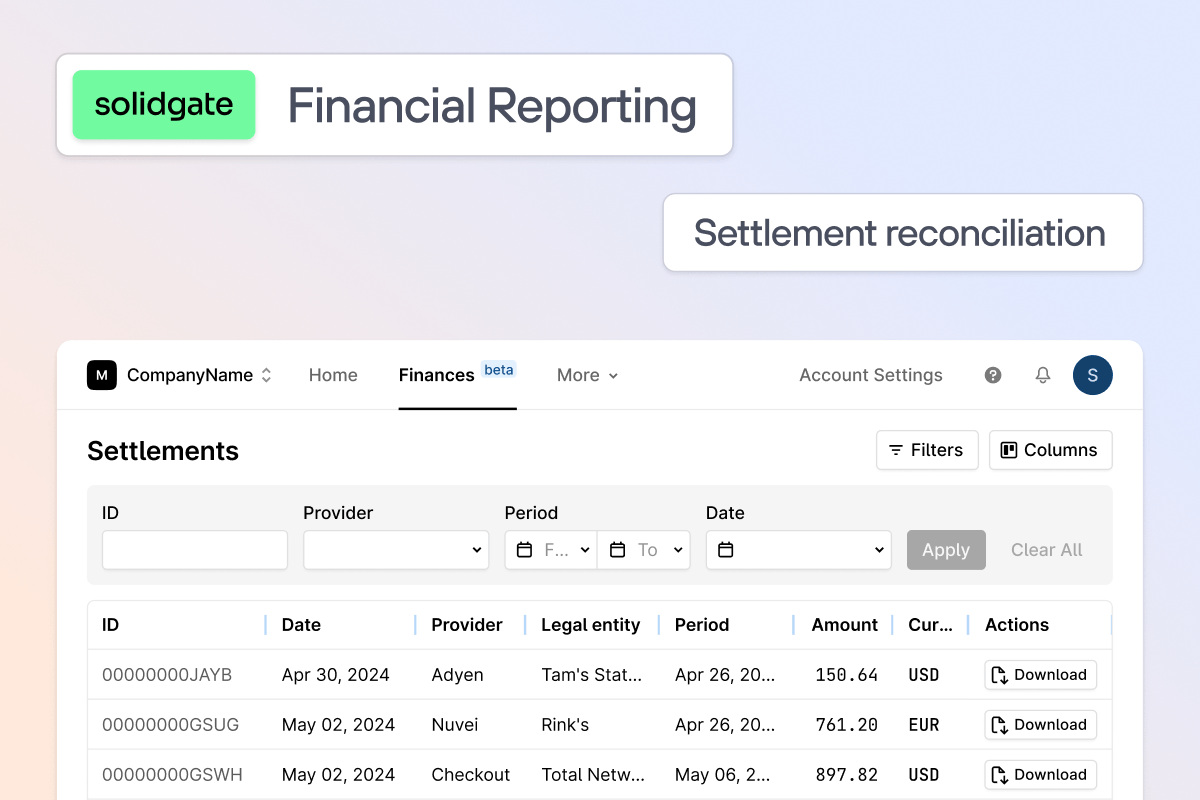
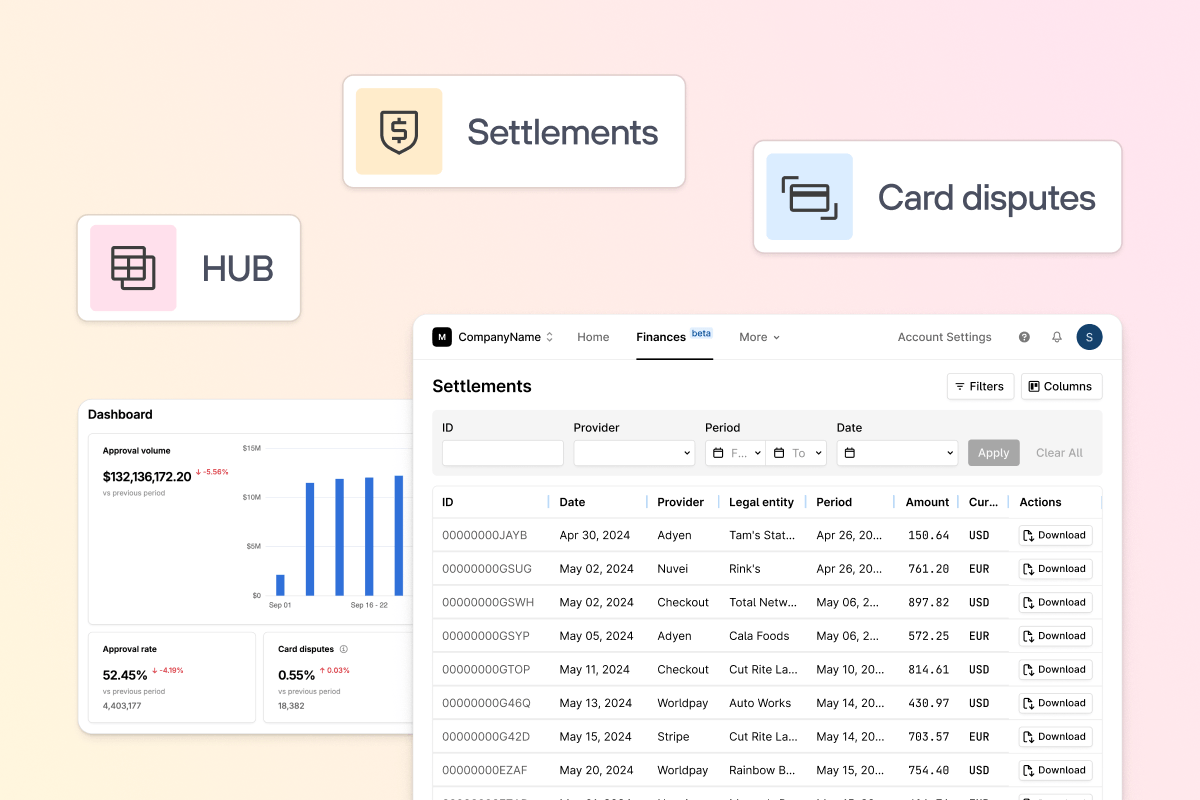
- Reconciled against: the acquirer's settlement report, matched line by line to the merchant's internal
How it works
- Authorization. The issuer checks the card and the available balance and approves or declines the transaction. The approved amount is held on the cardholder's account, and no funds move yet.
- Capture. The merchant confirms the amount to be collected, usually at fulfilment. Captured transactions join the queue for settlement.
- Batching. The acquirer collects captured transactions and submits them through to the relevant card network, rather than sending each one individually.
- Clearing. The card network passes transaction records between the acquirer and the issuer, applies interchange, and calculates the net position each institution owes the other.
- Funding. The issuer transfers funds to the acquirer, which credits the merchant account after deducting . The transfer runs as an between the two institutions.
Why it matters
- Settlement date, not approval date, is when revenue becomes spendable cash. A sale approved on Friday can sit as a held authorization across the weekend and only fund the following week.
- The settlement report is where deducted costs become visible at transaction level: interchange, scheme fees, and acquirer markup are separated there, not on the checkout record.
- and are netted into later settlements, so a settlement amount rarely equals gross sales for the same period.
- Cross-border sales settle in the currency agreed with the acquirer, so the amount credited depends on the applied at settlement rather than the rate displayed at checkout.
- depends on it: matching settlement lines to orders is what confirms the merchant was credited the correct amount and identifies transactions that never funded.
Common issues
- Unsettled batches. A batch that is not submitted or is rejected by the acquirer leaves captured transactions unfunded until it is resubmitted.
- Amounts that don't match orders. Partial captures, refunds, and fee deductions all change the settled figure, which is why settled totals and order totals diverge.
- Reserve deductions. Acquirers holding withhold a portion of each settlement, so the credited amount is lower than the net sales figure for the period.
- Currency differences. When the transaction currency and the settlement currency differ, conversion happens on the acquirer's side, and at checkout adds a second conversion point.
- Missing references. Investigating a settlement discrepancy requires the that ties a settlement line back to the original transaction.