Holdback
What is holdback?
Holdback is a portion of a merchant's settlement funds that an or payment provider withholds until a predetermined period has elapsed or certain conditions have been met. The withheld money accumulates in a reserve balance and covers , , and fees that arrive after the sale has already been paid out.
The holdback amount is usually a percentage of the merchant's transaction volume, and the terms are fixed during and written into the merchant agreement. , merchant service providers, and acquiring banks apply holdbacks where post-sale liability is highest: high-risk industries, businesses with a history of chargeback issues, long fulfilment lead times, and new accounts with no processing record. The term overlaps with , which names the balance the withheld funds sit in, and with , the structure where each settlement batch is held for a fixed window and released in sequence.
Key facts
- Set by: the acquiring bank or payment provider, during underwriting
- Sized as: a percentage of settlement volume, sometimes capped at a fixed total
- Held for: a period long enough to outlast the window in which cardholders can dispute a transaction. Filing windows vary by scheme and reason code, so hold periods vary by acquirer agreement
- Applies to: , newly approved accounts, and subscription or pre-order models where delivery follows payment
- Draws against it: chargebacks, refunds, scheme fines, and unpaid processing fees
- Released: on the schedule in the merchant agreement, net of whatever has been drawn
How it works
- Terms are set at underwriting. The acquiring bank assesses the merchant's category, processing history, delivery model, and expected chargeback exposure, then sets the holdback percentage and hold period as a condition of approval.
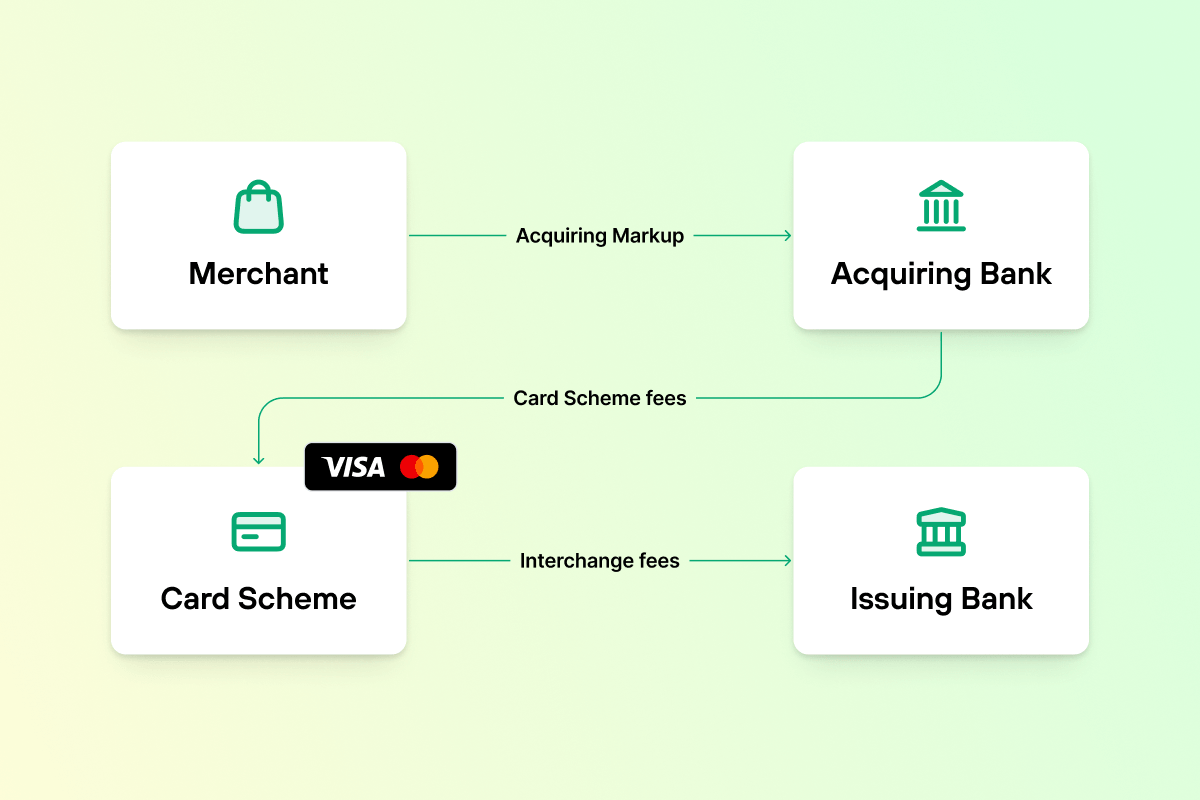
- A transaction settles. The acquirer receives the funds from the issuer through the card network and calculates the merchant's payout for the batch.
- A share of the payout is withheld. The holdback percentage is deducted from the batch and moved into the merchant's reserve balance instead of the payable balance. The merchant sees the gross sale in reporting and the net amount in the payout.
- The balance absorbs post-sale liabilities. Chargebacks filed against the merchant, refunds issued after payout, and fees are drawn from the reserve before the acquirer asks the merchant for funds.
- The remainder is released. Once the hold period on a given batch expires, what's left of that batch's holdback is paid out. Under a rolling structure this happens continuously, so a release and a new deduction occur in the same settlement cycle.
Why it matters
- Chargeback liability doesn't end at settlement. A cardholder can dispute a transaction well after the merchant has been paid, and if the merchant can't fund the reversal, the acquirer covers it. The holdback gives the acquirer a claim on money it has already collected.
- It's the condition that makes some accounts approvable. Merchants that would be declined outright at underwriting get a by accepting a holdback, so the mechanism decides whether certain businesses can accept cards at all.
- It ties up working capital. Withheld funds don't appear in the available balance, so a business growing quickly has a growing amount held back at the point where it needs cash for inventory and acquisition.
- Refunds draw against the same balance as disputes. A spike in returns reduces what gets released at the end of the hold period, even when the merchant's chargeback ratio is flat.
Common issues
- Cash flow strain. Subscription and fast-growing merchants feel a percentage holdback hardest, because the withheld amount scales with volume while the released amount reflects volume from months earlier.
- Terms tightened mid-relationship. When a merchant's chargeback ratio rises above the acquirer's threshold, the holdback percentage or the hold period gets raised, often alongside additional monitoring.
- Funds held after account closure. Closing a merchant account doesn't release the reserve. The balance stays held until the dispute window on the last processed transactions has passed.
- Reconciliation gaps. Merchant agreements state the percentage clearly but describe release mechanics loosely, which makes matching payouts against gross sales harder than it looks.