What Is a Merchant of Record?
Merchant of Record Definition
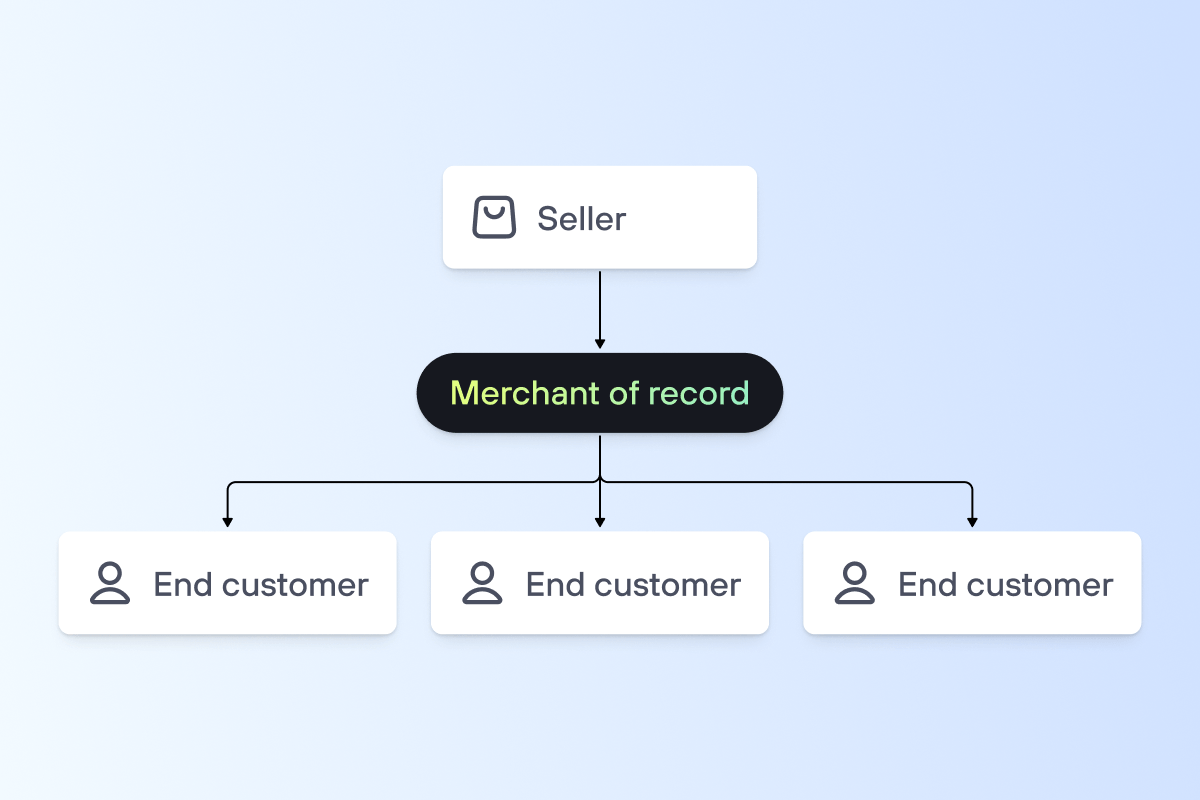
Merchant of Record (MoR) is an entity that accepts payment card transactions and carries full responsibility for , refunds, and compliance with payment industry rules on behalf of other businesses. In the eyes of , banks, and regulators, the MoR is the official merchant, even when transactions are made for third-party sellers or service providers.
Merchant of Record Responsibilities
Key responsibilities of a Merchant of Record include:
- Financial responsibility
It is fully liable for disputes, chargebacks, and refunds, regardless of which business delivered the goods or services. They must also hold reserves to cover potential losses and risks. - Regulatory compliance
It must meet standards, (AML) rules, tax duties, and regional regulations in all jurisdictions where it processes payments. This includes accurate reporting, record-keeping, and customer verification. - Payment processing
MoR manages relationships with and processors, oversees integrations, fraud checks, and transaction routing. They appear on customers’ card statements and act as the main contact for payment-related issues. - Business use cases
E-commerce platforms, SaaS providers, and marketplaces often rely on MoR services to simplify payment acceptance. This allows smaller businesses to accept payments without opening their merchant accounts or handling complex compliance.
Merchant of Record Examples
- Amazon: Processes payments and handles regulatory requirements for third-party sellers, with Amazon appearing on customer bank statements.
- Airbnb: Collects payments from guests and pays hosts, managing financial transactions and related compliance.
- Etsy: Acts as the MoR for sellers on its platform, managing payments and regulatory responsibilities.
- PayPal: Serves as the MoR for businesses using its services, facilitating payments between buyers and sellers.
- Google Play: Handles transactions for app purchases, with customers paying Google, not the app developers directly.
The MoR model lets businesses shift payment and compliance complexity to a trusted provider, helping them focus on core operations while reducing risk. Choosing a reliable MoR partner is critical to protect revenue and reputation.