Retrieval reference number
What is the retrieval reference number (RRN)?
Retrieval reference number (RRN) is a unique alphanumeric identifier the acquiring bank assigns to a card transaction at authorization. It lets banks and merchants trace and locate one specific transaction record when the needs details about a purchase – for example, when a cardholder raises a query or starts a on a disputed charge.
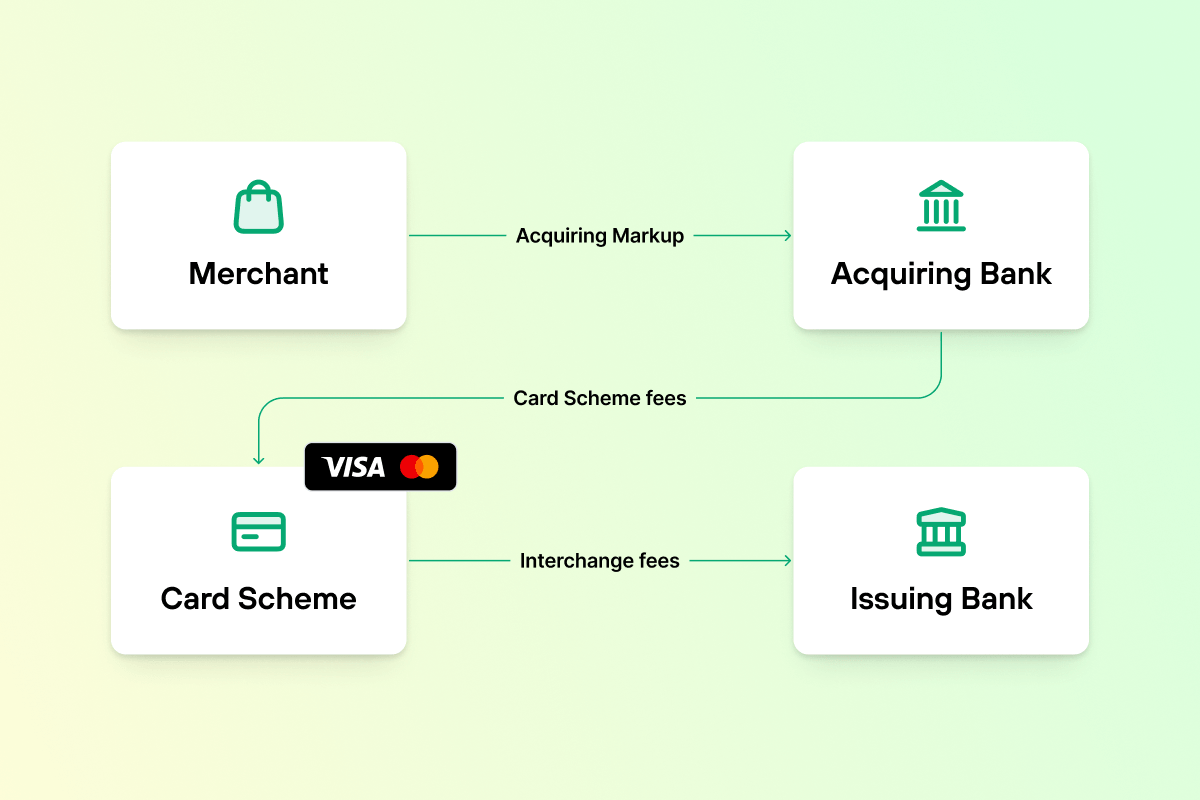
The RRN travels with the transaction from authorization through clearing and settlement, so the merchant, the , the , and the issuer all hold the same reference against their own copy of the payment. That shared key is what makes reconciliation and dispute resolution work without exchanging full card data – the issuer can pinpoint a single transaction among millions instead of matching by amount, date, and merchant name alone.
Key facts
- Assigned by: the acquiring bank or processor, at the point of authorization.
- Format: a 12-character alphanumeric value, carried as field 37 in the ISO 8583 messaging standard.
- Also called: RRN; some schemes and processors label it the transaction reference number. Card terminal receipts often show it as "RRN" or "Ref No."
- Travels through: authorization requests and responses, batch settlement files, and dispute documentation.
- Required in: retrieval request responses and chargeback evidence packages.
How the RRN works
- Generated at authorization: When a cardholder pays, the acquiring bank creates the RRN and includes it in the authorization request sent to the card network.
- Forwarded to the issuer: The card network passes the request – with the RRN embedded – to the issuing bank for an approval or decline decision.
- Recorded by the issuer: The issuing bank stores the RRN in its transaction logs alongside the authorization response.
- Carried into settlement: At settlement, the acquirer includes the RRN in batch files so each funded transaction matches its original authorization.
- Used to retrieve the transaction: If the cardholder disputes the charge, the issuer cites the RRN in a retrieval request or chargeback notice to identify the exact transaction.
- Returned by the acquirer: The acquirer matches the RRN to its records and returns the requested data, closing the inquiry or dispute.
Retrieval reference number vs other transaction identifiers
A single payment carries several identifiers, and they're easy to confuse. The RRN is the value banks use to locate a transaction during an inquiry; the others identify it for settlement, internal systems, or approval.
| Identifier | Generated by | Format | Primary use |
| Retrieval reference number (RRN) | Acquirer | 12-character alphanumeric (ISO 8583 field 37) | Locate and trace a transaction during inquiries and retrieval requests |
| (ARN) | Acquirer | 23-digit numeric | Track a cleared transaction, especially refunds, through settlement |
| Payment processor or gateway | Varies by provider | Identify the transaction inside the merchant's and processor's own systems | |
| Authorization code | Issuer | 6-character | Confirm that the issuer approved the transaction |
Where to find the RRN
- Merchant: in the payment processor or acquirer dashboard and in transaction or settlement reports, listed against the order.
- Cardholder: not printed on a card statement; a cardholder who needs it requests it from the merchant or their issuing bank. For in-store card payments, it's often printed on the terminal receipt.
- Developer: in the transaction details returned by the processor's API or transaction webhook, usually in a reference or RRN field.