Billing cycle
What is a billing cycle?
Billing cycle is the recurring interval between two consecutive billing dates, over which a customer's charges accumulate before an invoice or statement is issued. Each cycle has a start date, an end date, and a payment due date that together set when a merchant collects revenue.
Most billing cycles run monthly or annually, though weekly, quarterly, and usage-based windows are common too. The cycle length is fixed at signup and anchors every downstream event: when a card on file is charged, when a is retried after a decline, and what date range shows up on the customer's statement. In subscription and SaaS models, it's also the unit finance teams use to recognize revenue and measure churn.
Key facts
- Also known as: billing period, billing interval
- Typical lengths: monthly, quarterly, annual, weekly, or usage-based
- Anchor date: either the signup date or a fixed calendar date, such as the 1st of each month
- Key dates: cycle start, cycle end, statement/invoice date, payment due date, and any grace period
- Applies to: subscriptions, SaaS, utilities, credit card accounts, and any model
How a billing cycle works
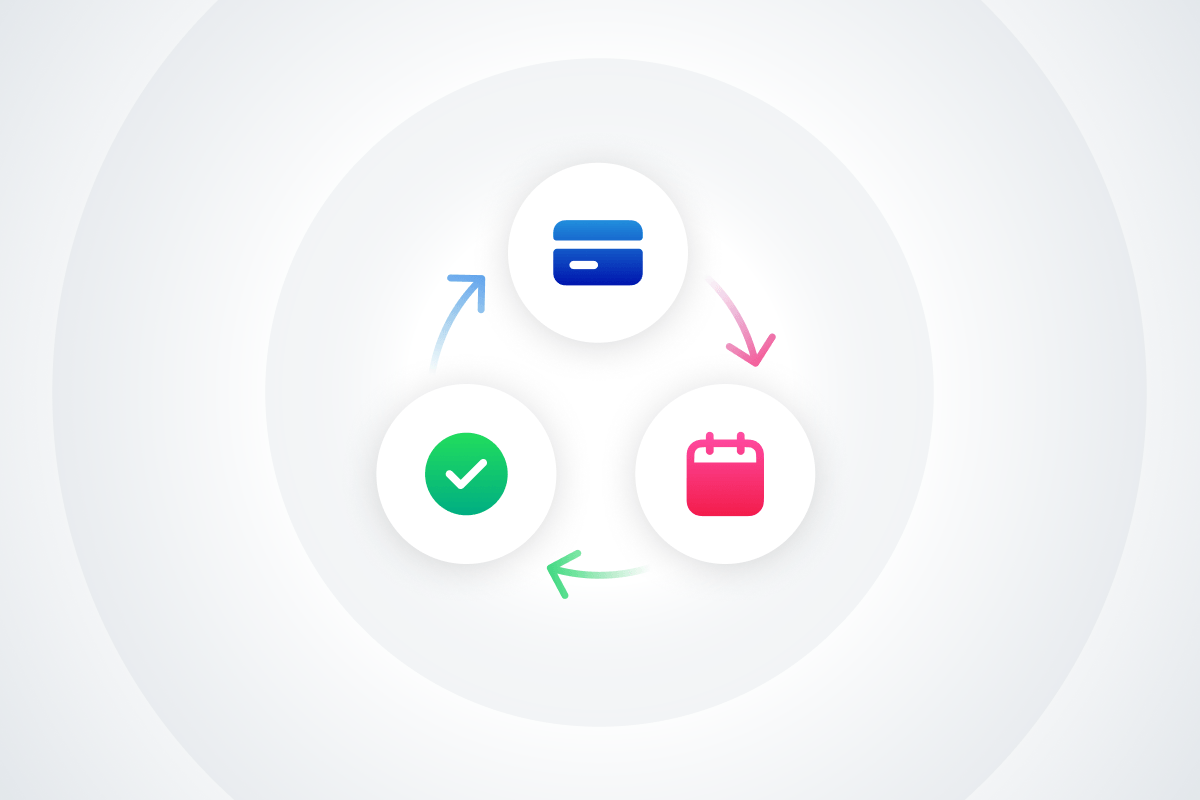
- Cycle opens. The start date is set at signup or reset at the close of the previous period.
- Charges accrue. A flat subscription fee, metered usage, or add-ons are recorded during the window.
- Cycle closes. On the end date the total is finalized and an invoice or statement is generated.
- Payment is collected. For card-on-file models, the merchant runs a against the amount due.
- Retries run on failure. If the charge is declined, logic retries the card before the account lapses.
- Next cycle begins. A new interval opens, usually on the same anchor date.
Why it matters
- It sets cash-flow timing. Revenue lands on predictable dates that finance teams use to forecast and recognize income.
- It anchors failed-payment recovery. The due date is when retries start, so a mismatch between the retry schedule and the cycle leaves recoverable revenue uncollected.
- It shapes the customer's statement. The date range and the a cardholder sees are tied to the cycle; when either is unclear, "I don't recognize this charge" disputes go up.
Common issues
- Proration. Mid-cycle upgrades, downgrades, or cancellations require partial charges that customers often question.
- Misaligned anchor dates. Charging on the signup date versus a fixed calendar date changes when revenue is recognized and can bunch renewals together.
- Failed renewals at cycle close. Expired cards or insufficient funds at the end date drive involuntary churn if dunning isn't tuned.
- Trial-to-paid transition. The first real charge after a free trial falls at the first cycle close, and an unfamiliar amount or timing raises the risk of a .