Customer lifetime value
What is customer lifetime value (LTV)?
Customer lifetime value (LTV) is the total net revenue a business expects to earn from a single customer over the entire span of their relationship. It turns a stream of individual payments into one forward-looking number that represents what each customer is worth.
LTV matters most for subscription and recurring-revenue businesses, where value accrues across many billing cycles rather than a single purchase. It's compared against customer acquisition cost (CAC) to judge whether growth is profitable, and it shapes decisions on marketing spend, pricing, and retention. A higher LTV means a business can afford to spend more to win each customer and still come out ahead.
Key facts
- Formula (basic): LTV = average revenue per user (ARPU) × average customer lifespan
- Formula (subscription): LTV = ARPU ÷ customer churn rate
- Also known as: lifetime value, CLV, CLTV
- Applies to: subscription products, SaaS, e-commerce, and any model with repeat purchases
- Paired with: customer acquisition cost (CAC), often expressed as the LTV:CAC ratio
How LTV is calculated
LTV builds up from a few inputs, each of which you can measure from billing data:
- Average revenue per user (ARPU): the average amount a customer pays per period, usually per month.
- Customer lifespan: how long a customer keeps paying, which is the inverse of the churn rate. If 5% of customers cancel each month, the average lifespan is 20 months.
- Gross margin: the share of revenue left after the cost of delivering the product. Multiplying by margin turns revenue LTV into profit LTV.
Combining these gives the core relationship: revenue per period, multiplied by how many periods the customer stays, adjusted for margin. Because churn sits in the denominator, small changes in retention move LTV more than equivalent changes in price.
What affects LTV
Several levers pull LTV up or down:
- Churn rate: the biggest driver. Lower churn extends the customer lifespan and compounds revenue across more billing cycles.
- Pricing and upsells: higher ARPU, plan upgrades, and add-ons raise the per-period value.
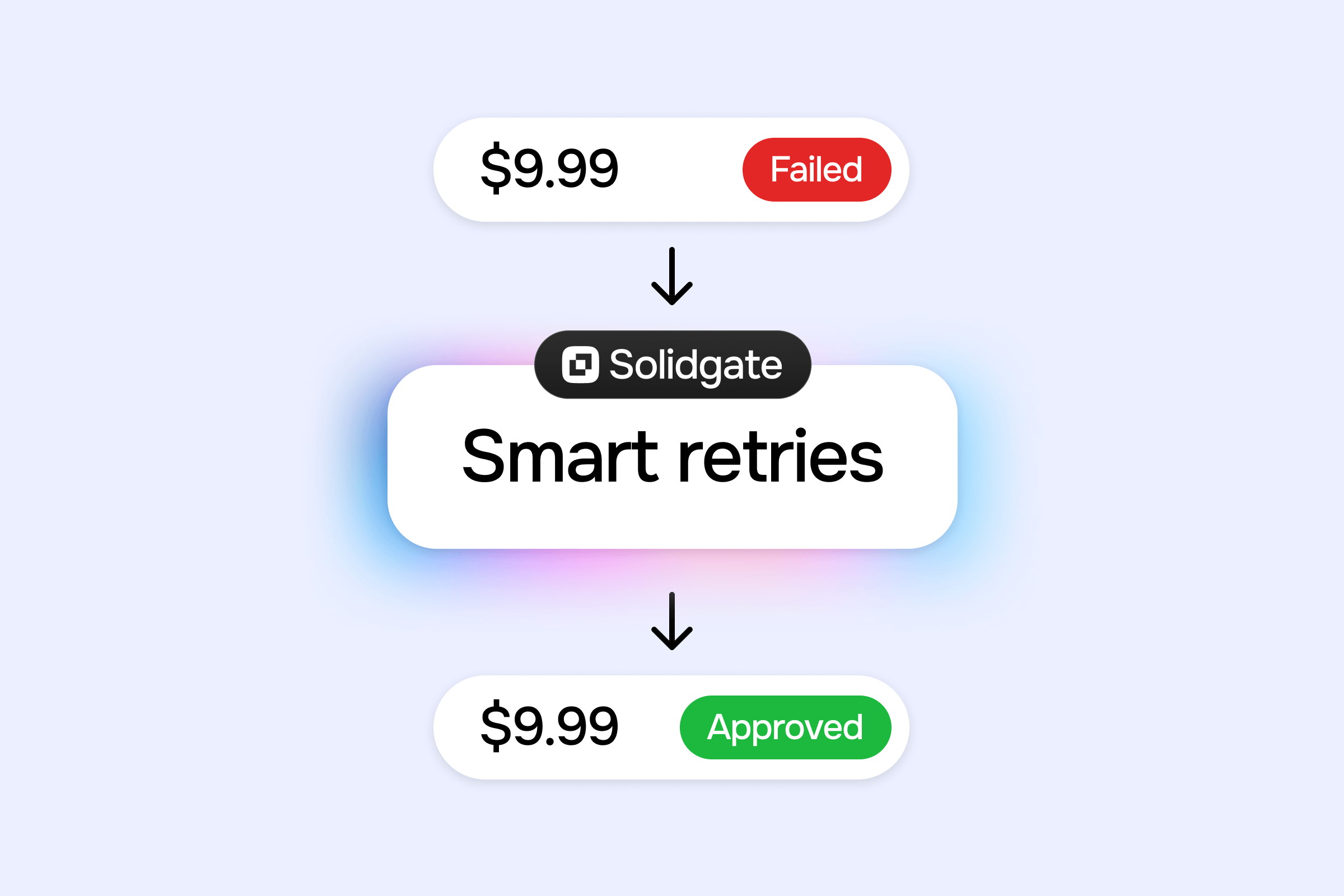
- Payment success: failed renewals cut a customer's lifespan short. Recovering them through and smart retries protects LTV that would otherwise leak away.
- Disputes and refunds: a reverses revenue already counted and often ends the relationship, so it reduces realized LTV twice over.
For businesses built on and , involuntary churn from declined cards is often a larger drag on LTV than customers who actively cancel.
Why it matters
LTV tells a business how much each customer is actually worth, which sets the ceiling on what it can spend to acquire one. When LTV comfortably exceeds CAC, every new customer adds profit; when the two converge, growth stops paying for itself. Tracking LTV alongside churn and payment-recovery rates shows where revenue leaks before it ever reaches the top line.