Flat-rate pricing
What is Flat-rate pricing?
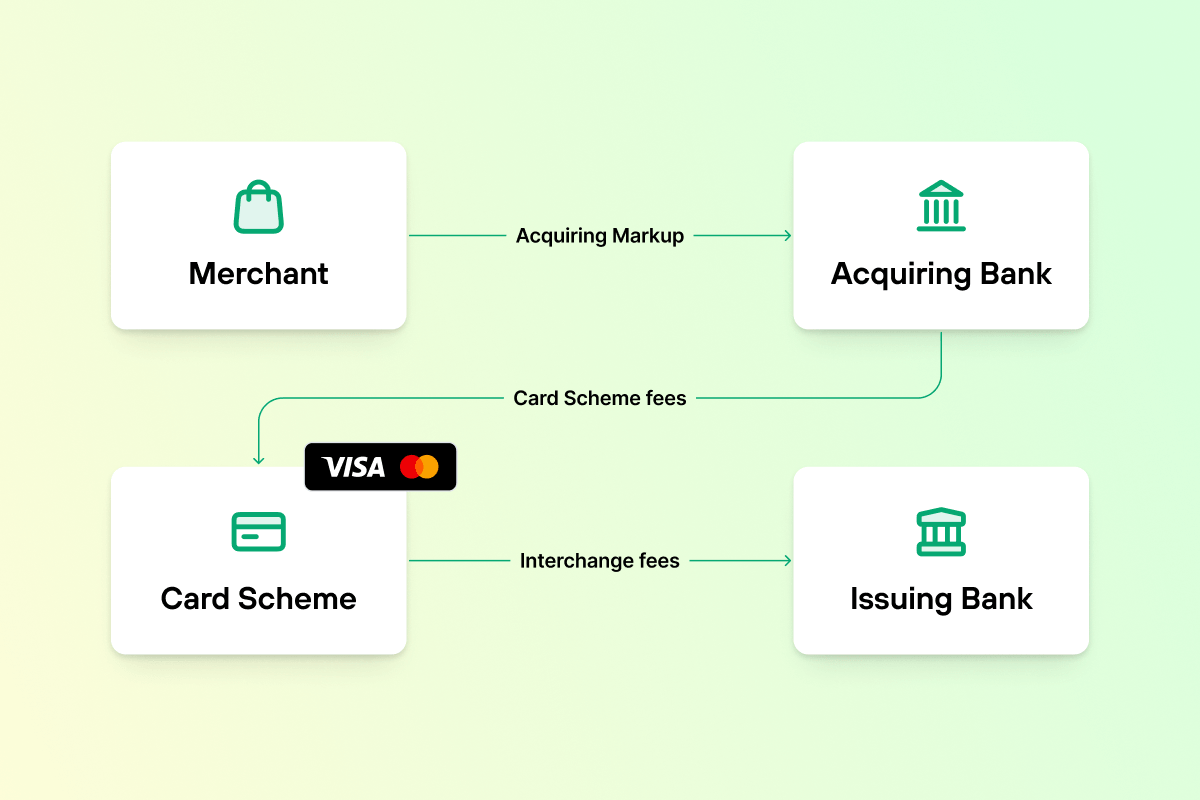
Flat-rate pricing is a payment processing fee model in which a merchant pays one fixed percentage of each transaction's value, often combined with a small fixed per-transaction fee, no matter which card network, card type, or interchange category the transaction falls under. The processor absorbs the difference between what it collects from the merchant and what it actually owes card networks and issuers in interchange and scheme fees.
It's one of three common ways processors bill merchants, alongside interchange-plus pricing and tiered pricing, and it's the structure billed as part of the overall a business pays its or . Because the rate is fixed, it doesn't change when a merchant's card mix shifts between debit and credit, or between domestic and international cards. It's the model most associated with simplified, all-in-one processors and payment facilitators that bill sub-merchants a single number rather than an itemized breakdown of .
Key facts
- Also known as: blended pricing
- Fee structure: a flat percentage of the transaction amount, plus (in most implementations) a fixed per-transaction fee, expressed as a single combined rate
- Contrasts with: , where interchange and scheme fees are itemized separately from the processor's markup, typically quoted in
- Applies to: merchants with lower or inconsistent volume, marketplaces and platforms billing through a payment facilitator, and businesses that prioritize a predictable statement over the lowest possible per-transaction cost
How it works
- The processor sets one rate across its merchant portfolio, calculated so it stays profitable on the highest-cost transactions it processes (international cards, rewards cards, card-not-present) as well as the cheapest ones (domestic debit, in-person).
- Every transaction is billed at that same rate, regardless of the interchange and scheme fees the processor actually owes the card network and issuer for that specific transaction.
- The processor nets the spread. When a transaction's real interchange and scheme cost is lower than the flat rate, the processor keeps the difference; when it's higher, the processor absorbs the loss.
- The merchant sees one line item per transaction or settlement batch, instead of separate interchange, scheme fee, and markup entries.
Flat-rate pricing vs interchange-plus pricing
| Model | Fee structure | Best fit |
| Flat-rate pricing | One fixed rate applied to every transaction | Simpler statements; lower or less predictable volume |
| Interchange + scheme fee + separate processor markup, itemized | Higher, steadier volume where cost efficiency outweighs statement simplicity |
Why it matters
A flat rate gives a merchant one number to budget against instead of a fee that shifts with every card type and region. That predictability is the main reason marketplaces, platforms, and lower-volume merchants choose it over itemized models.
The mechanism cuts the other way at scale: because the flat rate is set to cover the processor's most expensive transaction types, a merchant whose real card mix skews toward cheaper transactions (domestic debit, in-person, non-rewards) ends up subsidizing the rate's more expensive cases, rather than paying only for the interchange and scheme fees its own transactions actually incur.