Interchange++
What is Interchange++?
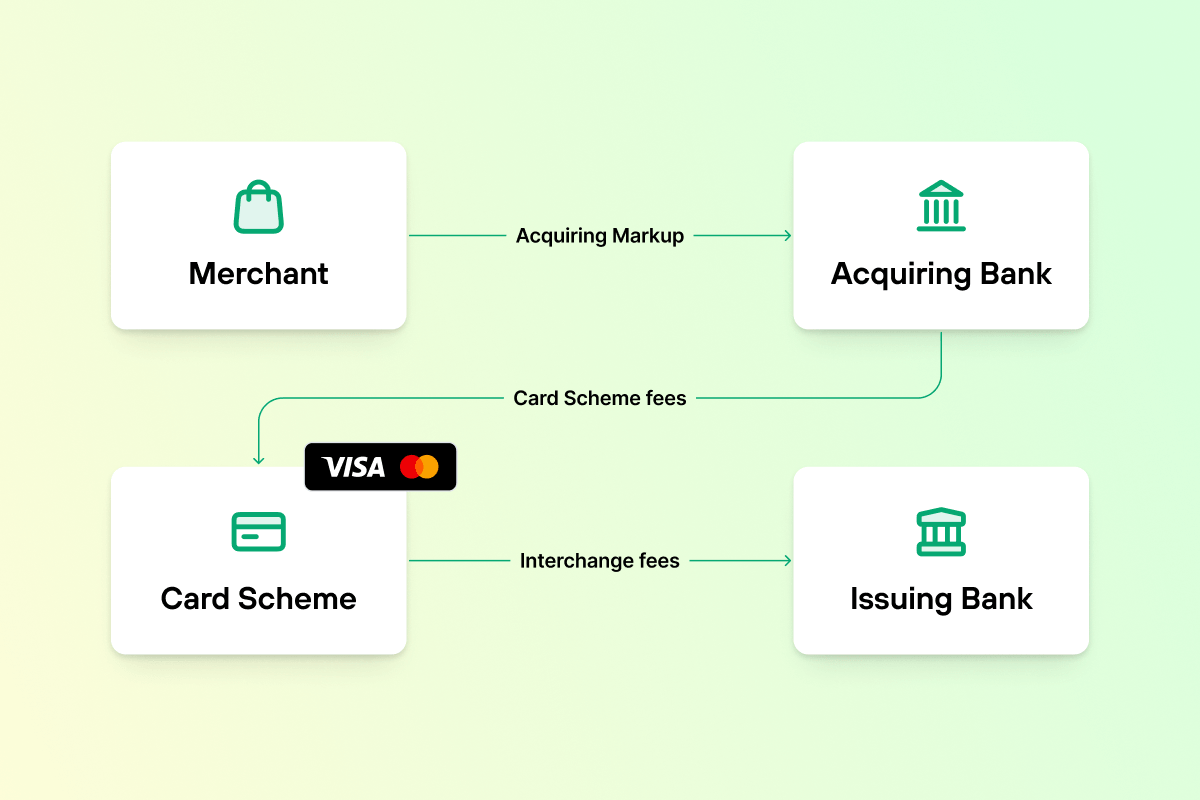
Interchange++ (IC++) is a card pricing model that bills a merchant for the actual interchange fee on each transaction, plus the card network's scheme fee, plus the acquirer's markup, with each shown as a separate line instead of bundled into a single rate. The two plus signs are the scheme fee and the acquirer markup.
Note: Interchange++ is not the same thing as . Interchange is one fee, paid by the merchant's to the cardholder's on every card transaction. Interchange++ is the pricing arrangement that passes that fee through at cost and itemises everything charged on top of it.
Splitting the bill this way shows which part of a transaction cost is fixed by the scheme, which is fixed by the interchange category the card falls into, and which is set by agreement with the . Only the last layer moves in a pricing negotiation.
Key facts
- Also known as: IC++, interchange plus plus, pass-through pricing
- Three cost layers: interchange paid to the issuer, the scheme fee paid to the , and the acquirer markup
- Applies to: card transactions settled through an acquirer or PSP, both card-present and card-not-present
- Interchange category driven by: card product, issuer and acquirer regions, authentication method, and the , a four-digit code grouping merchants by industry that determines which interchange table a transaction is priced against
- Reported as: a per-transaction breakdown in acquirer settlement files, rather than a single effective rate
How Interchange++ works
- The card network sets interchange. Visa and Mastercard publish interchange tables and revise them on a fixed schedule. The rate that applies to a given transaction depends on the card product, the issuing and acquiring regions, the MCC, and how the cardholder was authenticated.
- The scheme fee is added. This is the network's own charge for authorising, clearing, and settling the transaction. It's the first plus, and it is set by Visa or Mastercard rather than by the acquirer.
- The acquirer adds its markup. This is the acquirer's margin, the second plus, and the only layer set by commercial agreement rather than by the network.
- Each layer settles separately. The settlement file reports interchange, scheme fee, and markup per transaction. A shift in the mix of cards accepted therefore shows up as a change in the interchange line rather than as an unexplained change in the effective rate.
Interchange++ vs blended pricing
| Pricing model | What the merchant is billed | Cost visibility |
| Interchange++ (IC++) | Actual interchange, plus scheme fee, plus acquirer markup | All three layers itemised |
| Interchange+ (IC+) | Actual interchange, plus one combined scheme-and-acquirer charge | Scheme fee folded into the markup |
| Blended (flat rate) | One averaged rate across all card types | Layers not disclosed |
When to use which
- Interchange++ is standard for merchants with volume spread across card products and regions, where an averaged rate hides the gap between a domestic consumer debit card and a cross-border commercial credit card.
- Interchange+ sits between the two: interchange still passes through at cost, but the scheme fee is folded into the acquirer's charge, so the merchant can't separate the network's take from the acquirer's margin.
- Blended pricing is common for low-volume or single-market merchants, where one predictable rate is simpler to reconcile and the card mix is narrow enough that averaging distorts little.
- Under IC++ the effective rate moves with every shift in card mix, so a month's total processing cost isn't known until settlement closes.