Arbitration fee
What is an arbitration fee?
Arbitration fee is the charge a applies when a dispute escalates to , the final stage at which the network issues a binding ruling. The losing party pays the fee on top of the disputed transaction amount.
Arbitration sits at the end of the dispute chain. After a chargeback and the merchant's representment, if the and the still disagree, either side can escalate through and then into arbitration, where the card network decides the outcome. The arbitration fee is what the network charges for issuing that decision, and it's separate from the an acquirer passes on earlier in the process.
Key facts
- Charged by: the card network (Visa, Mastercard, American Express), not the acquirer or the issuer
- Paid by: the losing party, in addition to the disputed amount
- Typical range: roughly $500 to $1,000 or more per case under the US-dollar fee schedules published by Visa and Mastercard, depending on the network, the dispute value, and case complexity. Networks revise these schedules periodically, so current figures come from the scheme's active fee bulletin rather than a fixed industry number.
- When it applies: only after pre-arbitration ends without agreement and a case is formally filed for arbitration
- Billed separately: filing fees, case ruling fees, and appeal fees are itemized individually by some networks, so a single case can carry more than one charge
How arbitration fees are assessed
- A case is filed. The issuer or the acquirer files the dispute for arbitration once pre-arbitration ends without agreement. Filing alone triggers a fee, whatever the outcome.
- The network reviews the case. The card network examines the , the submitted by each side, and both positions against its own operating rules.
- A binding ruling is issued. The network decides which party is right, and that decision closes the dispute. Some networks run a separate appeal process, which carries its own higher fee.
- The charges are itemized. The losing party is billed the filing fee together with any ruling or administrative charge, and also absorbs the disputed transaction amount.
Why it matters
- The fee is set by case, not by transaction value, so a low-value dispute can carry a four-figure cost. A $60 subscription charge taken to arbitration costs the losing side far more than the sale was worth.
- Arbitration turns a fixed, predictable chargeback cost into a variable one, because the amount at stake stops being the transaction and becomes the transaction plus the network's fee schedule.
- A merchant who escalates without compelling evidence pays twice: the fee and the disputed amount both land on the merchant account.
- Acquirers generally require the merchant's written approval before filing, since the merchant carries the cost if the case is lost.
How to avoid arbitration fees
Most disputes close before arbitration, and the fee is the reason. Escalating a small-ticket case is uneconomical for both the issuer and the acquirer, so settlement at pre-arbitration is the normal outcome.
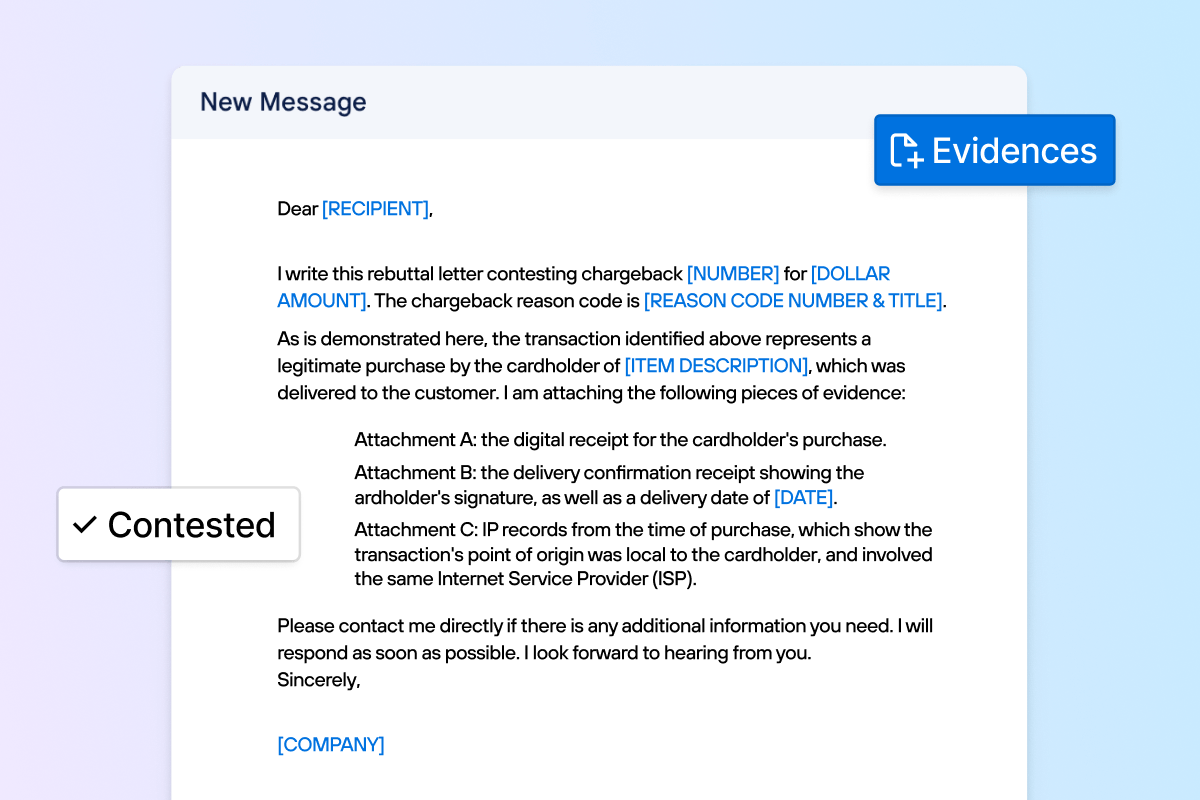
- A representment package built around the issuer's stated chargeback reason code resolves many disputes at the first response, before escalation is on the table.
- Prevention alerts and refunds issued before a chargeback is filed remove the dispute from the escalation chain entirely.
- Where the disputed amount is smaller than the likely fee, a costs the merchant less than winning an arbitration case.
- Cases with documented delivery, authentication, or usage evidence are the ones where escalation is defensible, because the network rules on evidence rather than on intent.