Main payment method in India: How to scale into the Indian market with UPI
Industry
Updated 8 Oct 2026
4 min

Stefan Dzhenkov
Head of APMs and Stablecoins, Solidgate
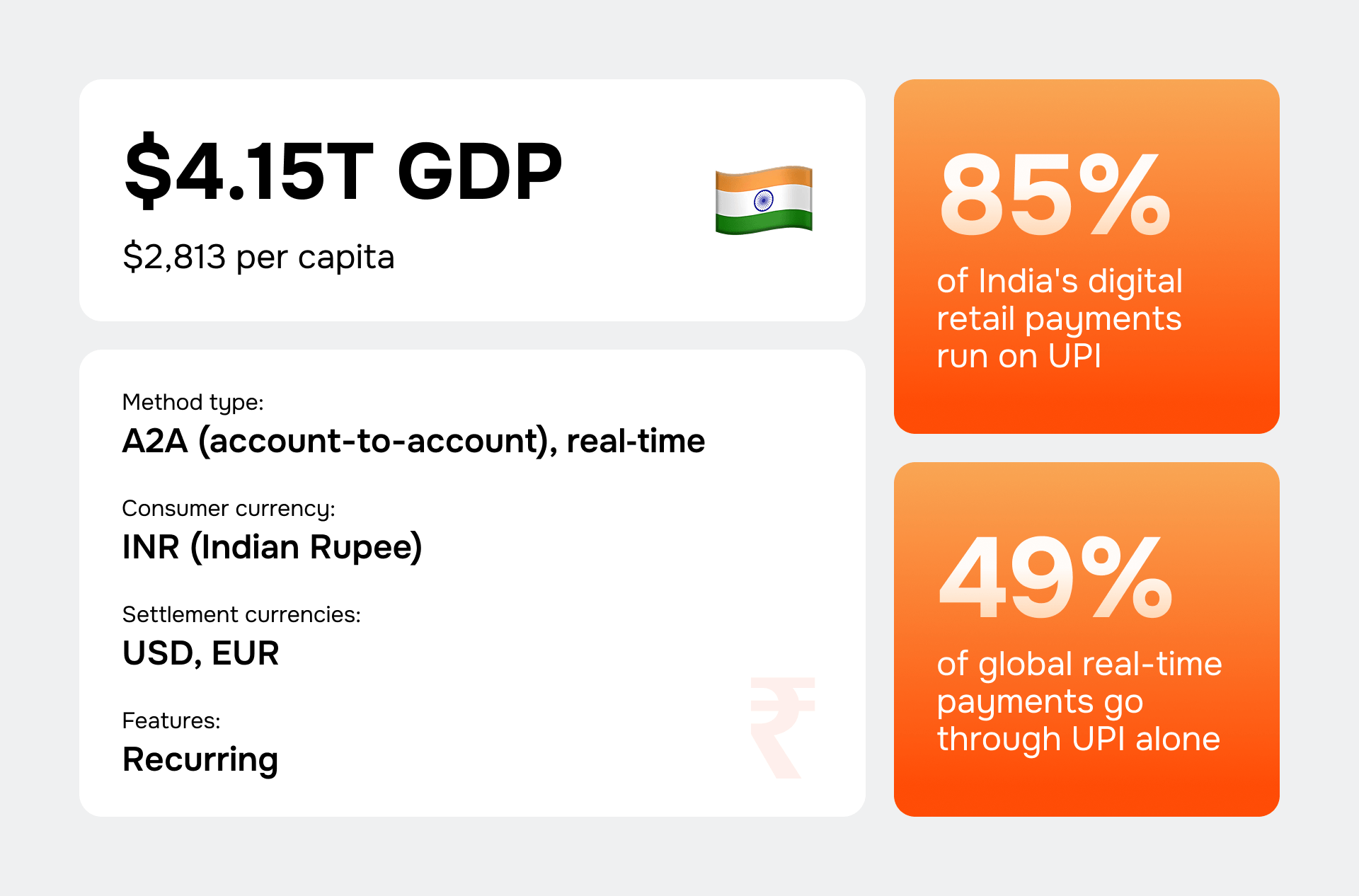
UPI handles ~85% of India's digital payments. If you sell in India, this is the rail your checkout needs to run on.
India is the world's most populous country and the sixth-largest economy by GDP – in 2026 with 6.5% growth. For global digital businesses, it represents one of the largest untapped consumer bases available today.
Entering India successfully starts with two things: understanding how Indian consumers make purchasing decisions, and getting the most widely used payment method in India – UPI – live at checkout. This article covers both.
How India pays (and what drives conversion)
GDP per capita at $2,813 puts India 173rd in the world. That number has a direct consequence for payment strategy: purchasing decisions, especially for digital subscriptions, happen at significantly lower price points than in Western markets.
Card ownership reflects the same reality. A large share of Indian consumers who would convert on your product have never held a credit or debit card. What they do have is a smartphone and a UPI app – and that combination covers virtually the entire market. Skip UPI and you're offering a checkout most of your potential customers can't use.
Here's what actually drives conversion rates in India:
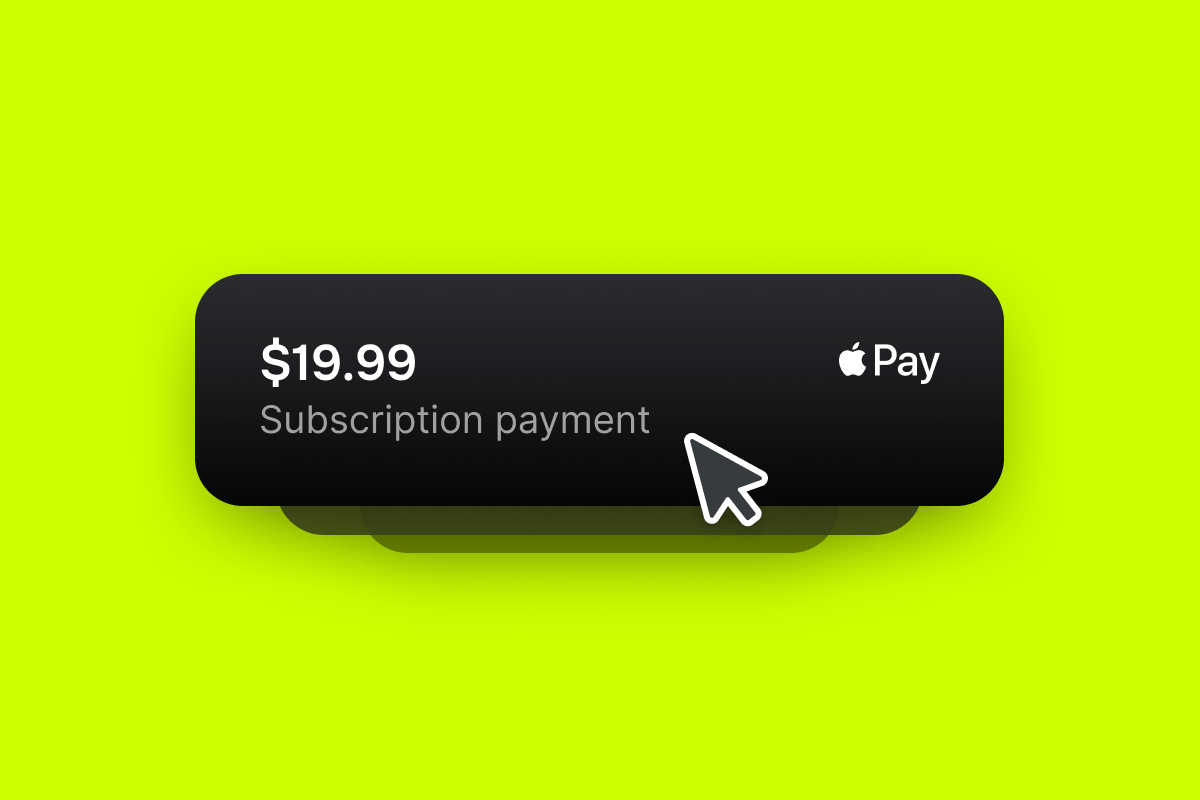
Price to the market. Merchants succeeding in India with subscriptions – including some of the largest consumer platforms globally – price their entry plans well below $5 a month. At $10/month, conversion starts dropping. At $25+, you are reaching a narrow segment. The model that actually works is high volume at a low price point, with upsell paths built in from the start.
Mandate amount design determines recurring conversion. UPI Autopay requires customers to pre-authorize a maximum charge amount at mandate creation – that number is visible in their UPI app before they confirm.
A ceiling that looks disproportionate to the first charge causes abandonment at the final step, not at the pricing page. The gap between the initial charge and the mandate ceiling should stay within roughly 30% to avoid that drop-off.
Clarity on post-trial and upsell charges reduces abandonment. Offering a low or free first period works – but only when the subsequent recurring charge is communicated clearly before mandate creation.
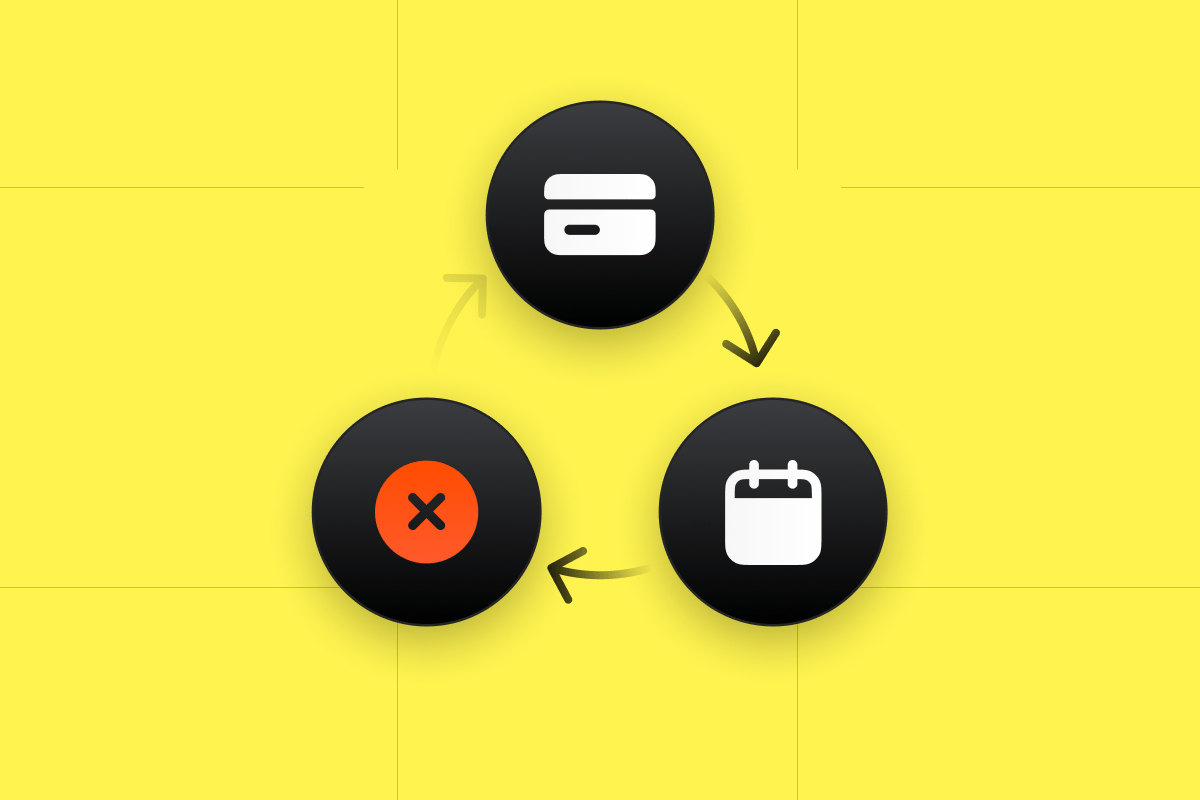
The same applies to upsells. If you plan to move customers to a higher subscription tier later, the best approach is to create a new mandate for the higher amount and, once enrollment succeeds, cancel the previous one. For add-on products that require a one-off payment, a standard one-time UPI payment is the best option.
The rule of thumb: users who encounter a much higher charge than expected at the confirmation screen cancel, not because they changed their mind about the product, but because the number confuses them.
UPI – India's default payment rail
UPI is India's real-time payment infrastructure built by the government-led (NPCI) – a single rail connecting hundreds of banks nationwide. Customers pay instantly from any linked bank account through apps like Google Pay, PhonePe, Paytm, or BHIM. No card, no account number, no OTP required. Payments settle around the clock.
For merchants, UPI covers one-time payments, recurring mandates, and unscheduled charges – the full range of billing models relevant to digital and .
UPI's share will keep growing, absorbing the credit use case on top of its existing bank-balance payments. More than 50% of RuPay credit card transactions now run through UPI, and credit's share of total UPI volume has climbed from roughly 10% to 40%. Visa and Mastercard lose further ground as a result – both networks sit outside the UPI flow, and the RBI now requires banks to issue RuPay cards by default unless a customer specifically requests another network.
How to accept UPI payments with Solidgate
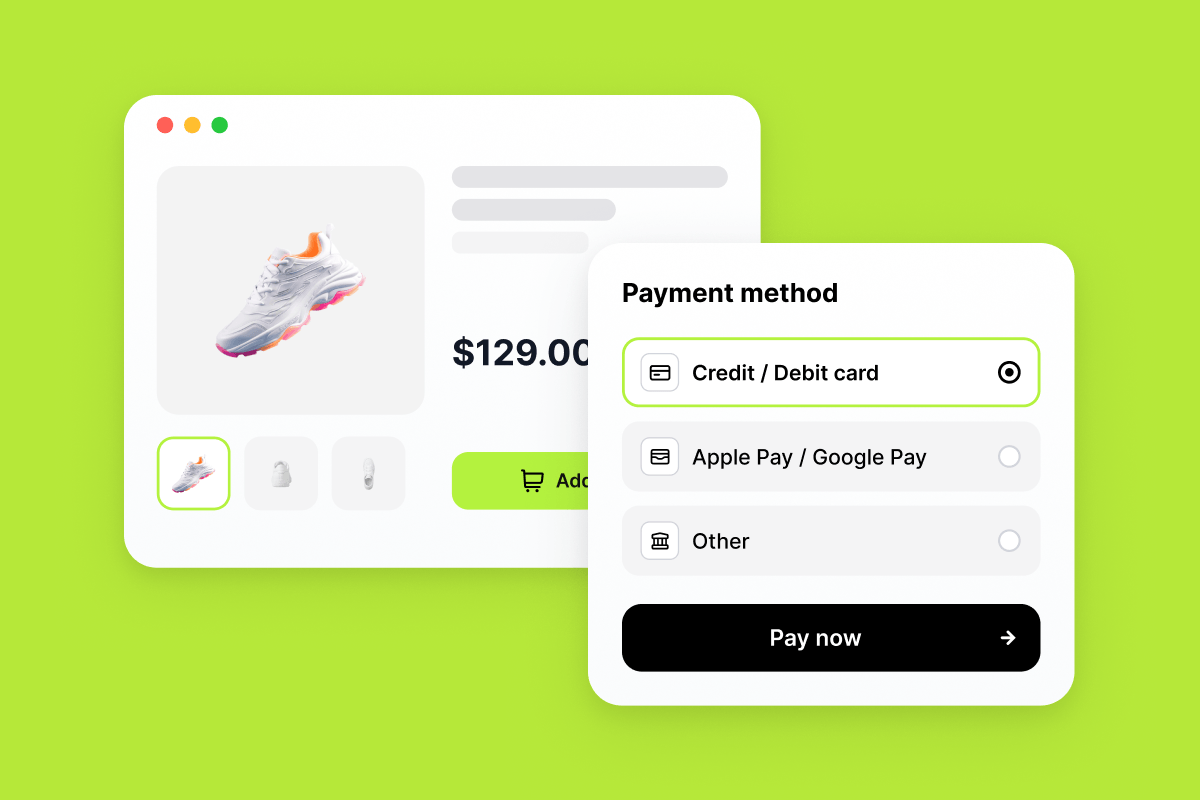
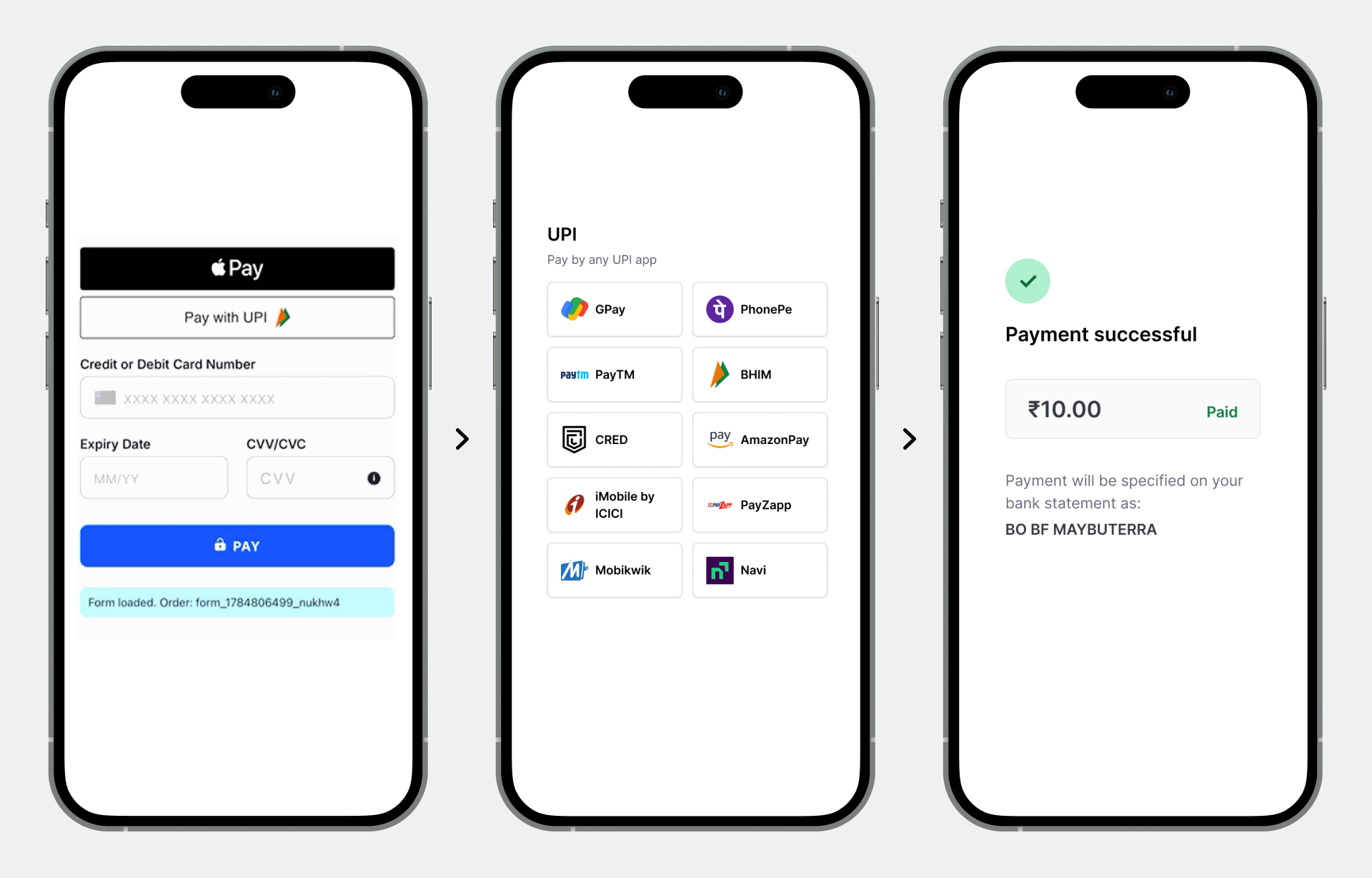
Solidgate supports UPI in India via Razorpay, running on UPI Intent – the current standard for UPI payments. At checkout, the customer picks their UPI app – it opens with the payment amount already filled in.
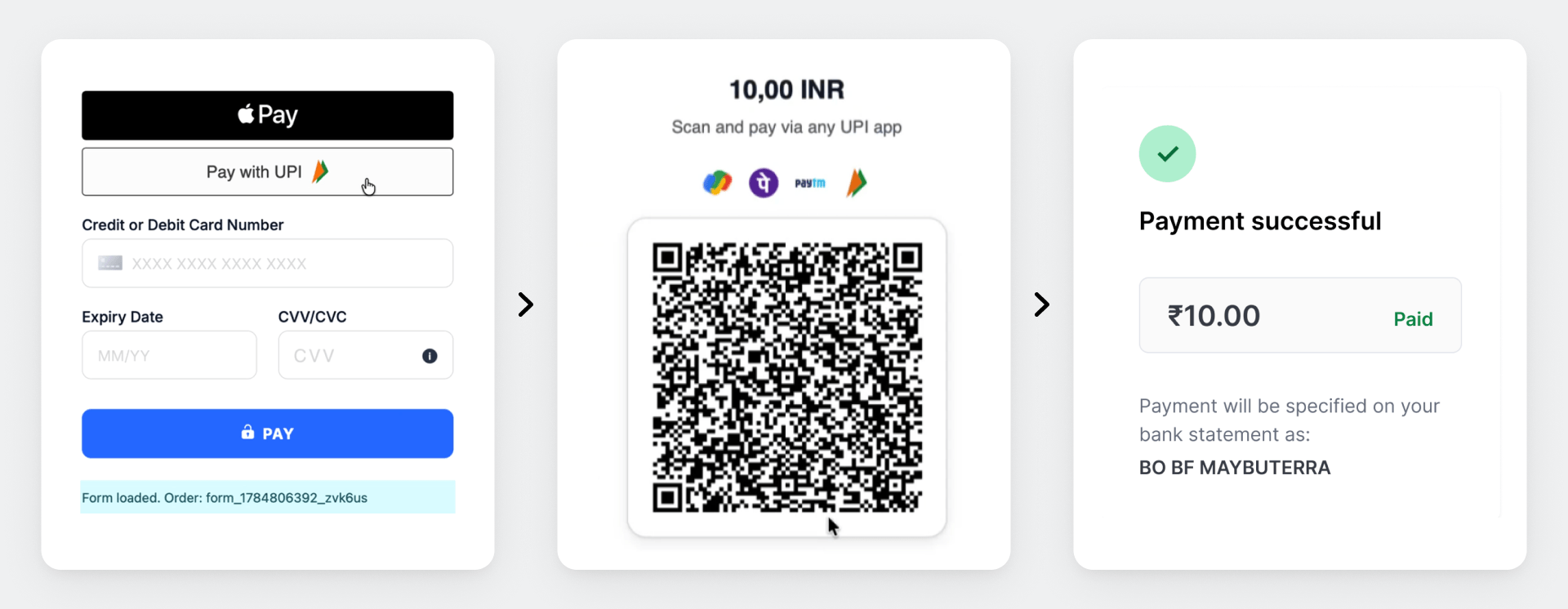
On desktop, the same flow renders as a QR code to scan. No manual entry, no redirect friction.
UPI Intent replaced UPI Collect, which required customers to type a payment address before approving in their app – an extra step that created more room for typos and drop-off. Since February 2026, NPCI no longer allows that manual entry on mobile – Intent is the only compliant flow for checkouts today.
To speed up integration, we recommend launching UPI Intent via the. The flow is locally validated and certified, delivering a localized checkout experience out of the box.
Scaling into India: What merchants need to know
Before going live with UPI, there are a few things to confirm on the legal and operational side.
No local entity required. Solidgate operates UPI via Razorpay, which holds the RBI's Payment Aggregator Cross-Border license. Merchants can go live without establishing an Indian legal entity or local bank account.
That doesn't mean no tax. Foreign businesses selling digital products or subscriptions to Indian consumers generally fall under India's OIDAR rules and are expected to register for GST and charge 18% on B2C digital sales. Confirm your exact position with a tax advisor before launch, and factor the 18% into how you price to the market.
Regulation moves fast here. NPCI updates flow rules, mandate limits, and tokenization requirements regularly. Keeping up with those changes is a real operational burden for merchants entering a new market without local expertise.
Solidgate and Razorpay absorb that at the infrastructure level, so your integration stays compliant as the rules evolve.
Expanding into India? UPI is live on Solidgate via Razorpay. See the full UPI integration details in our .

Local acquiring, +15% acceptance
See how Headway expanded on one Solidgate integration
Frequently asked questions
UPI is the dominant payment method in India, handling around 85% of the country's digital retail payments. It works as a real-time, account-to-account transfer – no card or manual bank details required – through apps like Google Pay, PhonePe, Paytm, and BHIM.
Solidgate operates UPI in India via Razorpay, which holds the RBI's Payment Aggregator Cross-Border licence. This means you can go live without setting up an Indian legal entity or a local bank account. Keep in mind that tax obligations still apply – foreign businesses selling digital products to Indian consumers generally need to register for GST under India's OIDAR rules.
UPI supports recurring payments through Autopay mandates, where customers pre-authorize a maximum charge amount that renews automatically. Getting the mandate amount right matters for conversion – a ceiling that looks too high relative to the first charge tends to cause drop-off at setup.
Recent articles