Multiple payment providers: When to add and how to run them
Payments 101
Updated 8 Oct 2026
8 min

Andrii Kononenko
Head of Merchant Operations, Solidgate
More providers, better rates, more markets. Here's when a multi-PSP strategy pays off and how orchestration makes it manageable.
If you're considering adding multiple payment providers, you've probably hit one of these:
- Authorization rates have plateaued and you can't identify the ceiling
- A provider outage left checkout with no fallback
- A new market requires local payment methods your current PSP doesn't support
- Processing fees are compounding with no way to benchmark or route around them
Managing multiple providers solves each of these – but adds its own complexity: separate integrations, fragmented reporting, custom routing logic, and card credentials locked to whichever PSP tokenized them. Payment orchestration removes that overhead, giving merchants a single layer to connect, route, and manage every provider in the stack.
This article covers what a multi-PSP setup is, when it makes commercial sense, and how orchestration makes it operationally manageable.
TL;DR
- A multi-PSP setup connects more than one payment provider to the same checkout.
- Merchants add providers when a specific failure appears in their data: authorization rates plateau, a provider outage has no fallback, a market won't convert on the current setup, or processing costs have no competitive pressure.
- Multi-PSP delivers the most measurable return for cross-border and multi-market businesses, subscription merchants who need renewal fallback, and merchants optimizing processing costs across corridors.
- Running multiple providers without a central layer multiplies overhead – separate integrations, fragmented reporting, custom routing logic, and token lock-in per provider.
- Payment orchestration removes that overhead: one integration covers the full provider stack, routing and failover run automatically, settlement data normalizes into one view, and tokens stay portable across every connected acquirer.
What is a multi-PSP setup?
A multi-PSP setup is when a merchant processes payments through more than one at the same time. Instead of sending every transaction through a single provider, the merchant splits traffic across two or more – by market, card type, cost, or performance.
Managing multiple payment providers as a unified stack rather than parallel independent systems requires:
- Routing logic – decides which provider handles each transaction and defines fallback sequences when one fails
- Token portability – card credentials travel across providers without re-collection, stored outside any single provider's vault
- Unified reconciliation – one view of settlement data, fees, and performance across all connected providers
A multi-PSP strategy gives merchants control over how, where, and at what cost transactions are processed. If you want to build it without creating a new lock-in, check out our guide to.
Why businesses use multiple payment providers
Merchants add more payment gateways when a specific failure appears in their data.
plateau. Every PSP routes transactions through its own acquirer relationships, optimized for its portfolio. When rates stop improving, the ceiling isn't the product – it's the acquirer network behind the provider. Declined transactions stay declined, with no visibility into whether a better-performing route exists and no mechanism to recover that revenue.
A single provider is a single point of failure. Most major PSPs publish 99.9% uptime SLAs, which still permits up to 8 hours and 45 minutes of downtime per year. When the provider goes down, checkout goes down – every transaction during that window is lost with no fallback.
A single provider means tying your market reach to its network. Since every PSP has a specific set of markets, acquirers, and payment methods it supports, expanding into a market it doesn't cover well means selling as a foreign merchant. This typically results in lower approval rates, missing local payment methods, and a checkout that doesn't match local expectations.
puts the cost in concrete terms: 10% of shoppers abandon checkout because their card was declined, and 9% because their preferred payment method wasn't offered.
Processing costs have no competitive pressure. A single PSP sets its fee structure knowing migration is expensive. There's no way to benchmark fees across providers or route transactions to a cheaper option for a specific corridor. At scale, uncompetitive processing fees compound across every transaction.
Core insight: Merchants add more providers when a rate doesn't move, a market won't convert, an outage has no fallback, or processing costs have no benchmark to compare against.
When a multi-PSP strategy makes sense
A single PSP is the right default for merchants at an early stage, operating in one market with stable authorization rates and no recurring billing dependency. These are the business contexts where a multiple payment processor strategy delivers a measurable return.
Cross-border and multi-market businesses
The more markets a merchant enters, the more payment infrastructure those markets require. Polish shoppers pay with BLIK. Spanish shoppers use Bizum. Dutch shoppers expect iDEAL. A checkout without the preferred loses customers before the transaction is even attempted. Solidgate data shows that local acquiring lifts average LTV by 17.9%.
Bazhane, a fashion brand expanding across Europe, needed to reach Polish shoppers. With local acquiring and BLIK enabled through Solidgate's orchestration layer, 65% of Polish transactions now flow through BLIK and checkout conversion in Poland lifted by 10%.
Check the full .
Beyond methods variety, each new market also adds and compliance friction. A single provider rarely covers all of this across multiple markets simultaneously – and the gaps show up directly in conversion.
Subscription businesses with recurring billing
Subscription merchants depend on renewal success across every billing cycle. When a single provider declines a renewal, that subscriber is lost – no second attempt, no fallback route. If the declined payment can reroute to a different provider in real time, the customer doesn't notice and the business doesn't lose the subscriber.
Payment cascades across multiple providers recover an average of 14.8% additional LTV, per Solidgate's merchant data. That recovery only works if a second route exists in the stack.
Merchants reducing processing costs
Merchants processing payments at scale need cost control across corridors and card types. On a single provider, every transaction pays whatever fee that provider charges – there's no ability to route by cost or benchmark fees against alternatives. As volume grows, uncompetitive processing fees on specific corridors compound into a meaningful drag on margins.
Core insight: Adding multiple payment gateways makes commercial sense when a business is expanding markets, protecting subscription revenue, or reducing per-transaction costs at scale.
How to run a multi-PSP setup without the overhead
Running multiple payment processors without a central layer creates four compounding problems. Each PSP has its own API, its own onboarding process, and its own contract – adding a third provider means a third full integration cycle.
Without shared routing logic, the merchant has to build and maintain the decision layer that directs transactions across providers. Settlement data, fees, and approval rates arrive in separate reports per provider, reconciled manually. And if card credentials are locked to whichever PSP tokenized them, switching or adding a provider adds complexity.
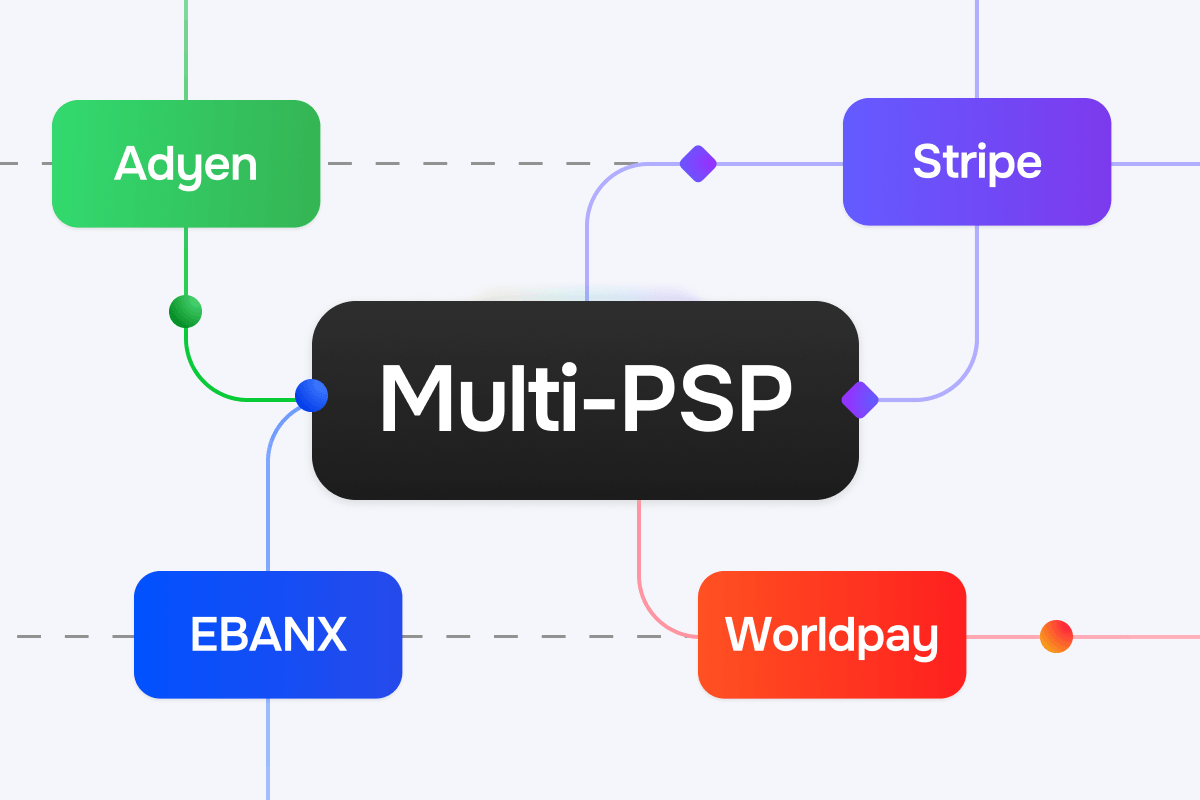
solves all four. It sits between the merchant's checkout and all connected providers – handling routing, token portability, and unified reconciliation through a single integration.
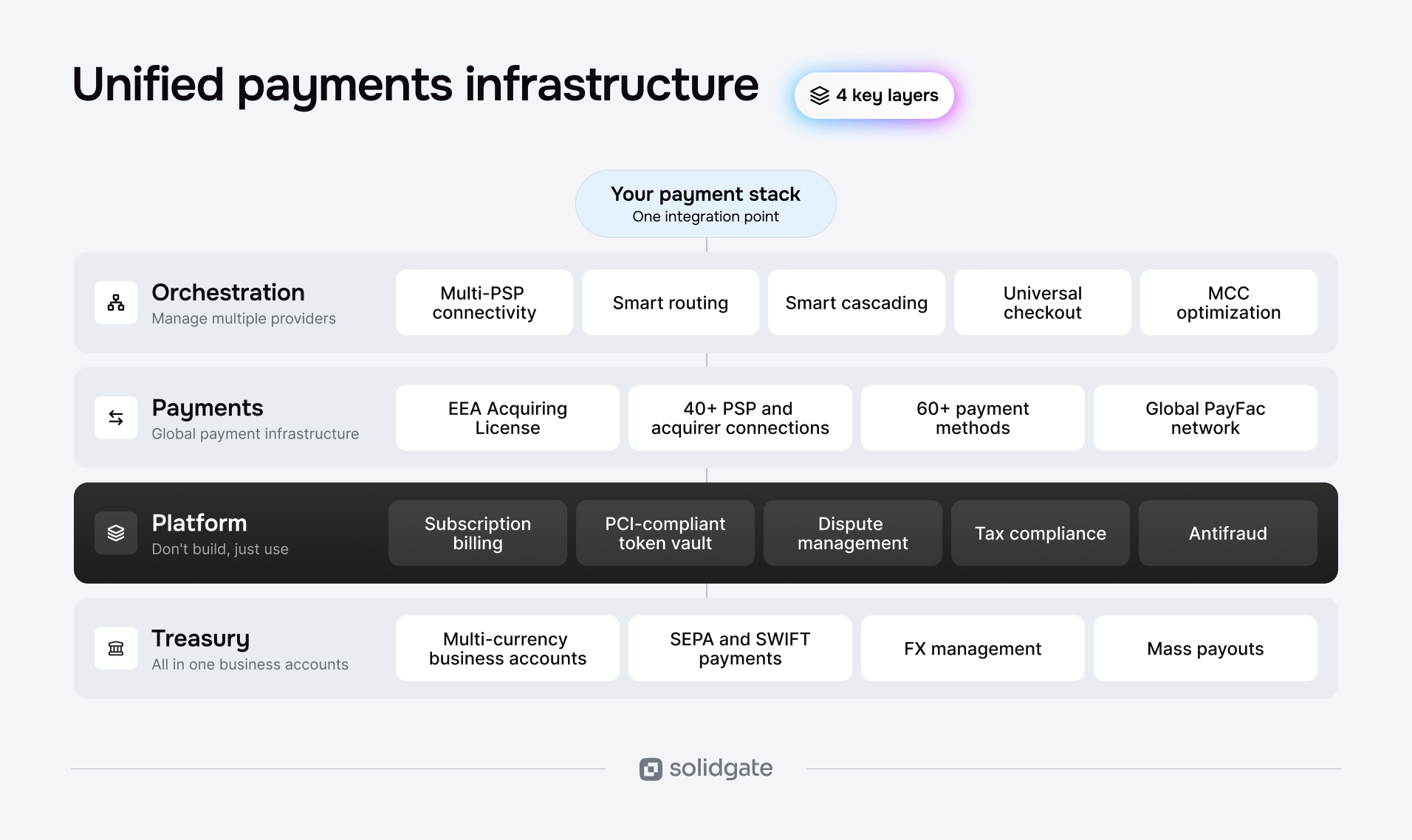
Multiple providers and payment methods through one integration
An orchestration layer comes pre-connected to a library of providers, acquirers, and alternative payment methods. The merchant accesses all of them through one API and activates whichever ones their stack needs – without building each connection from scratch.
Solidgate merchants to 100+ acquirers, providers, and alternative payment methods through one integration. Adding a new connector or enabling a local payment method takes minutes in the platform – no additional development work required.
Smart routing and automatic failover
With logic in place, each transaction evaluates against rules the merchant sets – by market, card brand, BIN range, cost, and real-time provider performance – and routes to the provider most likely to approve it.
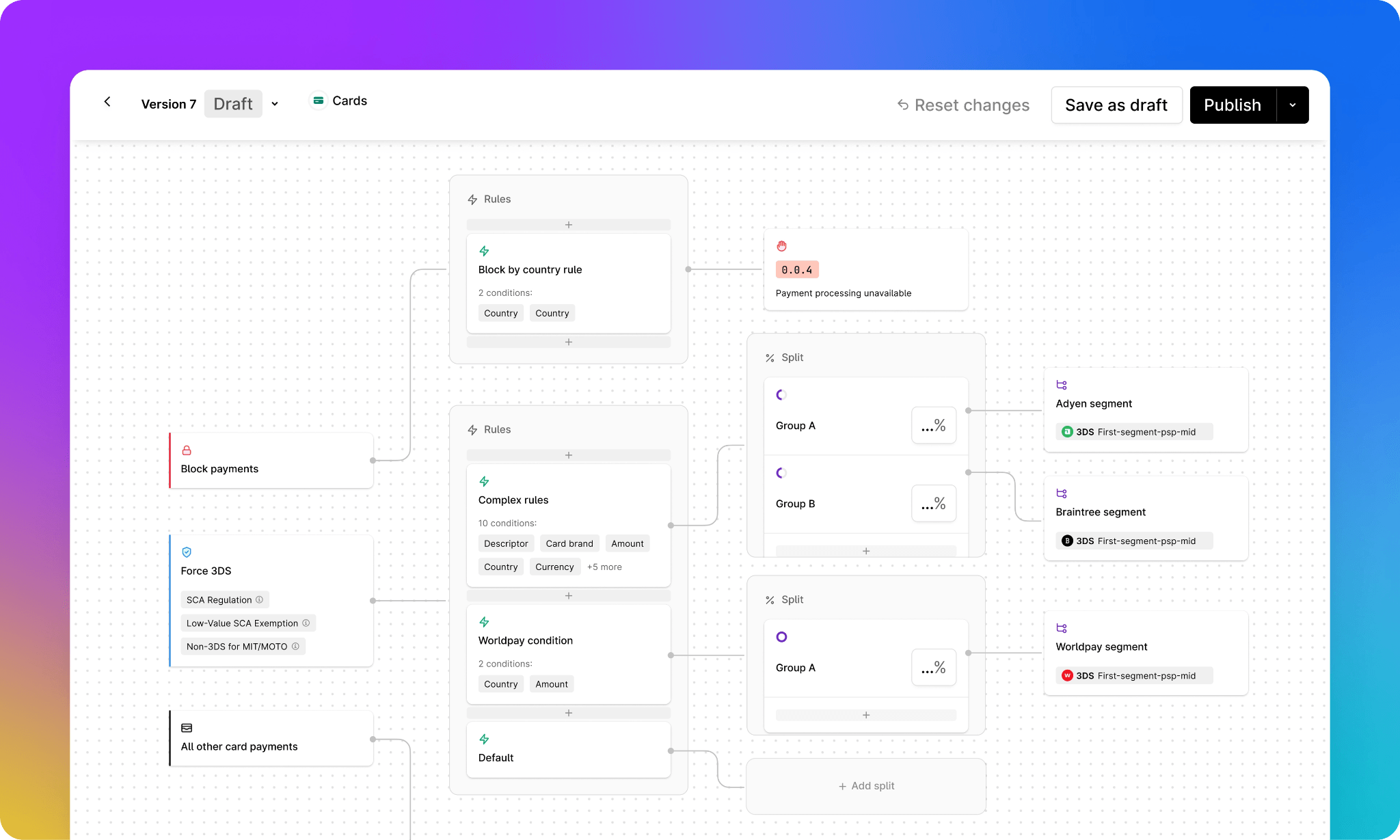
When a provider underperforms on a specific corridor or goes down, routing shifts to the next provider in the cascade automatically. Checkout stays up; approval rates improve without manual intervention.
Solidgate's gives merchants no-code control over routing rules with up to five cascade steps and real-time performance visibility per provider.
Unified reporting across all providers
Without a central layer, every provider added means another settlement report, another fee structure, and another approval rate dataset – each in a different format, reconciled manually. An orchestration layer normalizes data from all connected providers into one view.
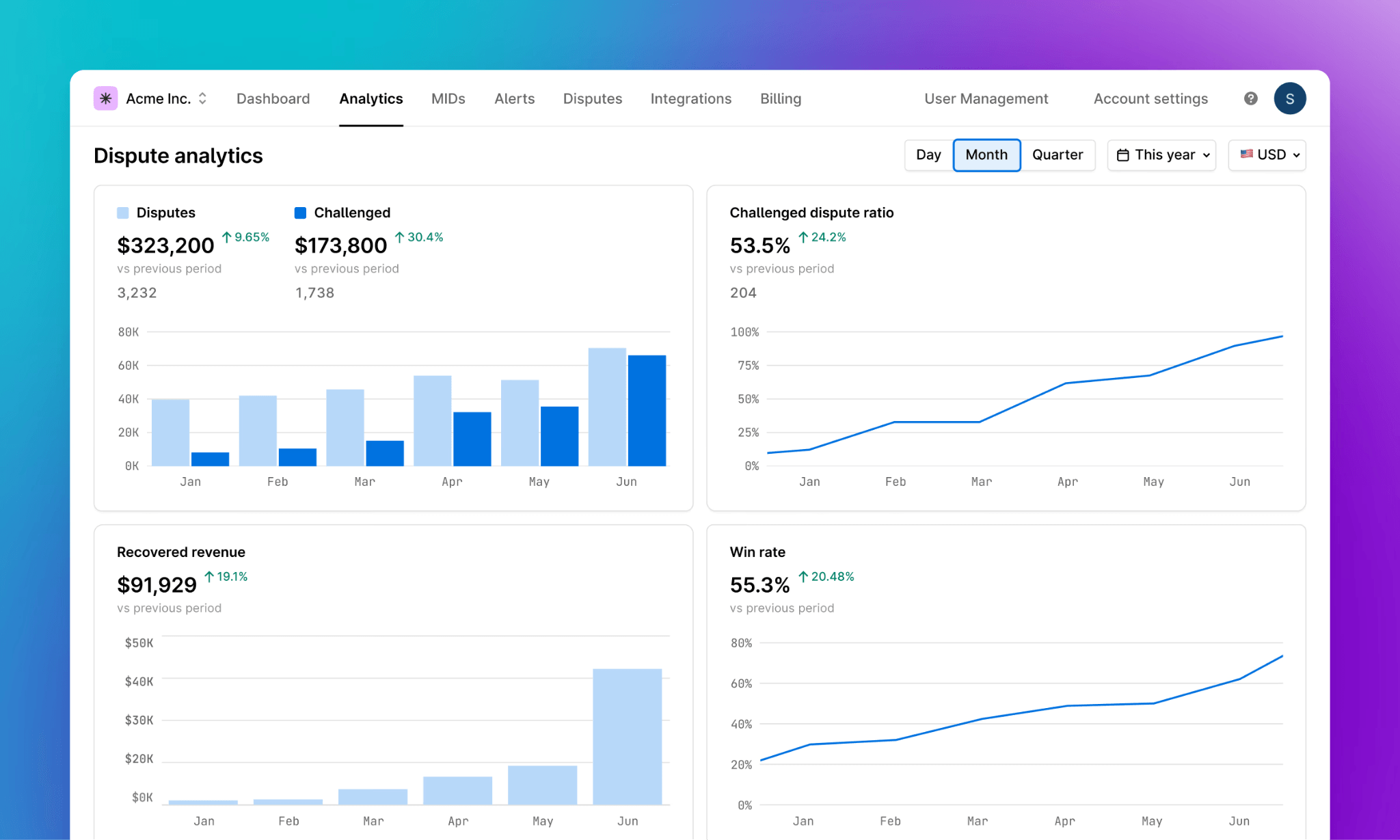
Settlement data, fees, and approval rates across every provider and market are visible and reconcilable from a single dashboard.
Token portability across providers
When a card is submitted at checkout, the PSP tokenizes it and stores the credential in its own vault. That token is proprietary – it works only within that PSP's system. Adding or switching providers means stored credentials don't follow, and the merchant has to re-collect card data from existing customers.
A provider-agnostic vault solves this. Card credentials store outside any single PSP, and the token routes to any connected acquirer – the merchant can add or replace providers without touching stored credentials or interrupting billing. It also reduces scope – card data sits outside the merchant's environment entirely.
adds a second layer. Visa Token Service (VTS) and Mastercard Digital Enablement Service (MDES) issue tokens at the card scheme level – these survive card reissuance automatically, without any action from the merchant or cardholder.
For subscription businesses, the combined effect is that provider changes happen behind the scenes. Subscribers never re-enter their card details, billing continues uninterrupted, and the business retains the freedom to move volume to better-performing providers without touching the customer relationship.
When one of Zeely's tier-2 acquirers closed, all tokens stayed in Solidgate's vault. The recurring payments transferred to new providers with near-zero subscriber impact – no re-collection, no billing interruption.
See the full .
Core insight: Payment orchestration makes multi-PSP operationally manageable – one integration replaces separate provider builds, one routing layer replaces custom decision logic, one dashboard replaces fragmented reporting, and one vault removes token lock-in across every connected provider.
Run your multi-PSP stack with Solidgate
A multi-PSP strategy makes commercial sense when the constraints of a single provider start costing money – in approval rates, market coverage, subscription renewal failures, or processing margins. The setup itself isn't complicated. What makes it operationally demanding is managing the integration overhead, routing logic, reconciliation, and token management that multiply with every provider added.
Solidgate is a payment orchestration platform that gives merchants the infrastructure to run a multi-PSP stack without that overhead:
- Intelligent routing that sends each transaction to the best-performing provider
- A provider-agnostic vault that keeps tokens portable across every acquirer
- Unified reporting that consolidates settlement data across all connected providers into one view
For merchants who need more, the same platform covers local acquiring, subscription billing, fraud and dispute management, taxes, and treasury.
If you're evaluating a multi-PSP setup for your business, to review your current stack and identify where adding providers would deliver a measurable return.

15% higher payment acceptance
See how Headway entered new markets on one integration
Frequently asked questions
The depends on your specific needs – provider coverage in your target markets, routing flexibility, vault portability, and whether you need adjacent capabilities like subscription billing or fraud management. Solidgate, for example, covers all of these through one integration.
Yes. Merchants run multiple payment processors simultaneously by routing different transactions to different providers based on rules they set – by market, card brand, cost, or performance. An orchestration layer manages that routing centrally without requiring separate direct integrations per processor.
There's no universal number. A single PSP is sufficient for merchants at an early stage operating in one market with stable authorization rates. Adding providers makes commercial sense when one of three conditions is true: the business is expanding into markets the current provider doesn't cover, subscription renewal failures have no fallback route, or processing costs across corridors need competitive pressure.
Solidgate manages network tokens through a provider-agnostic vault that stores credentials outside any single PSP. Tokens issued by Visa (VTS) and Mastercard (MDES) at the card scheme level route to any connected acquirer without re-tokenization – and when a card is reissued, the network token updates automatically without any action from the merchant or cardholder.
A layer provides a single API that covers all connected providers. Instead of building a direct integration per PSP, the merchant integrates once to the orchestration platform – new providers, acquirers, and payment methods activate as configured connectors without additional engineering work.
Yes, in two ways. First, routing each transaction to the provider with the strongest acquirer relationship for that card brand, corridor, or BIN range raises approval rates directly. Second, automatic failover means declined transactions retry through an alternative provider before the customer sees a failure.
Recent articles