Cascading payments: How to recover declined transactions automatically
Payments 101
Updated 8 Oct 2026
9 min

Anton Tsyslytskyi
Product Manager, Solidgate
A declined transaction isn't always a lost customer – the same card often approves through a different provider moments later.
A declined transaction doesn't always mean a lost sale. Most teams treat it that way and move on, but a large share of declines are recoverable – the issuer was briefly unreachable, or the acquirer's risk engine flagged a clean transaction.
of online shoppers abandon a purchase when their card is declined – for many of those declines, the same card would have been approved through a different provider moments later.
Payment cascading catches these cases automatically, before the customer sees anything went wrong.
This guide covers how the sequence actually runs, how it differs from and retries, and exactly where it goes wrong, so you can judge what's realistically recoverable in your stack.
TL;DR
- Cascading of payments re-attempts a declined transaction through another provider, automatically and in real time, to recover a sale before the customer sees a failure.
- Whether a cascade continues or stops depends on the decline type: soft declines move to the next provider in the sequence, hard declines halt it.
- Cascading is the fallback stage inside smart routing – it activates only after the routing engine's first-choice provider declines a transaction, and differs from a retry by switching provider immediately rather than re-attempting later.
- To get cascading right: connect to multiple providers through one integration, gate the cascade on decline type, and keep credentials portable across the sequence.
- Cascading pays off at volume, across borders, and in subscription models.
What is payment cascading?
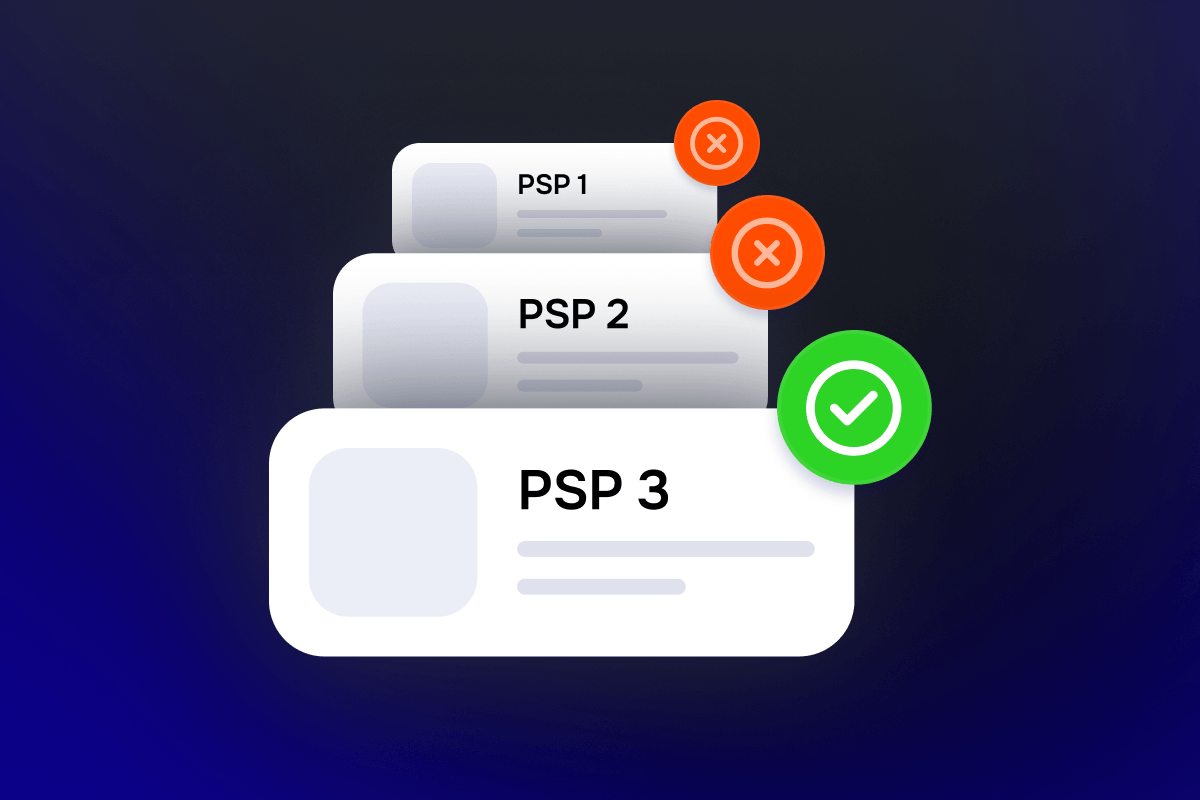
Payment cascading is the automatic re-attempt of a declined transaction through another provider, in real time, before the customer sees a failure. When a decline comes back, the transaction moves to the next provider in the sequence instead of surfacing the failure at checkout.
The mechanism exists because approval isn't a fixed property of a transaction. Two strong acquirers processing the same merchant's traffic can differ by up to 5 percentage points in acceptance rate, driven by their issuer relationships and how each one is scored by the cardholder's bank. A decline at one acquirer is often an approval at another – cascading exists to capture that gap automatically, instead of losing the sale to whichever acquirer happened to receive the transaction first.
How does payment cascading work?
Not every decline is worth cascading. Whether the sequence continues or stops depends entirely on the decline type.
A soft decline is temporary: insufficient funds, a bank timeout, an issuer's velocity check. These are worth cascading, because a different provider with a stronger issuer relationship may still get an approval on the same card.
A hard decline is permanent: stolen card, closed account, a do-not-honor instruction from the issuer. No acquirer will approve a hard decline, and how a merchant chooses to at this stage determines whether a cascade recovers revenue or wastes an attempt for nothing.
The payment cascade sequence, step-by-step
The first attempt goes to the primary provider selected for that transaction. If it approves, the cascade never fires and checkout completes normally. If it declines, the logic reads the response code before deciding what happens next.
A soft decline sends the transaction to the next provider in the sequence, which submits a fresh authorization request. This repeats down the configured fallbacks until one approves or the list runs out. A hard decline halts the cascade immediately, regardless of how many fallbacks remain.
Core insight: Cascading depends entirely on decline type – it recovers soft declines by trying another acquirer, and stops on hard declines that no acquirer will approve.
Cascading payments vs smart routing
That fallback sequence is only half the picture. Smart routing already decides where the first attempt goes, before the cascade ever runs.
selects the provider most likely to approve a transaction up front, based on card type, issuer, and geography. Cascading is the fallback stage inside that same routing setup – it only activates once the routing engine's first choice has already declined.
A merchant can route without a cascade configured, but a cascade always needs an ordered provider list from routing to fall through.
This is also what separates in practice. Static routing sends every transaction down a fixed, pre-defined path and has no logic to redirect after a decline. A cascade needs a routing engine that evaluates each decline in real time and can hand the transaction to the next provider in the sequence – that's what smart routing provides.
| Aspect | Smart routing | Cascading |
| When it acts | Before the first attempt | After a decline |
| What it decides | Which acquirer receives the transaction first | Which acquirer receives the transaction next |
| Goal | Maximize approval odds on the first try | Recover the transactions the first try missed |
Cascading also differs from retrying, a related but separate mechanism. A cascade changes the acquirer and happens immediately, in the same checkout session. A retry changes the timing and re-attempts later, often hours or days after the decline, which suits recurring where the cardholder isn't present. and cascading are frequently used together – retries for renewals, cascading for live checkout.
Core insight: Cascading is the fallback stage inside dynamic routing – it activates on a decline and switches acquirer in real time, while a retry re-attempts through the same path at a later time.
Benefits of cascading payments
Cascading delivers three concrete gains: it recovers sales a single attempt would lose, it strengthens the retention curve on recurring revenue, and it adds resilience when one acquirer's performance dips.
Recovering sales a single attempt would lose
Not every decline is the card's fault. Sometimes the issuer flags a clean transaction because of how a specific acquirer is scored in that market, and the same card approves through a different acquirer moments later. The card hasn't changed, the customer hasn't changed – only which bank processed the request.
That gap is where cascading recovers revenue. Across Solidgate's merchant base, cascading recovers around 8% of transactions the primary acquirer declined. Even at a 90%+ approval rate, a cascade can recover another 2–3% of volume.
Keeping subscribers who would otherwise never activate
A declined first charge in a subscription model doesn't show up as churn – the customer never activates, so they never appear in retention figures at all. That makes it one of the quietest revenue leaks a subscription business can have.
A cascade catches that declined first charge and re-attempts through another provider before the customer sees anything went wrong. If it approves, the subscriber activates normally.
Solidgate data shows payment cascades deliver an average LTV growth of 14.8% – which reflects not one recovered charge, but that recovery compounding across every renewal that follows.
Staying up when one acquirer goes down
Acquirer outages and approval rate drops in specific corridors happen. With a single provider, that degradation hits revenue directly and someone has to notice it, diagnose it, and manually reroute traffic. With a cascade in place, affected transactions shift to the next provider in the sequence automatically – the routing adjustment happens before anyone files a support ticket.
Core insight: Cascading turns a decline into three separate gains – recovered revenue, stronger retention, and resilience when one acquirer in the mix underperforms.
What makes cascading difficult (and how to make it manageable)
Cascading delivers real recovery, but it introduces operational complexity that compounds quickly without the right setup in place.
The challenges:
- Multiple provider connections. Each provider in the cascade sequence requires a separate API integration, contract, and maintenance. The acquirer relationships behind those providers add more: a KYB review, MID provisioning, and typically three to six months of onboarding work per region before a transaction can run through that route.
- Double charges on timeouts. When a provider returns a timeout instead of a clean decline, it may have already processed the charge. If the cascade fires anyway and the next provider also approves, the customer gets charged twice.
- Authentication that doesn't travel. Card credentials and 3DS results aren't portable across providers by default. A cascade that moves to a fallback provider can force the customer to re-enter card details or repeat authentication mid-checkout.
- Invisible chargeback risk. Recovered transactions skew toward marginal approvals. Without segment-level visibility, a fallback provider producing sales that later become chargebacks is invisible until the ratio has already moved.
What merchants can do:
Connect through one integration
An maintains provider and acquirer relationships directly, so a merchant accesses the full cascade network through a single contract and integration.
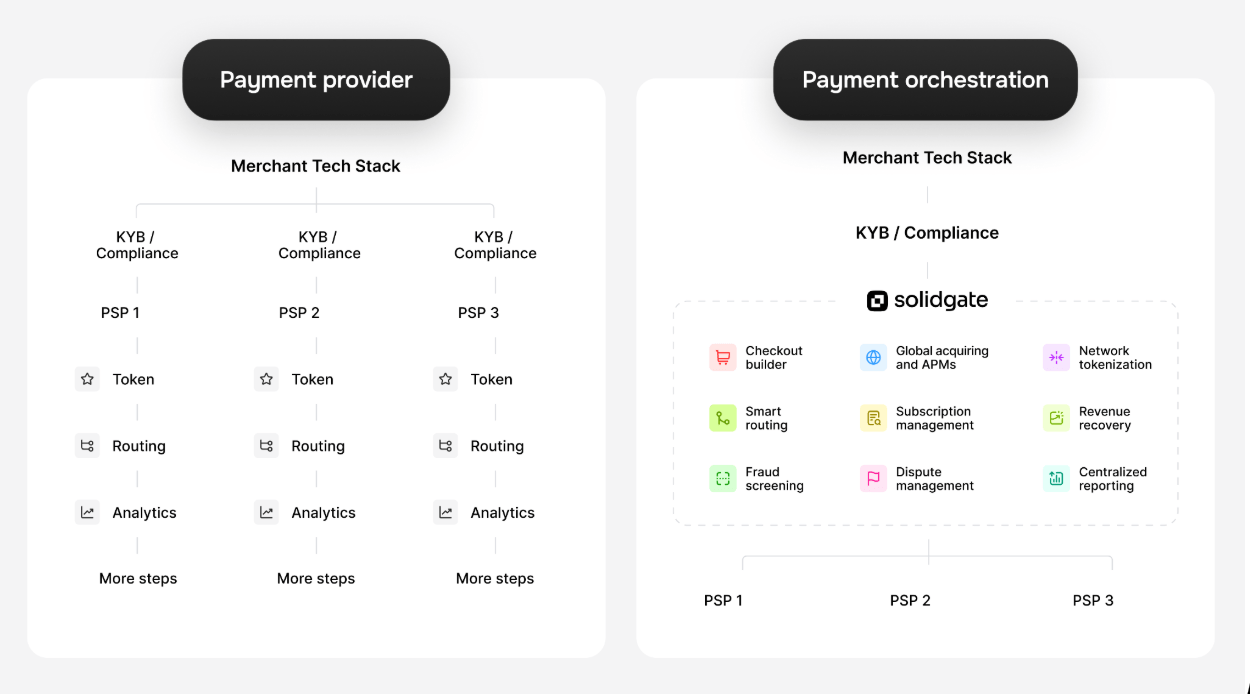
Solidgate maintains direct acquirer and PSP relationships across multiple markets – a merchant's payments team configures the cascade sequence in the Hub, self-service, without engineering tickets or per-region onboarding.
Solidgate maintains direct acquirer and PSP relationships across multiple markets – a merchant's payments team configures the cascade sequence in the Hub, self-service, without engineering tickets or per-region onboarding.
Tag every attempt with a unique reference
A duplicate-transaction check assigns a unique identifier to each transaction attempt, so a late approval and a cascade attempt can never both settle. This needs to be in place before the cascade goes live – not after the first duplicate dispute arrives.
Keep credentials and authentication portable
Start with . It replaces a raw card number with a Visa or Mastercard token that travels with the transaction across every provider switch, so card details don't need to be re-entered on a fallback attempt.
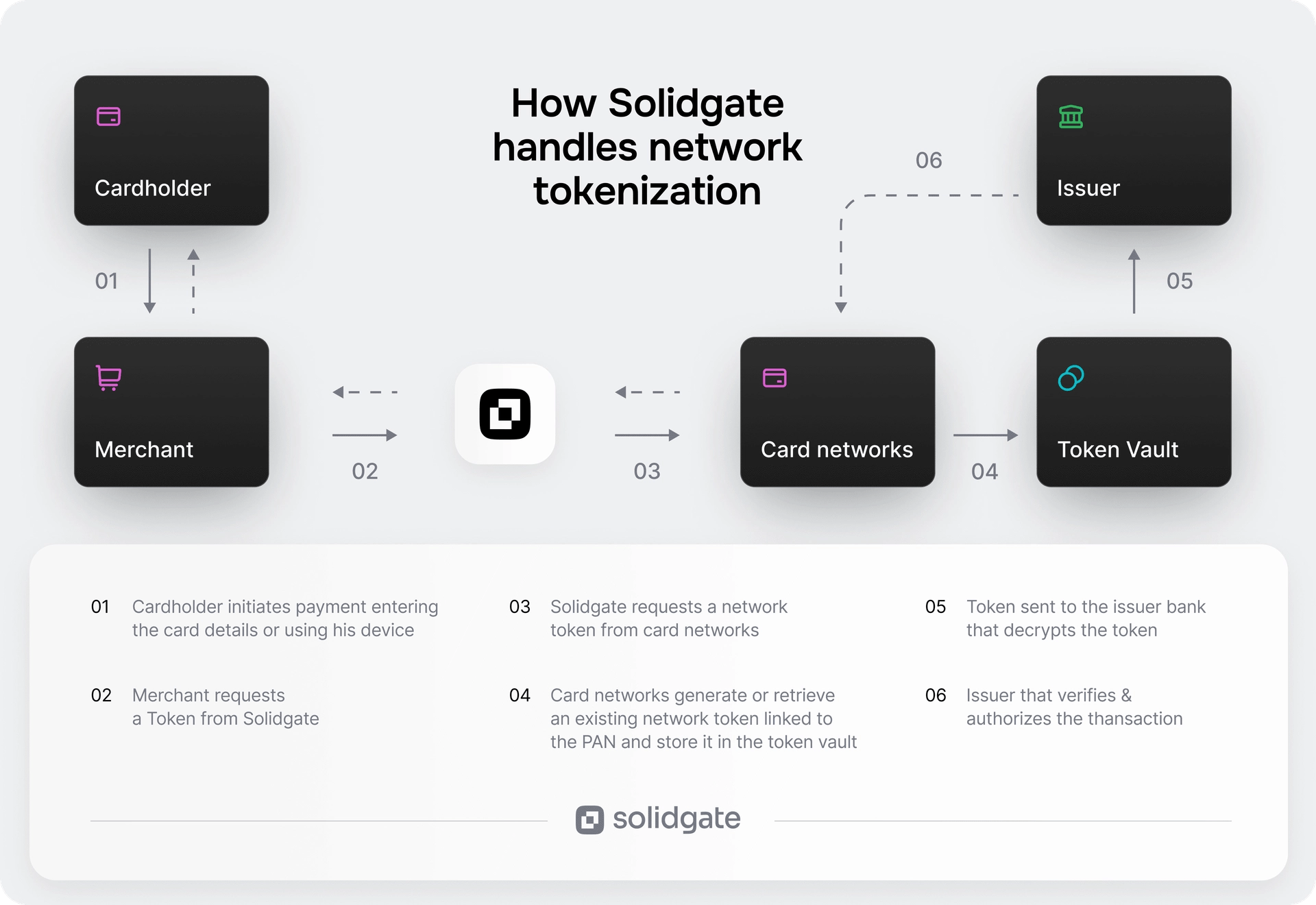
For that token to stay usable across the full cascade sequence, store it in a that isn't tied to any single provider.
You can also handle the authentication layer the same way. 3DS results are tied to the provider that ran them by default, so when a cascade moves to a fallback provider, the customer can be prompted to authenticate again mid-checkout. A provider-agnostic 3DS setup stores the result independently, so it travels with the transaction across every fallback attempt and the customer never repeats the step.
When one of tier-2 banks closed, all tokens were preserved on the Solidgate side – the recurring payment tail moved to new acquirers with near-zero customer impact.
Track results by provider, not just overall
Segment-level analytics show approval rate and dispute rate per fallback provider, so a problematic route shows up in the data before it becomes a scheme penalty. With Solidgate's Hub, for example, your payments team can see how each provider in the cascade is performing – and adjust the sequence without filing engineering tickets.
Core insight: Cascading without the right safeguards creates operational debt – duplicate charges, broken authentication, and invisible chargeback risk. An can help handle provider connections, credential portability, and cascade monitoring in one place, so the recovery mechanism works without compounding the complexity.
When to cascade payments
Cascading delivers real recovery, but it's not the right setup for every merchant. The honest answer depends on volume, geography, and what's already in the payment stack.
High-volume merchants
Cascading recovery compounds with volume. At low transaction volumes, the cost of processing additional attempts through a fallback provider can outweigh the revenue recovered. At scale, even a 2–3% recovery rate translates into a meaningful sum of completed purchases that would otherwise be lost. Volume is the baseline condition that makes cascading worth the setup.
Cross-border merchants
When traffic spans multiple issuing countries, approval rates vary significantly by corridor. A primary acquirer optimized for one market may perform poorly in another, and a fallback acquirer with stronger local issuer relationships recovers declines the primary one can't. The wider the geographic spread, the larger the recoverable gap tends to be – and the stronger the case for a cascade sequence that reflects that variance.
Subscription businesses
Cascading is one of the ways to before they compound into churn. Involuntary churn from failed payments costs the average subscription business between 5.6% and 8.3% of its subscriber base each month.
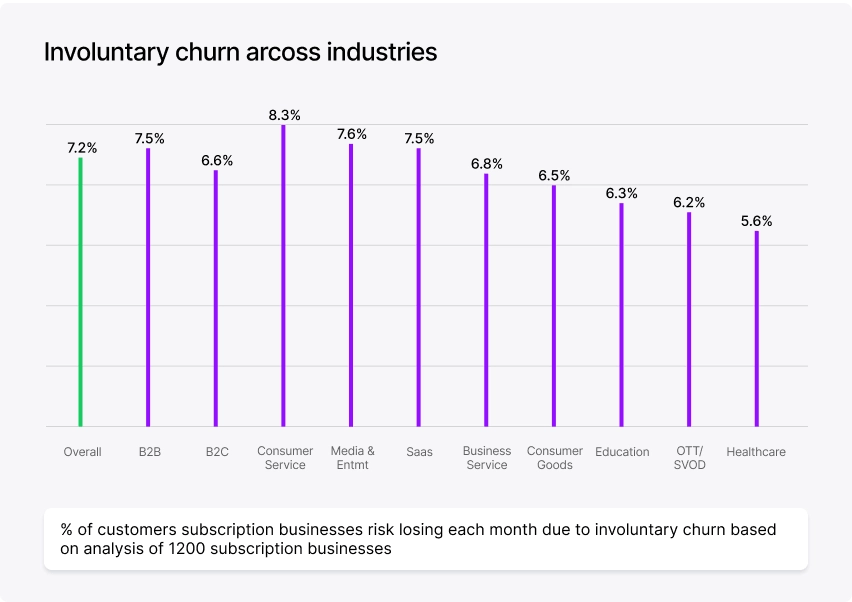
A recovered first charge through a cascade keeps a customer who would otherwise never activate. Pairing cascading with smart retries covers both the live attempt and the scheduled renewal re-attempts.
Multi-acquirer setup
A merchant whose provider already connects to multiple acquirers can add a cascade without new infrastructure – the provider sequence already exists, and cascading is a configuration on top of it. The size of the gain depends on how much those providers' approval rates diverge in practice, so checking that gap first shows what's realistically recoverable before switching a cascade on.
Core insight: Cascading pays off at volume, across borders, and in subscription models where every recovered transaction compounds – but only once a second provider is reachable and the volume makes recovery worth the setup cost.
Turn recoverable declines into completed sales
A declined transaction is only a lost sale if there's nowhere else for it to go. For merchants processing at volume – across markets, on subscription models, or both – that somewhere else exists.
Whether that recovery holds depends on the setup. Configured correctly inside, cascade logic runs automatically, gates on decline type, and stays invisible to the customer.
If you're losing transactions you suspect are recoverable, to map your current setup and identify where the gap sits.

15% more payments approved
See how Headway got there with Solidgate
Frequently asked questions
A retry re-attempts a declined transaction later in time, often hours or days after the decline, through the same or a different provider. Cascading re-attempts immediately through another provider within the same checkout session. Retries change timing; cascades change the provider.
Smart routing selects the provider most likely to approve a transaction before the first attempt, using card type, issuer, and geography. Cascading is the fallback that fires only after a decline comes back, sending the transaction to the next provider in the sequence. Cascading operates inside a routing setup rather than replacing it.
It can if the checkout flow lacks a duplicate check. When an acquirer approves after a delay and the cascade assumes a decline, two authorizations can land. A duplicate check tags each transaction attempt with a unique reference, so a late approval and a cascade attempt can't both settle.
Recovered transactions skew toward marginal approvals, which can raise dispute rates if the cascade is unmonitored. Cascading a hard decline – one the issuer has already flagged as do-not-retry – risks generating an unauthorized attempt, which can trigger a dispute.
Recent articles